The outcome of key races determining the strength of Democrats’ majorities in the House and Senate remains uncertain a week after Election Day. Several races, including those in Mississippi and Alaska, are still too close to call, with votes being tallied.
As of now, Democrats are expected to hold 54 Senate seats come January, with the possibility of gaining one or two additional seats from Republicans in Alaska and Mississippi. In the House, Democrats are projected to secure 255 seats, marking their largest majority since 2008, and they could potentially increase this number as remaining races conclude.
The Senate race in Mississippi is still pending results. As of late afternoon Tuesday, Democrat Scott Colom was approximately 2,600 votes ahead of Republican incumbent Cindy Hyde-Smith in the contest. Critical deadlines in Mississippi's vote-counting process include the receipt of mail-in absentee ballots by Tuesday, and counties are required to submit their certified election results, which includes provisional ballots, to the state by Friday. The specifics regarding the number of ballots still uncounted remain unclear, as Mississippi does not have a centralized vote reporting system.
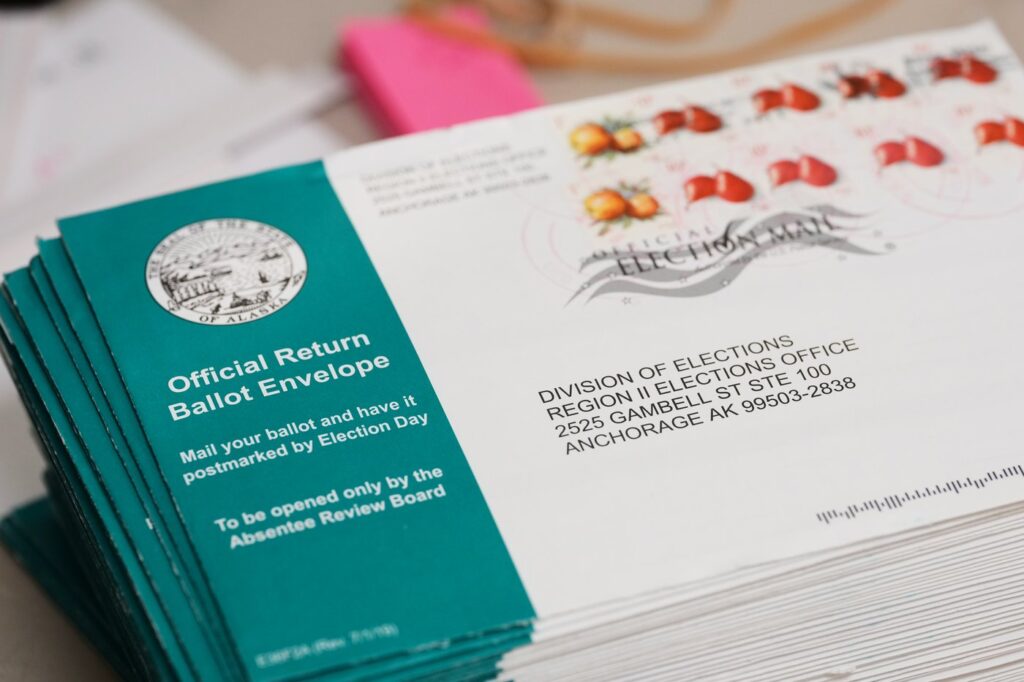
In Alaska, the Senate race is also in flux. Democrat Mary Peltola was leading Republican Sen. Dan Sullivan by around 2,500 votes, with about 76% of the vote tallied by Tuesday afternoon. The final absentee ballots from outside the U.S. can be accepted until November 18. Peltola is slightly short of the majority necessary for an outright victory, which may lead the race to proceed to ranked choice voting on November 18, with results expected to be certified by November 25.
The ongoing vote count also affects more than a dozen House races, primarily where the margins are exceedingly tight—often within 1 percentage point of each other. North Carolina has the most undecided races with four, all challenging Republican incumbents. In the event of narrow margins, candidates can request a recount, but it must be filed by noon Eastern time on November 17, following the state’s county canvass.
California has one uncalled House race that could influence the balance of power in the chamber. In South Carolina’s 2nd District, a recount is currently taking place, with Republican incumbent Joe Wilson narrowly leading Democrat Zyon Khalia by only about 3,000 votes after nearly all ballots were counted. Minnesota's House race in the 1st District is also close, with around 300 votes separating the candidates and an estimated 99% of votes counted.
In Tennessee, the race for the 4th District shows about 300 votes separating Democrat Victoria Broderick from Republican incumbent Scott DesJarlais. Recounts in Tennessee can only occur through legal challenges, as there are no mechanisms for automatic recounts.
Additionally, two governorships remain undecided. In Kansas, Democratic state Senator Cindy Holscher is narrowly ahead of Republican Senate President Ty Masterson by less than 1 percentage point. An audit of the closely contested races, including the gubernatorial race, must be completed by November 16. Meanwhile, in Alaska, Jonathan S. Kreiss-Tomkins, the Democratic candidate, is leading his opponent by approximately 45,000 votes, with 76% of the ballots counted. If no candidate manages to secure over 50% of the vote, the election will advance to ranked choice tabulation.
As the election results continue to unfold, stakeholders await the certification of results that could significantly impact both federal and state political landscapes.