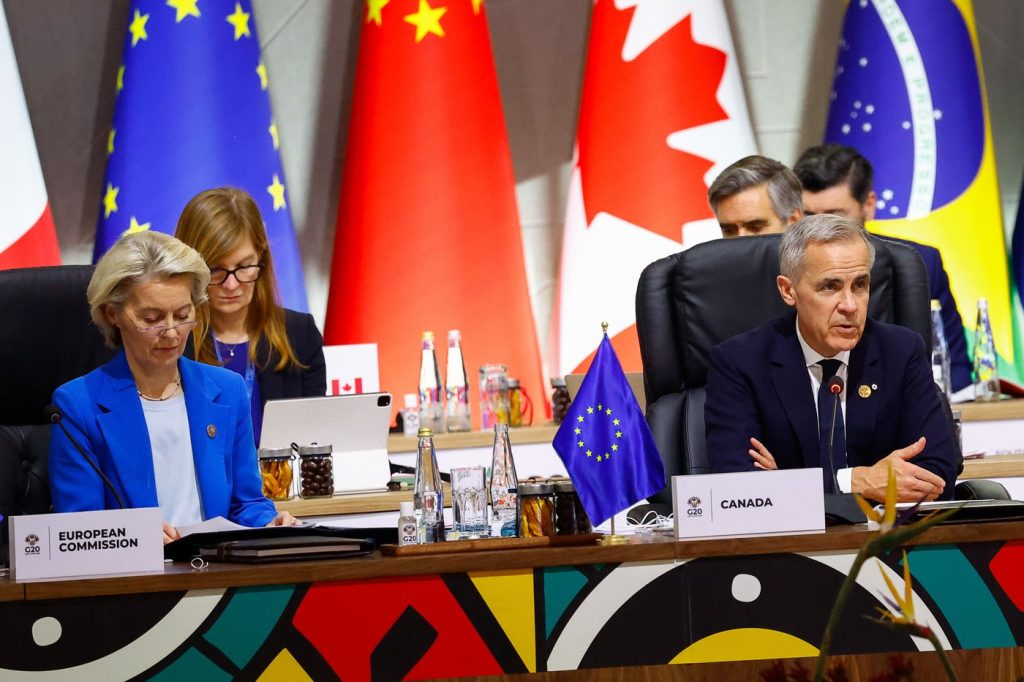
OTTAWA — The European Union has announced that Canada will need to contribute 10 million euros, approximately C$16 million, to join a significant defence procurement agreement with the EU, a cost that has sparked discussions regarding the anticipated investment returns from the arrangement.
This week, Canada officially became a participant in the $245 billion Security Action for Europe (SAFE) program, which is part of the broader ReArm Europe initiative aimed at reducing the continent's dependence on American defence technology and funding.
During a press conference in Ottawa on Monday, Defence Minister David McGuinty confirmed the finalization of the deal but was reserved when asked for specific payment details. He mentioned, “we’ll have more to say about that in due course.” However, the fee was revealed by EU spokesman Thomas Regnier in a briefing held in Brussels the following Tuesday.
Regnier specified that Canada must initiate a one-time payment of 10 million euros to the EU budget, which will be reassessed in the future. Global Affairs Canada later validated this statement, indicating that the contribution consists of a 2.5 million euro upfront administrative fee and a 7.5 million euro upfront annual participation fee. A principle agreement has been established, although technical discussions remain ongoing to finalize the treaty text, according to department spokesman John Babcock.
Babcock emphasized that this arrangement would enhance all partners’ defence readiness and contribute to the growth of their respective defence industries. Regnier further explained that the fee for Canada or any other country is determined by the potential contracts available to their respective industries through SAFE participation. He added that there is a correction mechanism in place, which means the contributions will be reassessed based on the value of contracts received by the Canadian industry from this participation.
The EU has also requested the United Kingdom to pay between 4 and 6.5 billion euros, significantly more than Canada's fee. Professor Justin Massie from Université du Québec à Montréal raised concerns on social media, questioning the implications of Canada’s comparatively lower fee and what this means for investment returns from the deal. He articulated that the entry costs reflect expected benefits from access to the EU instruments, urging caution in expectations.
When asked for clarification on this interpretation, Foreign Affairs Minister Anita Anand refrained from confirming the accuracy of such assessments. In a phone call from Brussels, she expressed that there is considerable enthusiasm in Europe regarding Canadian defence technology and industrial capabilities. Anand stated, “Everyone I spoke with was very excited to have Canadian companies be on the same footing as European companies to compete for procurement contracts here.” She underscored that the SAFE agreement positions Canada positively within the domestic economy.
In addition, Regnier noted that a separate agreement exists, allowing European countries to purchase products directly from Canada’s defence industry, provided that at least 20% of the goods' components originate from the EU.
This report underscores the collaborative efforts between Canada and the EU in enhancing mutual defence capabilities while navigating the complexities of international procurement agreements.