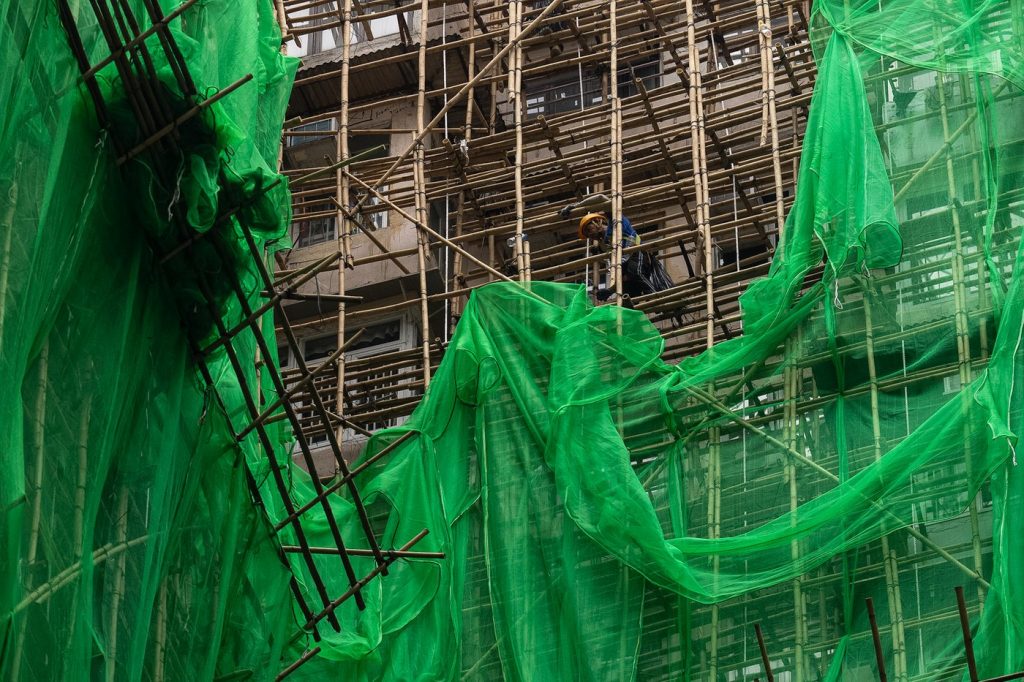
The recent deadly fire at Wang Fuk Court in Hong Kong has ignited a debate regarding the safety of traditional bamboo scaffolding. The blaze, which occurred on November 26, claimed at least 159 lives and quickly spread from one tower to seven, leading authorities to scrutinize the bamboo scaffolding enveloping the complex.
Although bamboo scaffolding, a longstanding technique in Hong Kong, has faced criticism, many residents, construction professionals, and former officials argue against blaming it solely for the rapid spread of flames. As discussions arise regarding the potential replacement of bamboo with metal scaffolding, critics caution that such a move could overlook more systemic safety issues.
Authorities have indicated that some of the green netting covering the bamboo scaffolding was of substandard quality, and flammable foam boards were reportedly used to seal windows during renovations. This combination has been cited as a significant factor in the fire's escalation. Kristof Crolla, an associate professor of architecture at the University of Hong Kong, emphasized the need for a thorough investigation before attributing blame to bamboo: “When it is properly used and combined with certified fire-retardant netting it is comparatively hard to ignite,” he noted.
Moreover, Raffaella Endrizzi, an architect at the Chinese University of Hong Kong, pointed out that bamboo scaffolding is not “easily ignited.” She expressed concerns that focusing solely on bamboo could distract from essential safety protocols that remain unaddressed. City officials, however, have indicated a preference for metal scaffolding, claiming its fire resistance is superior to that of bamboo.
This debate has sparked vocal pushback from various community members. A poignant message at the fire's memorial stated, “It’s not the bamboo scaffolding that should be reviewed, but the whole system,” echoing sentiments shared widely on social media. Regina Ip, a former security secretary, criticized scapegoating bamboo for the incident, while John Tsang, a former financial secretary, defended its merits, asserting that bamboo is “not so easy to burn.”
Advocates for bamboo scaffolding highlight its unique adaptability in Hong Kong’s densely populated urban landscape. Endrizzi described bamboo as “light, fast, and adaptable,” traits well-suited for the city's construction demands. Experts like Crolla underscored the difficulty of substituting bamboo with metal options, noting that metal scaffolding often lacks the flexibility to navigate the complex urban architecture.
While metal scaffolding is seen as non-combustible, it poses challenges in terms of weight and setup time. Additionally, the cost of switching to metal could be a deterrent for Hong Kong residents, especially those in older buildings that require external renovations. Ho Ping-tak, chairman of the Hong Kong and Kowloon Bamboo Scaffolding Workers Union, mentioned that bamboo costs significantly less than metal alternatives, raising questions about affordability for residents.
Broader safety concerns have surfaced as investigations now focus on potential corruption and the use of substandard materials in various building projects. Authorities have arrested at least 15 individuals as part of this inquiry. Following the incident, there were community concerns raised about fire safety materials used in the ongoing renovations at Wang Fuk Court, which went unheeded prior to the fire.
In response to the tragedy, city officials have begun removing potentially hazardous netting from scaffolding on numerous other constructions and will re-evaluate safety protocols. An independent committee has been formed to investigate the fire, with Chief Executive John Lee pledging systemic reforms to prevent future incidents. Lee emphasized the need to ensure justice and uncover the truth behind the tragic event.