In a significant diplomatic maneuver, U.S. President Donald Trump has rescinded an invitation to Canadian Prime Minister Mark Carney to join his newly launched “Board of Peace.” This decision marks a moment of tension in the Canada-U.S. relationship, particularly as a vital trade agreement is set for review in 2026.
On Thursday night, Trump announced the withdrawal of Carney's invitation via social media, emphasizing that the Board of Peace is “the most prestigious Board of Leaders ever assembled, at any time.” However, he did not provide specific reasons for the change in plans. The decision followed Carney's impactful speech at the World Economic Forum in Davos, Switzerland, where he declared that the old world order is obsolete and urged middle powers to unify in the face of economic pressure from larger nations.
Carney's address resonated widely, garnering praise worldwide and prompting European leaders to cite his remarks as they expressed concerns over fractures in long-established international relationships. In contrast, Trump's comments during the WEF summit indicated displeasure with Carney. Trump suggested that Canada benefits significantly from U.S. support, stating, “But they should be grateful to us. Canada lives because of the United States. Remember that, Mark, the next time you make your statements.”
In response, Carney defended Canada’s position earlier on Thursday in Quebec City, stating, “Canada and the United States have built a remarkable partnership in the economy, in security and in rich cultural exchange. But Canada doesn’t live because of the United States. Canada thrives because we are Canadian.” The ongoing exchange illustrates the underlying tensions between the two leaders.
While the exact motivations for Trump's actions remain unclear, members of his administration have criticized Carney’s statements in Davos. U.S. Commerce Secretary Howard Lutnick described the speech as “political noise” and expressed concern that Ottawa's recent trade agreements with China could jeopardize the upcoming negotiations surrounding the Canada-U.S.-Mexico Agreement (CUSMA).
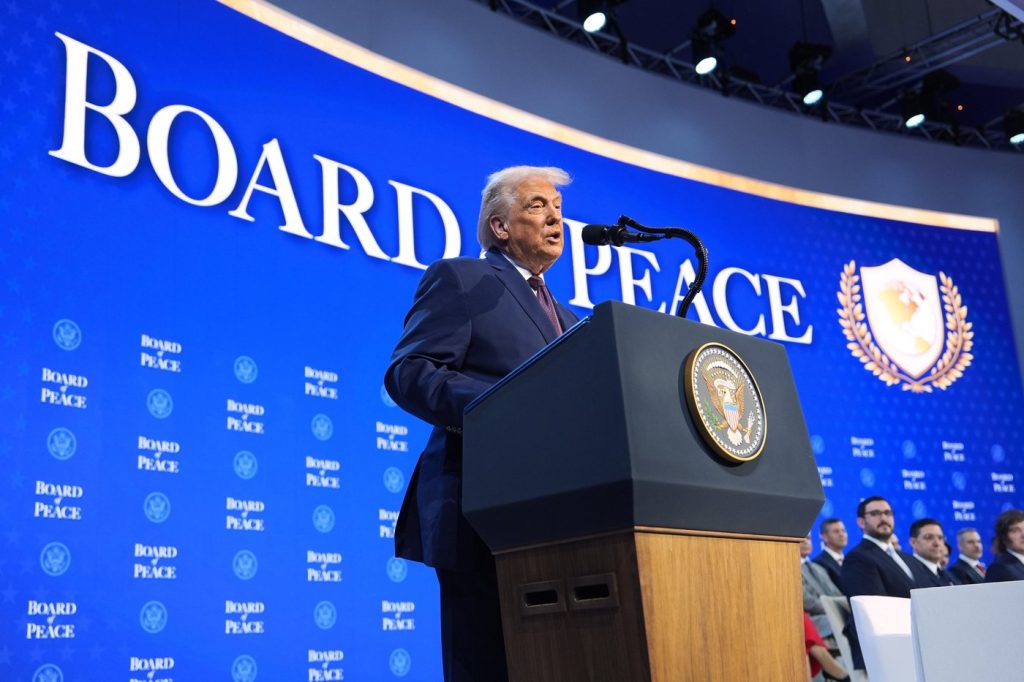
Earlier on the same day, Trump unveiled his “Board of Peace” concept at the World Economic Forum, although many key global leaders, including those from Canada and most European nations, did not attend the rollout. The board, originally intended to oversee peace efforts related to the Gaza conflict, has evolved into a broader initiative that has sparked controversy, especially after the revelation that Russian President Vladimir Putin was invited to participate despite Russia's ongoing war in Ukraine.
Although Carney initially showed interest in joining the board, he later expressed reservations about its structure and the proposed permanent membership fee of $1 billion. Thus far, it appears Carney is the only leader to have had an invitation rescinded, which raises questions about the future of negotiations concerning CUSMA.
While CUSMA was established during Trump’s first term, the President has characterized the agreement as “transitional” and has stated, “it may have served its purpose.” Recently, he referred to CUSMA as "irrelevant" in his current political agenda. The trade pact has been crucial in protecting Canada from severe tariffs imposed by the U.S., although Canadian industries still grapple with significant duties on products such as steel, aluminum, copper, lumber, and cabinets.
In past efforts to ease tensions, Carney held discussions with Trump at the White House last year, receiving praise from the President. However, bilateral talks have stagnated since October, following Trump's displeasure with an advertisement sponsored by Ontario that quoted former President Ronald Reagan's criticism of tariffs. This backdrop of escalating tensions could have far-reaching implications as trade negotiations loom in the coming months.