Ukrainian, Russian, and U.S. envoys convened in the United Arab Emirates on a Friday, marking the first instance where officials from the Trump administration engaged in discussions with both countries aimed at addressing the nearly four-year-long invasion by Moscow. These talks are a significant aspect of Washington's efforts to foster progress toward resolving the ongoing conflict in Ukraine.
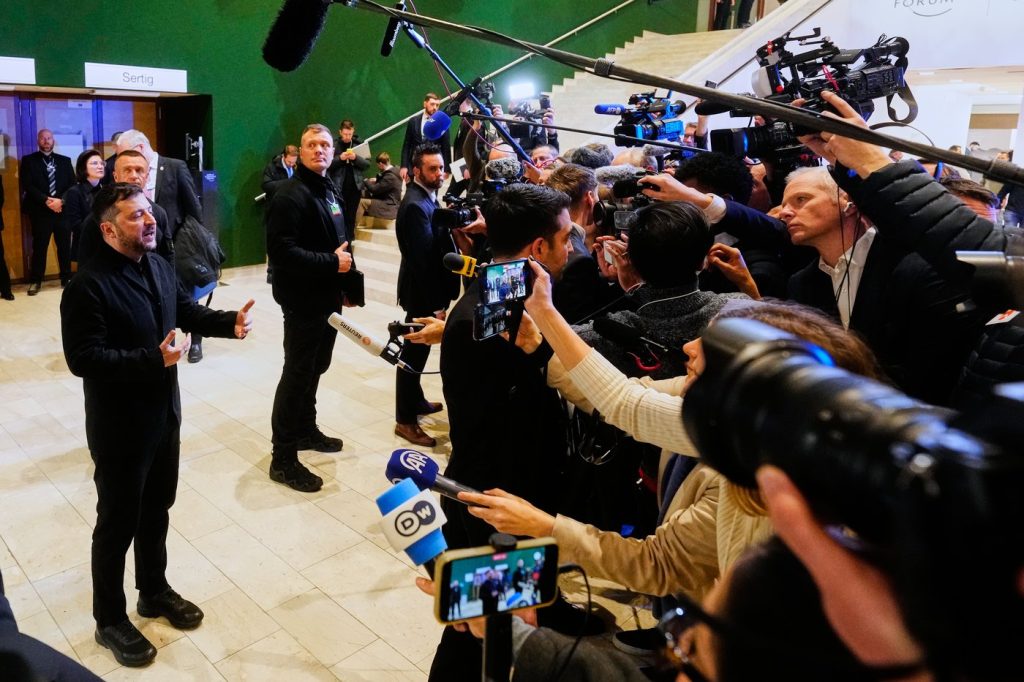
The meeting follows a surge of recent diplomatic activities spanning from Switzerland to the Kremlin, although fundamental obstacles continue to hinder negotiations between the nations. Ukrainian President Volodymyr Zelenskyy, during a recent address at the World Economic Forum in Davos, Switzerland, claimed that a potential peace agreement was "nearly ready." However, key sticking points, particularly concerning territorial issues, remain a challenge.
One distinguishing feature of these talks is their location in Abu Dhabi, the capital of the UAE. Although representatives from Russia and Ukraine have previously met on separate instances, the inclusion of U.S. envoys represents a pivotal step as President Donald Trump advocates for a cessation of the war. The meetings are a response to escalating diplomatic interactions, despite Russia's ongoing attacks on Ukraine and its energy infrastructure, which have left many regions in Ukraine without power amid harsh winter conditions.
During a closed-door hour-long session on Thursday, Zelenskyy met with Trump, describing the discussion as "productive and meaningful." Trump later confirmed a positive outcome from the talks, stating that both Russia and Ukraine were "making concessions" in their efforts to conclude the war. Similarly, Russian President Vladimir Putin met with U.S. envoys Steve Witkoff and Jared Kushner for nearly four hours at the Kremlin the same night.
As for the participants, the U.S. delegation is confirmed to include Witkoff, Kushner, Army Secretary Dan Driscoll, and NATO's top general, U.S. Air Force Gen. Alexus Grynkewich. The Ukrainian representatives consist of Rustem Umerov, head of Ukraine's national security and defense council; Andrii Hnatov, chief of the general staff; and Kyrylo Budanov, head of the presidential office. Russia's delegation, led by Adm. Igor Kostyukov of military intelligence, also includes Putin's envoy Kirill Dmitriev.
Scheduled to conclude on Saturday, the discussions are expected to cover sensitive topics, including territorial and security issues. Zelenskyy highlighted that territorial concessions would likely be on the agenda, while the Kremlin described the meeting as a "working group on security issues." Separate economic talks between Witkoff and Dmitriev are also planned.
The discussions are crucial as they stem from unresolved territorial disputes, particularly regarding the Donbas region in eastern Ukraine, which Zelenskyy labeled as "key." Since the beginning of hostilities in 2014, Russia has captured approximately 20% of Ukraine, with significant costs incurred on the Russian military front. The ongoing conflict has strained the Russian economy, resulting in repercussions due to international sanctions.
In his briefing regarding the meeting with Witkoff and Kushner, adviser Yuri Ushakov emphasized the futility of expecting a long-term settlement without addressing territorial issues. Similarly, Kremlin spokesperson Dmitry Peskov reiterated that Ukraine must withdraw its troops from the Donbas region, which Russia annexed illegally in 2022 but has not fully secured.
As Ukraine continues to seek security guarantees from Western allies to deter future Russian invasions, the outcome of these diplomatic talks remains to be seen.