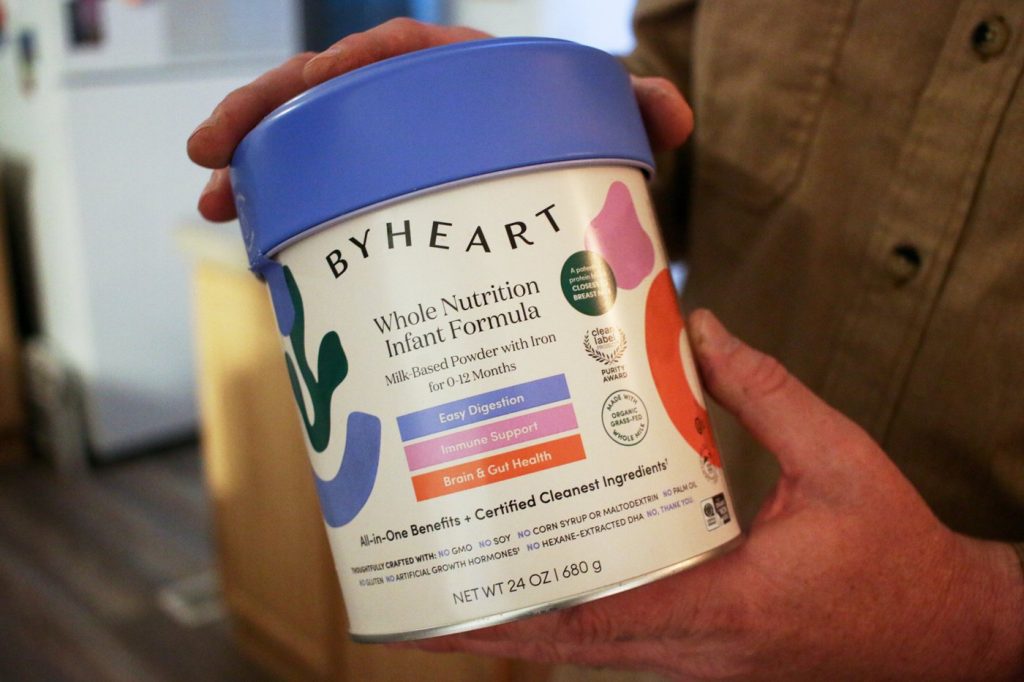
Recent investigations reveal that powdered whole milk used in ByHeart infant formula may have been a source of contamination responsible for an outbreak of botulism, affecting dozens of babies across the United States. Health officials highlighted this potential link on Friday, prompting increased scrutiny of the formula's ingredients.
The U.S. Food and Drug Administration (FDA) conducted tests that identified the specific bacteria known to cause botulism in two samples associated with ByHeart formula. Alarmingly, the bacteria found in an unopened can of formula matched samples from a sick infant, implying a direct connection to the formula's production. Moreover, contamination was also found in organic whole milk powder used by ByHeart, which the company collected and tested as part of its own investigation.
In their assessment, the FDA detected bacteria in whole milk powder sourced by ByHeart that matched the germ discovered in the company's finished formula. Although these findings provide critical data, officials stated that they are not definitive, and the investigation continues to determine the actual source of the contamination.
In response to the findings, ByHeart expressed its commitment to addressing the issue. Dr. Devon Kuehn, the chief scientific and medical officer at ByHeart, described the situation as a "watershed moment" for the company, emphasizing their resolve to act responsibly based on the new information to enhance the safety of their products.
Currently, the FDA and ByHeart have not disclosed the identity of the supplier linked to the contaminated powdered milk. However, the FDA has clarified that there is no indication of a widespread issue across the infant formula market at this time.
ByHeart, a New York-based company, has faced scrutiny since the outbreak, which has sickened 51 infants in 19 states since December 2023. The problem came to light when officials from California's medical program, responsible for the sole treatment for infant botulism, noted a surge in cases among infants who had consumed ByHeart formula. As of mid-December, no new cases associated with the outbreak have been reported, according to the U.S. Centers for Disease Control and Prevention (CDC).
Initially, ByHeart recalled two lots of their formula, later expanding the recall to encompass all products. Federal officials suggested that contamination could not be ruled out for any ByHeart products released since the company's launch in March 2022. This expansion followed testing by the company itself, which revealed that six out of 36 sampled formula containers from three different lots contained the harmful bacteria linked to infant botulism.
Diagnoses of botulism in infant formula are rare, making this outbreak unprecedented in scale, according to food safety experts. Within the food industry, some formula manufacturers conduct thorough testing of both raw materials and finished products to detect any signs of contamination, yet there are calls for more stringent requirements in this regard. Sarah Sorscher, director of regulatory affairs at the Center for Science in the Public Interest, underscored the need for the FDA to establish a systematic testing protocol in light of the situation.
Despite the possibility that the contamination source may be traced back to a raw milk supplier, the overarching legal and moral responsibility remains with ByHeart, as articulated by Bill Marler, a Seattle-based food safety attorney representing over 30 families affected by the outbreak. Marler stressed that identifying the contaminated ingredient does not absolve the company of its obligations to consumers.
At its peak, ByHeart accounted for approximately 1% of the U.S. infant formula market, distributing around 200,000 cans monthly. The formula was marketed as a healthier option closely resembling human breast milk, made from "organic, grass-fed whole milk." Many parents selected this formula based on its purported health benefits, despite its higher price point of about $42 per can.
As the investigation unfolds, the implications for ByHeart and the broader infant formula industry remain significant, particularly regarding consumer safety and regulatory practices.