BRUSSELS (AP) — The ongoing challenge for any U.S., NATO, or European plans concerning Greenland revolves around the issue of ice. The ice not only obstructs harbors but also encapsulates valuable minerals and transforms coastlines into hazardous minefields of ice shards, posing a threat to vessels throughout the year.
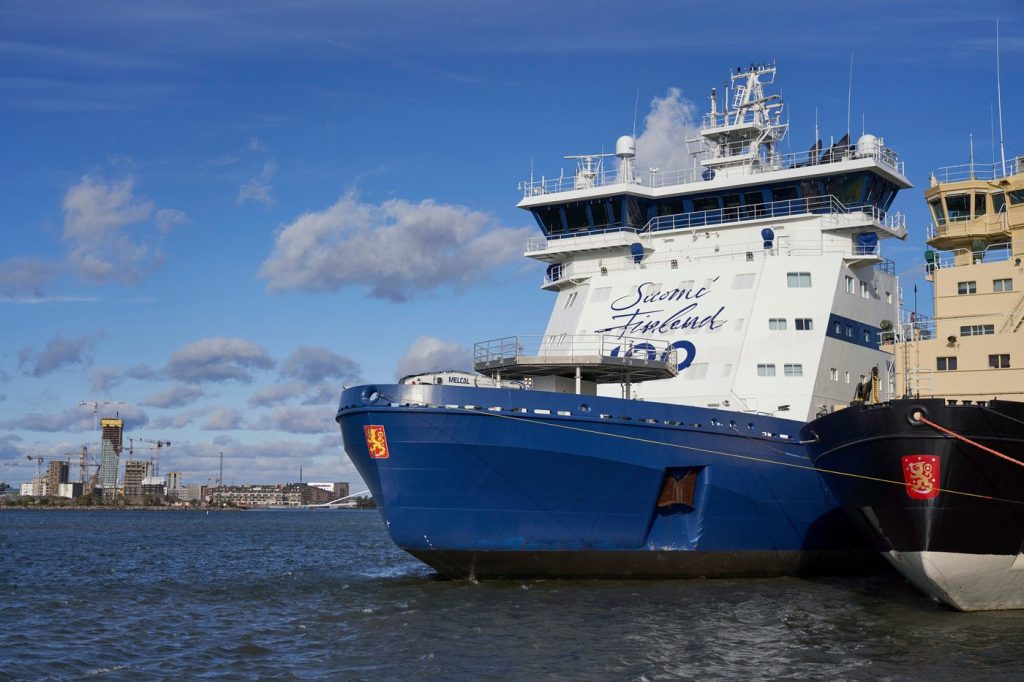
The only viable solution to navigate this frozen landscape is through the deployment of icebreakers—massive ships characterized by powerful engines, reinforced hulls, and stout bows designed to break through ice. Presently, the United States possesses merely three operational icebreakers, with one in such poor condition that it is barely functional. While agreements are in place to acquire an additional 11 vessels, these can only be procured from adversarial nations like China and Russia, or from allies like Canada and Finland, both of which have recently faced scrutiny from the Trump administration over Greenland.
Despite moderating his rhetoric, U.S. President Donald Trump remains determined to acquire Greenland for security and economic reasons. He aims to prevent what he refers to as "the big, beautiful piece of ice" from falling under the influence of Moscow and Beijing, whilst securing a strategic Arctic location for U.S. assets and tapping into Greenland's mineral wealth, particularly rare earths. During a gathering of global leaders in Davos, Switzerland, he highlighted the need for icebreakers, remarking, "to get to this rare earth you got to go through hundreds of feet of ice." However, without the crucial capability of icebreakers, there is no effective means to carry out any U.S. plans or operations in the semi-autonomous Danish territory.
Even if there was an immediate surge in U.S. resources directed toward Greenland, experts assert that access to the island would remain limited for at least two to three years due to ice conditions. Alberto Rizzi of the European Council on Foreign Relations noted, "On a map, Greenland looks surrounded by sea, but the reality is that the sea is full of ice."
The potential options for acquiring more icebreakers for the U.S. are limited to four: the strategic shipyards of China and Russia as well as those of Canada and Finland. Finland, having developed 60% of the global icebreaker fleet, possesses niche capabilities that offer significant leverage in the geopolitics of the Arctic. Meanwhile, Russia boasts the largest fleet, with about 100 vessels, and Canada plans to expand its fleet to around 50 icebreakers by 2024, according to Aker Arctic.
China lags with only five icebreakers but is rapidly advancing its capabilities. As Marc Lanteigne, a professor at the University of Tromsø, explained, "China is now in a position to develop indigenous icebreakers, and so the U.S. feels it must do the same." The need for the United States to catch up is pressing, with experts pointing out that two of its three current icebreakers are already beyond their operational lifespan.
During his presidency, Trump had prioritized the acquisition of ice-capable vessels—a stance that has carried through to the Biden administration, which signed agreements known as the Ice PACT with Canada and Finland to produce 11 new icebreakers. Under this agreement, four icebreakers will be built in Finland, while the remaining seven will be produced in a Texas-based facility owned by a Canadian company, alongside a shipyard in Mississippi.
The prospect of mining critical minerals in Greenland involves high costs in the harsh conditions present at sea and on land. Investments in mining infrastructure may require years, if not decades, to yield financial returns, as highlighted by Lanteigne. Even with the requisite icebreakers, the funding required for establishing mining or military facilities, akin to the proposed $175 billion Golden Dome missile defense network, would be substantial.
Danish Prime Minister Mette Frederiksen expressed openness to bolstering Arctic security through U.S. investments, including the support of the Golden Dome program, provided it respects Denmark’s territorial integrity. While both the U.S. and the 27-nation European Union have pledged increased investments in Greenland, the hard-power capabilities essential for effective operations in the region currently rest with Russia, China, and to a lesser extent, Canada.
Rizzi remarked on the complexities, stating that while Finland may not respond aggressively to threats over Greenland, European nations could exercise significant influence by withholding icebreaker agreements from the U.S. European Commission President Ursula von der Leyen reiterated at the World Economic Forum that collaboration with northern NATO members is crucial for achieving Arctic security, emphasizing Finland's role in manufacturing icebreakers for the U.S.
The situation illustrates that while increasing investments and commitments from allies may benefit Arctic security, the immediate capacity to project power and influence in Greenland’s icy landscape remains a pressing concern for the United States.