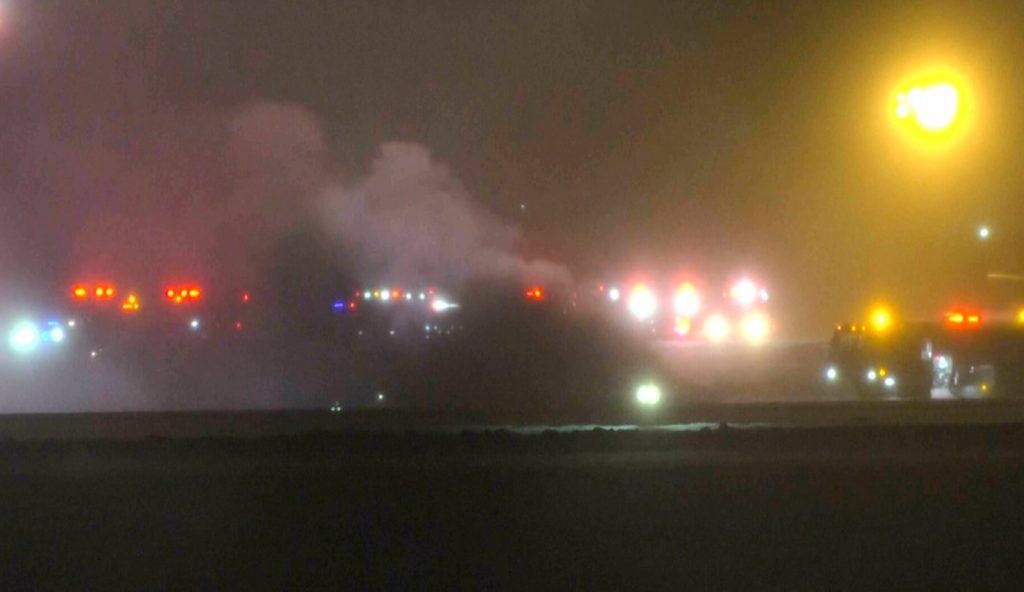
PORTLAND, Maine (AP) — Six individuals tragically lost their lives when a Bombardier Challenger 600 business jet crashed during takeoff amidst deteriorating weather conditions in Maine on Sunday night, January 25, 2026. The accident occurred at Bangor International Airport around 7:45 p.m. as a significant winter storm began to affect the area.
As the aircraft attempted takeoff, it flipped over and caught fire. An audio recording from air traffic control captured the moment, with a voice noting, “Aircraft upside down. We have a passenger aircraft upside down,” approximately 45 seconds after takeoff clearance. First responders were on the scene within a minute, as confirmed by the airport director, Jose Saavedra.
The aircraft was registered to a corporation linked to the Arnold and Itkin Trial Lawyers firm in Houston. According to the flight manifest, all six occupants on board perished in the crash. Initially, the Federal Aviation Administration (FAA) reported seven fatalities and one injury, but updated information later confirmed the number of casualties to be six.
At the time of the crash, snowfall was heavy in other parts of Maine, although it had just begun accumulating in Bangor. Other scheduled flights were taking off safely from the airport, but approximately 30 minutes prior, the pilot of a Florida-bound Allegiant flight aborted its takeoff due to failing deice fluid and low visibility conditions.
The Bombardier Challenger 600, a wide-bodied business jet designed to carry nine to eleven passengers, had previously landed at Bangor from Houston at 6:09 p.m. The jet had remained outside in the snowy weather for over an hour before attempting to take off again. Experts pointed out that ice could have begun to accumulate on the wings during this time, particularly if cold jet fuel had been stored in the aircraft's wing tanks. The National Transportation Safety Board (NTSB) and aviation safety consultant Jeff Guzzetti indicated that even a small amount of ice can significantly affect an aircraft’s performance during takeoff.
The NTSB will reportedly investigate the weather conditions, including potential ice accumulation on the wings, as a primary focus of the inquiry. Historical data suggests that the Challenger 600 model has faced issues with icing on takeoff, resulting in previous fatal accidents in Birmingham, England, and Montrose, Colorado, more than two decades ago. Guzzetti emphasized that careful inspection and effective de-icing are crucial steps before takeoff, and the time duration for de-icing is often limited to about 20 minutes.
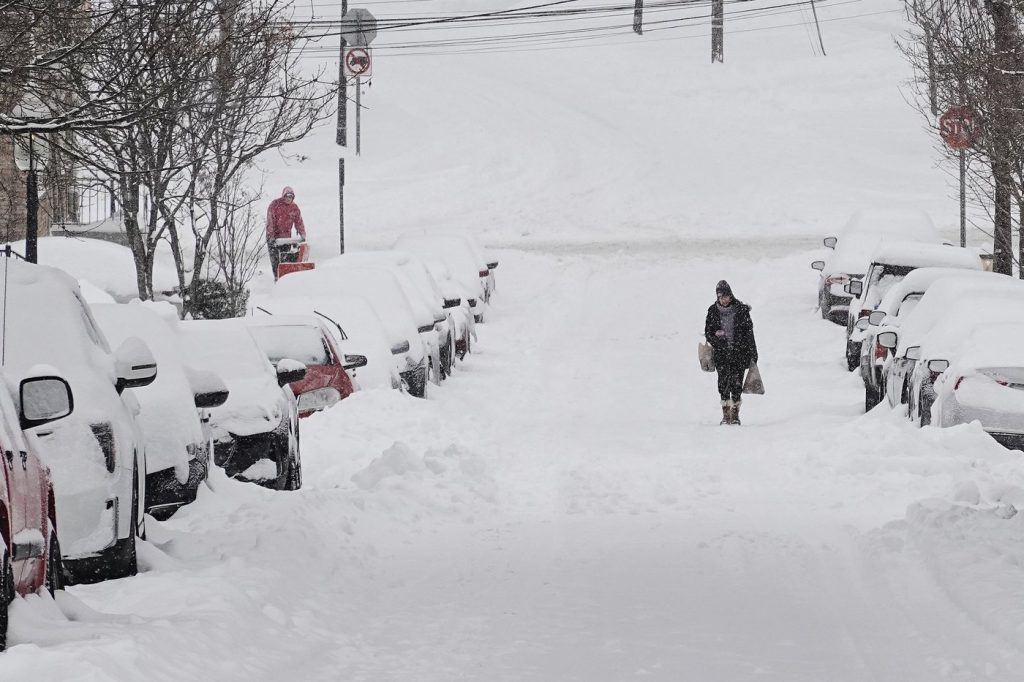
The National Weather Service in Caribou noted that Bangor ultimately received nearly 10 inches of snow, with temperatures dropping below 3 degrees Fahrenheit (-16 degrees Celsius) around the time of the crash. Despite these conditions, it was noted that such weather would not generally prevent aircraft from flying. However, the aircraft's condition after being outside in snow for an extended period raised questions about whether the crew effectively managed the de-icing process.
In light of the crash, the airport was closed, and operations will remain suspended at least until the following Wednesday to allow FAA and NTSB investigators to examine the scene and recover wreckage. A preliminary report detailing the facts surrounding the crash is expected to be released within a month, although a final report may take over a year to complete.
The aftermath of this tragic event highlights ongoing concerns regarding air safety, especially in winter conditions, as regulatory bodies continue to refine guidelines and procedures related to aircraft de-icing and ice management to ensure passenger safety in the future.