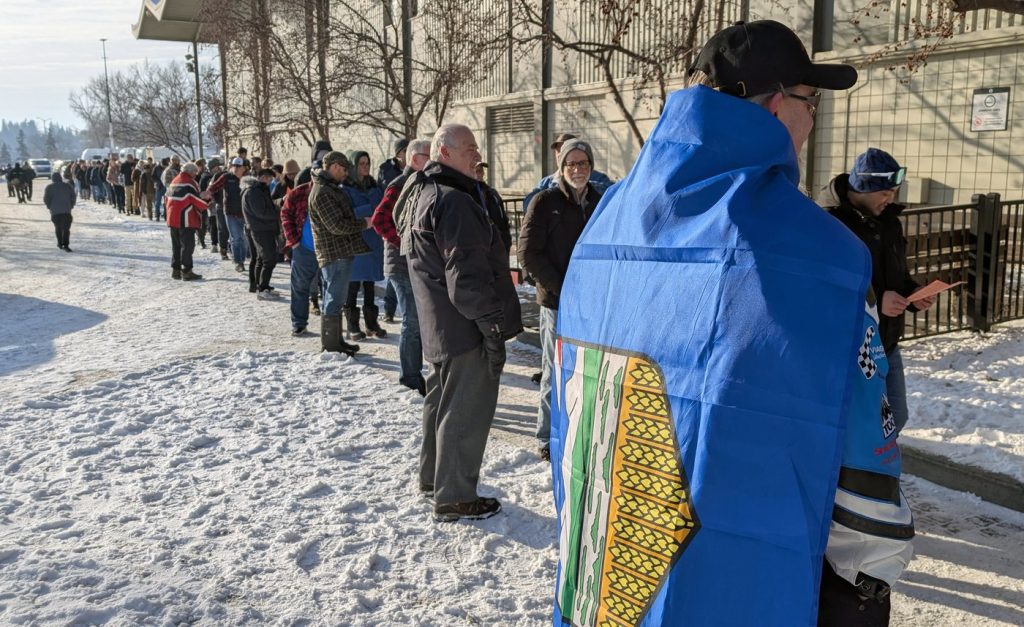
On January 26, 2026, Alberta's growing separatist movement reached Calgary, where hundreds of residents gathered at the Big Four Building on the Stampede grounds to sign a petition calling for a referendum on whether Alberta should secede from Canada. This event was organized by the advocacy group Stay Free Alberta, which seeks nearly 178,000 signatures by May to initiate the referendum process. Supporters expressed the belief that separation might be the only viable solution to what they describe as a strained relationship with the federal government led by Prime Minister Mark Carney.
Kelsey MacKay, one of the attendees, stated that policies from Ottawa have severely impacted Alberta's industries, claiming they have been "kneecapped." She voiced her frustration with the perceived federal overreach, saying, "Staying in a country that’s just, like, stealing your money in taxes, nothing to show for it." Her comments reflect a broader sentiment among supporters that leaving Canada may be the only way forward for the province.
The separatist sentiment in Calgary marks another chapter in a movement that has seen substantial interest in various communities across Alberta in recent weeks. Canvassers for Stay Free Alberta have observed similar turnout in their previous stops, indicating a rising fervor for independence among certain demographics in the province. The discussions surrounding the movement have intensified amid speculation that Alberta might consider joining the United States, an idea that has garnered attention from U.S. officials.
U.S. President Donald Trump has previously suggested the potential for Canada to become America’s 51st state, while U.S. Treasury Secretary Scott Bessent referred to Alberta as a "natural partner" for the U.S. given its wealth of natural resources. While some attendees at the petition signing event were focused solely on independence from Canada, MacKay expressed openness to the possibility of joining the U.S., arguing that it would provide Alberta with financial benefits such as access to a stronger currency and lower taxes.
Despite these sentiments, Jeffrey Rath, the general counsel for Stay Free Alberta, emphasized that the group’s goal is not to join the U.S. He criticized the idea, stating, "Why the hell would we want to fight tooth and nail... to leave Canada... to put ourselves under the taxing jurisdiction of the U.S." Rath reinforced the objective of obtaining "Free and independent Alberta," highlighting a clear vision for self-governance without aligning with American federal systems.
The political opposition within the province, particularly from the New Democratic Party (NDP) led by Naheed Nenshi, has voiced strong objections to the separatist movement. Nenshi argued that the discourse surrounding separatism could be detrimental to Alberta's economy and job market. He called upon Premier Danielle Smith and her United Conservative government to put an end to the issue by signing a pledge against separatism, firmly stating, "Alberta's New Democrats unequivocally denounce separatism and unabashedly stand with Team Canada." He criticized the Premier's ambiguous stance on supporting a "sovereign Alberta within a united Canada" as nonsensical “word salad.”
In response to rising criticisms, a spokesperson for the United Conservative caucus reiterated their support for a strong and sovereign Alberta but dismissed Nenshi's claims as deflections from his political failures as Calgary's mayor and as an NDP leader. Smith, on her weekend radio show, responded to comments regarding Alberta's potential relationship with the U.S. by asserting her focus on developing a new rapport between Alberta and Canada, claiming there is no significant demand among Albertans to join the United States.
As the separatist movement gains momentum and continues to provoke political and public discourse, the coming months will be critical in determining whether Alberta will move toward a referendum on independence, reflecting a significant shift in the political landscape of the province.