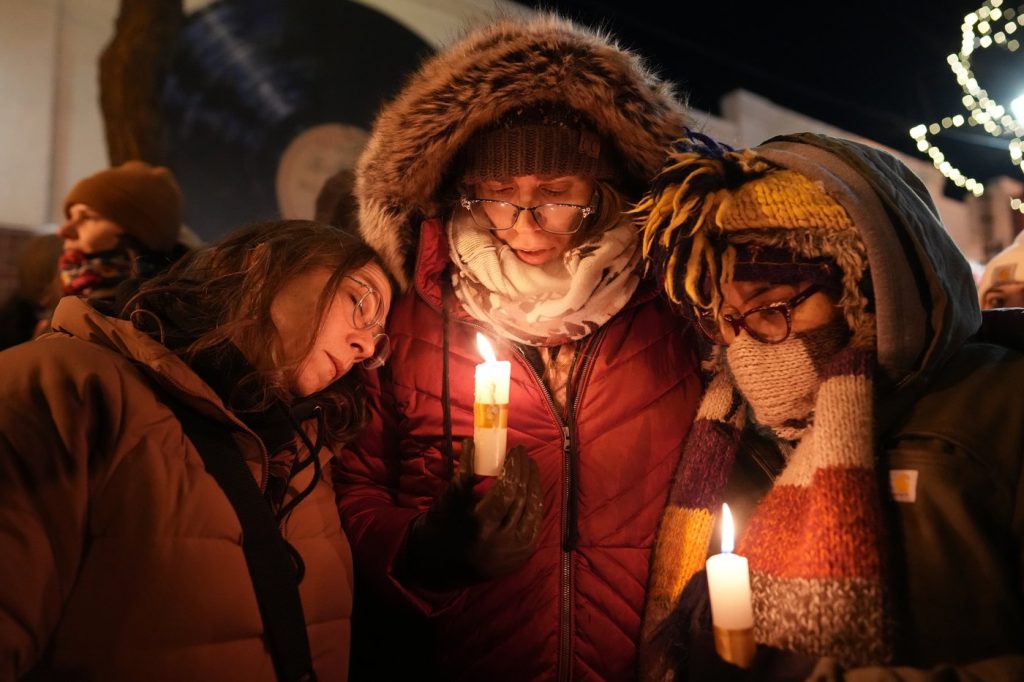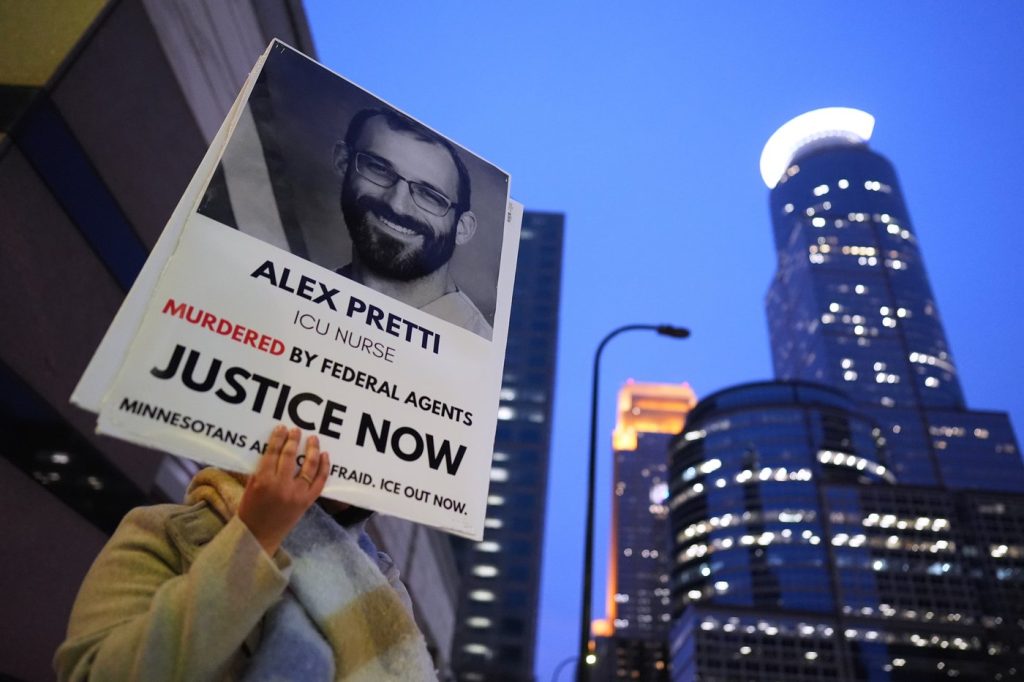
Two federal agents involved in the shooting of Alex Pretti are currently on administrative leave, which has been confirmed by U.S. Customs and Border Protection. This action is considered a standard procedure following such incidents. Pretti, a 37-year-old intensive care nurse employed at a Veterans Affairs hospital, was killed by U.S. Border Patrol officers during an encounter in Minneapolis on Saturday.
According to family members, Pretti had a history of participating in protests against the immigration policies of the Trump administration in Minneapolis. U.S. officials have stated that Pretti was armed and possessed a permit to carry a firearm. They claim that the officers fired their weapons defensively as he approached them. However, videos captured by bystanders appear to show that Pretti was not holding a weapon at the moment he was shot. This discrepancy has led to widespread outrage and has fueled further protests throughout the community.
The shockwave from Pretti's death has intensified tensions in Minneapolis, particularly in light of it being the second fatal shooting involving federal immigration agents in a short period. The event has been met with public criticism and calls for accountability from various corners of society. In response to the mounting scrutiny, President Donald Trump has indicated a willingness to alleviate tensions in the city. Nonetheless, there is skepticism about whether any substantial changes will occur, especially given the president's previous harsh rhetoric toward protests and his critical stance on local leadership.
In an apparent attempt to address the ongoing crisis, Trump made a significant leadership change by appointing his top border adviser to take charge of the immigration crackdown in Minnesota. This move was quickly followed by more conciliatory remarks toward Minnesota's Democratic governor, Tim Walz, and the mayor of Minneapolis, Jacob Frey. Following a phone call with Walz, Trump remarked that both he and the governor were "on a similar wavelength,” suggesting a newfound cooperative spirit.
Moreover, Trump described his discussion with Mayor Frey as productive, stating that “lots of progress is being made" in relation to the situation in Minneapolis. Despite this, many remain concerned that such remarks may lack the substance needed to address the underlying issues of police violence and immigration enforcement that have sparked public outcry. The cases involving federal immigration agents have ignited a broader dialogue about accountability and reform in law enforcement practices, raising questions about the future of community relations in Minneapolis and beyond.
The tragic circumstances surrounding Alex Pretti's death highlight ongoing national discussions about the intersection of immigration policy, law enforcement, and public safety. As protests continue and community members seek justice, the pressure remains on both local and federal officials to respond effectively to the concerns raised by citizens who demand accountability and systemic change.