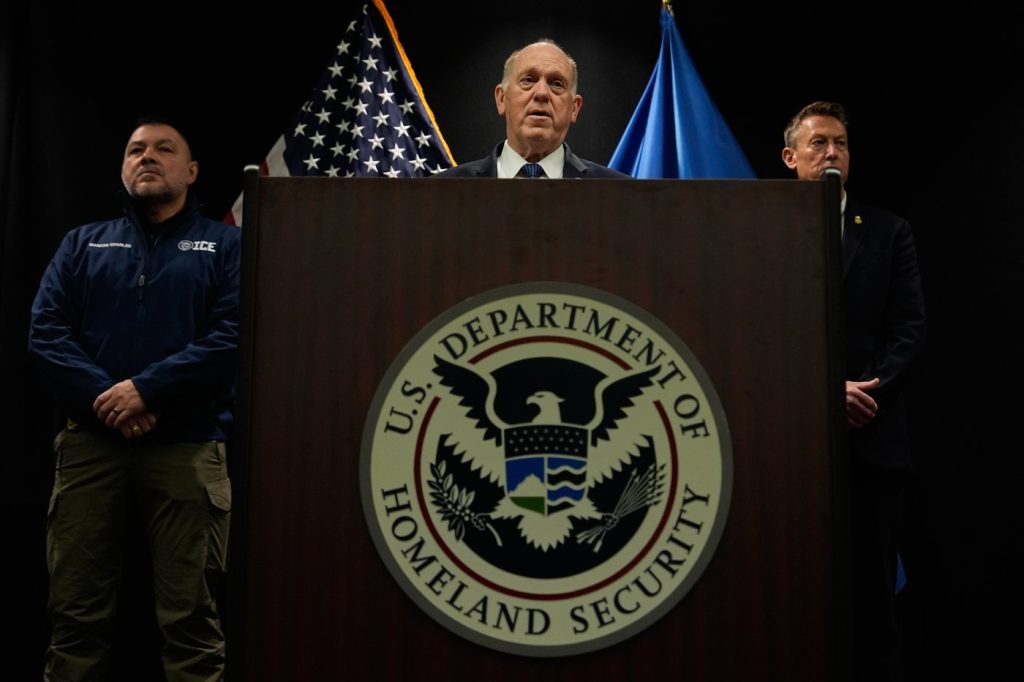
MINNEAPOLIS (AP) — In a recent press conference, Tom Homan, the Trump administration's border czar, indicated that the federal government could potentially reduce the number of immigration enforcement officers in Minnesota. This reduction, however, is contingent upon cooperation from state and local officials amid ongoing tensions surrounding federal operations in the Twin Cities. Homan emphasized his "zero tolerance" policy towards protesters who interfere with federal operations or assault officers.
Homan's remarks followed President Donald Trump's apparent willingness to ease tensions in the Minneapolis and St. Paul areas after the recent fatal shooting of protester Alex Pretti. This incident marked the second shooting of a local individual by federal officers this month. Homan refrained from discussing the details of the shootings but reiterated that the administration's immigration crackdown would continue unabated. He warned of consequences for protesters who disrupt federal officers during operations.
During the press briefing, Homan suggested the possibility of withdrawing many of the approximately 3,000 federal officers involved in the operation, linking the drawdown to the level of cooperation from local leaders and a decrease in anti-federal protests. He noted, "The drawdown is going to happen based on these agreements. But the drawdown can happen even more if the hateful rhetoric and the impediment and interference will stop."
Homan also acknowledged that there had been mistakes in the operations conducted thus far, stating, "I do not want to hear that everything that’s been done here has been perfect. Nothing’s ever perfect." He hinted at internal changes within U.S. Immigration and Customs Enforcement (ICE) to enhance operational effectiveness without providing specific details.
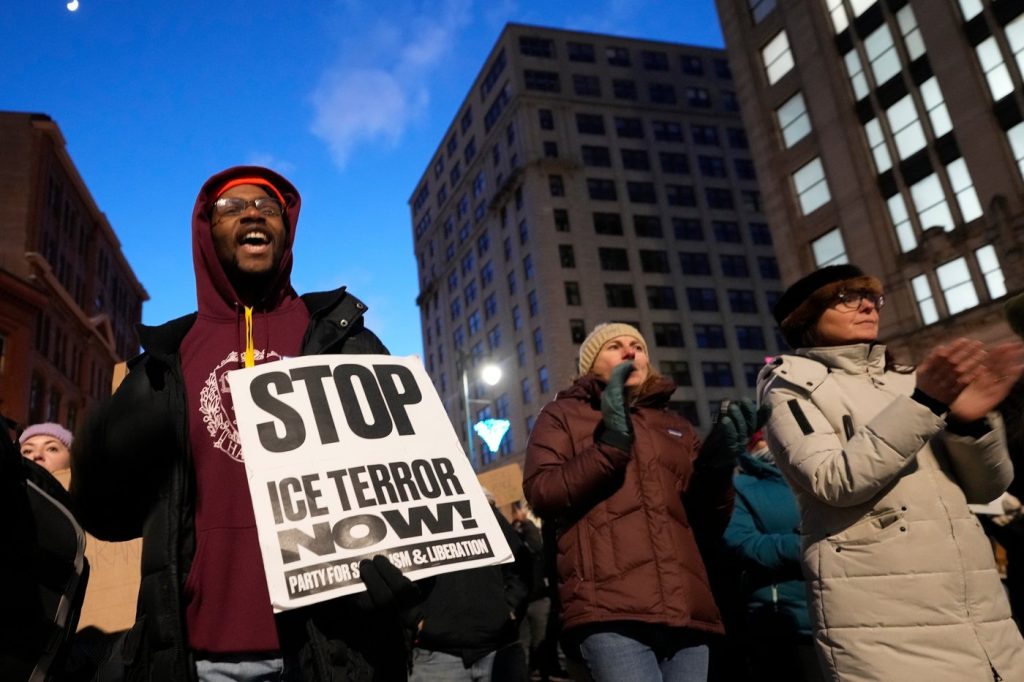
Minneapolis Mayor Jacob Frey expressed hope that federal officer presence in the city would diminish, stating that local police would conduct their duties without taking on the responsibilities of federal law enforcement officials. Despite a slight softening of Trump’s rhetoric regarding Minnesota officials, no major operational changes have been observed. On the same day as Homan's statements, protesters continued to demonstrate outside the federal facility that serves as the operation's main hub.
Alex Pretti, 37, was fatally shot during a confrontation with Border Patrol agents, following an earlier incident in which 37-year-old Renee Good was shot by an Immigration and Customs Enforcement officer while inside her car. Homan reiterated the need for local jails to notify ICE about inmates who may be deportable. He argued that transferring these inmates to ICE custody is safer and necessitates fewer officers being deployed in search of undocumented individuals.
The Trump administration has often criticized so-called sanctuary jurisdictions—state and local governments that limit cooperation with federal immigration enforcement for complicating the arrest of criminal immigrants. Homan reiterated this stance, urging local officials to grant ICE access to individuals who may pose public safety threats. However, Minnesota officials, including Paul Schnell, chief of the state Department of Corrections, contested this narrative, asserting that state prisons already honor ICE detainer requests without exception.
There is some opposition from jails within Hennepin and Ramsey Counties, which do not always cooperate with ICE unless there is a signed arrest warrant. Homan signaled a shift towards more "targeted operations," emphasizing that ICE would focus on apprehending immigrants with criminal histories to prioritize public safety. He assured that the primary mission remains capturing individuals illegally residing in the U.S. who present a threat, though he acknowledged that ICE will also apprehend others found to be undocumented.
Policy director Sameera Hafiz of the Immigrant Legal Resource Center questioned Homan's commitment to targeted operations, arguing that evidence shows deportations can destabilize communities and harm local economies rather than enhance safety. Homan did not provide a specific timeline for his stay in Minnesota, stating instead that he would remain until the situation improves, having met with various community and law enforcement leaders in pursuit of common ground.