U.S. President Donald Trump has recently renewed threats of imposing tariffs on Canada, focusing specifically on the country's aerospace manufacturing sector. In a post on his Truth Social platform, Trump expressed intentions to implement a 50 percent tariff on aircraft sold from Canada into the United States due to Canada's alleged refusal to certify Gulfstream business jets manufactured in the U.S.
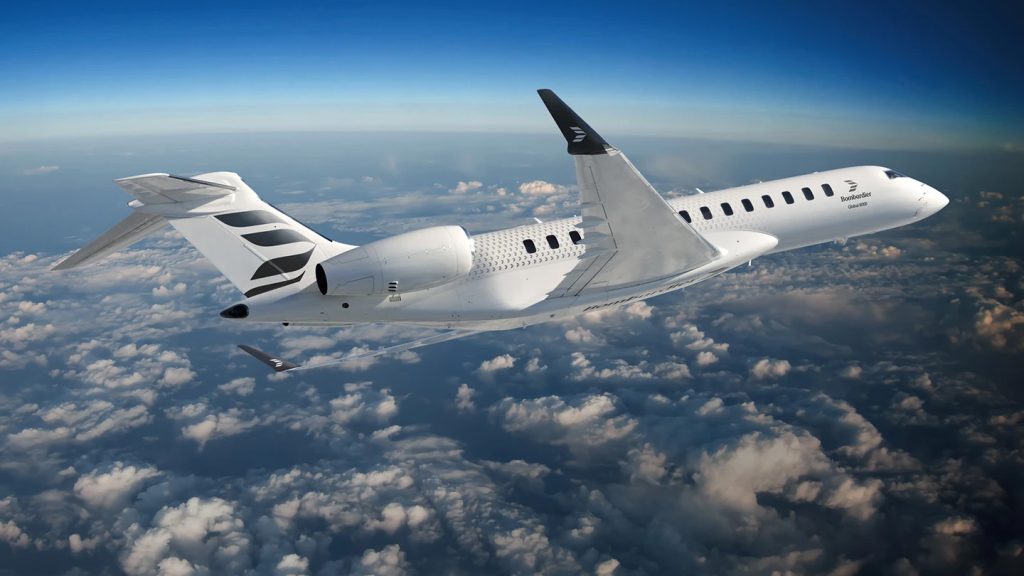
Trump claimed that Canada has "wrongfully, illegally, and steadfastly" refused to certify several Gulfstream jet models, including the Gulfstream 500, 600, 700, and 800. This lack of certification, according to Trump, is preventing the sale of these business jets in the U.S. Furthermore, he indicated that he would also decertify Bombardier Global Express business jets until Gulfstream's certification issues are resolved.
In the competitive arena of ultra-long-range business jets, Bombardier and Gulfstream are significant rivals. While Bombardier, based in Montreal, produced more planes than Gulfstream, which is located in Savannah, Georgia, it hasn't outperformed Gulfstream in revenue since 2012. In 2024, Bombardier produced eight more luxury aircraft than Gulfstream's total of 138 but fell short in sales, with Gulfstream generating US$8.3 billion compared to Bombardier's US$6.3 billion, according to a 2025 report from the General Aviation Manufacturers Association.
In response to Trump’s statements, Bombardier affirmed that its aircraft are compliant with Federal Aviation Administration (FAA) standards and emphasized its plans to expand operations in the U.S. The company noted that thousands of Canadian-built private and civilian jets operate in U.S. airspace daily and expressed hope for a swift resolution to prevent significant disruptions to air traffic and the flying public.
New Salvo in Trade War
The feasibility of Trump's threats remains uncertain. John Gradek, an aviation management professor at McGill University, emphasized that certification pertains to safety, stating that it would be unprecedented to decertify an aircraft for trade issues. He argued that certification is a vital phase in ensuring safe aircraft operations and noted that numerous Gulfstream jets have been certified in Canada for years.
Ross Aimer, CEO of Aero Consulting Experts based in California, expressed skepticism about the president's power to unilaterally revoke aircraft certifications. He pointed out that while the president can ground aircraft in extreme circumstances, such as the ban on the Boeing 737 Max 8 for safety reasons, aircraft certification processes typically involve years of meticulous regulatory work and cross-border cooperation between Canadian authorities and the FAA.
Nevertheless, it appears that Canada has not certified Gulfstream’s G500, G600, G700, or G800 jets to the same extent as the U.S. and Europe. Any potential grounding of Bombardier's approximately 1,000 Global business jets currently in service within the U.S. could significantly impact the company’s financial health. Should such decertification occur, not only could Bombardier be unable to sell additional jets, but the existing aircraft might also be rendered unable to operate in U.S. airspace.
This situation echoes previous tariffs imposed by the U.S. Commerce Department on Bombardier commercial jets in 2017, where the Canadian manufacturer was accused of selling planes below cost due to unfair government subsidies. However, the U.S. International Trade Commission eventually ruled that Bombardier did not harm the U.S. industry.
In addition to Bombardier, Canada is home to other significant aircraft manufacturers, including De Havilland Aircraft of Canada and European giant Airbus, the latter producing A220 commercial planes and helicopters in the country. Smaller U.S. operators utilizing Bombardier's Regional Jet for major airlines would also suffer from potential temporary groundings.
Canada Re-emerges as Target of Trump’s Anger
This marks the second instance within a week that Trump has directed tariff threats toward Canada. On January 20, he warned of imposing 100 percent tariffs in response to Canada's limited deal with China regarding electric vehicles and agriculture. Treasury Secretary Scott Bessent clarified that such tariffs would only be enacted if Canada pursued a free-trade agreement with China, a move Prime Minister Mark Carney has stated is not in Ottawa's plans.
Canada has become a renewed target of Trump’s ire following Carney's notable speech at the World Economic Forum (WEF) in Davos, where he called for middle powers to unite against larger nations seeking to exert economic pressure. Trump's response included a critique of Carney's lack of gratitude and the withdrawal of an invitation for Canada to join his contentious “Board of Peace.”