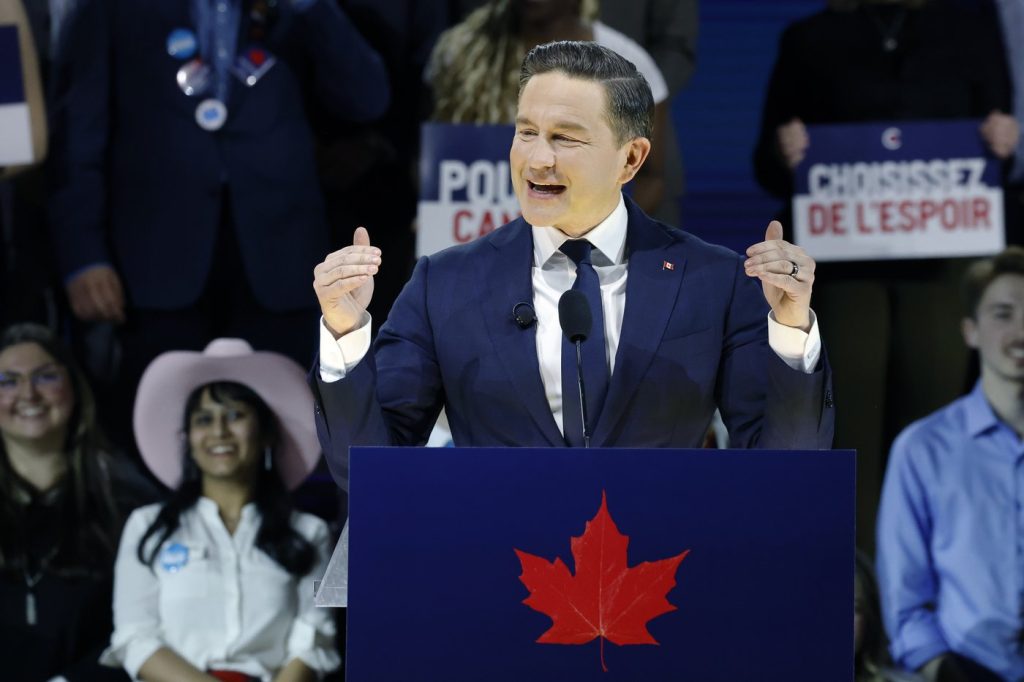
During a speech at the Conservative convention in Calgary on January 30, 2026, Conservative Leader Pierre Poilievre attributed the resurgence of separatist movements in Canada, particularly in Alberta and Quebec, to the policies of the federal Liberal government. He argued that under Liberal governance, young Canadians have been taught to view their history negatively, while simultaneously facing rising costs of living and diminishing prospects for home ownership.
Poilievre emphasized that Ottawa has undermined both Alberta's energy sector and Quebec's regional autonomy. He stated, “Liberals are in power, and just as night follows day, separatist movements are in resurgence,” addressing a full ballroom at Calgary's BMO Centre. He called for a reevaluation of the relationship between Ottawa and the provinces, suggesting a more respectful approach to provincial jurisdictions.
However, his comments were not enough to sway members of the separatist movement in Alberta. Jeffrey Rath, general counsel for Stay Free Alberta and a leader in the push for Alberta’s independence, remained firm in his conviction that their cause is not dependent on federal political changes. Rath dismissed the idea that Poilievre could influence their goal, noting, “We don’t believe that Pierre Poilievre is coming to save us.”
Rath has been actively gathering signatures for a citizen-led petition aimed at triggering an independence referendum in Alberta, describing the province's relationship with Ottawa as “toxic and abusive.” He insisted that Alberta has been consistently disrespected and exploited, claiming that Poilievre’s attempts to quell separatist sentiment are unrealistic. He mentioned that delegates approached him at the convention, expressing their support and willingness to assist in the petition effort, which requires close to 178,000 signatures to advance to a provincial vote on separation.
While Rath remains committed to the independence movement, not all political figures share his views. Cory Hogan, a Liberal MP for Calgary Confederation, argued that there is no significant rise in separatist sentiment, attributing the current attention to politicians like Poilievre who lend legitimacy to these movements. Hogan cautioned against being sidetracked by “grievance politics,” which he views as detrimental to the nation.
Scott Armstrong, a Progressive Conservative member of Nova Scotia's legislature, voiced agreement with Poilievre's perspectives, suggesting that when Ottawa's actions overreach provincial boundaries, secessionist considerations arise among provinces. However, Philippe J. Fournier, a polling analyst and founder of 338Canada, contested Poilievre’s assertion that Quebec separatism is experiencing a resurgence, stating that the sentiment has remained consistent for decades. He argued that the appeal of the Parti Québécois in polls may create a misperception of increased support for independence.
Fournier further contended that Poilievre’s claim that separatism is a direct result of Liberal governance oversimplifies the historic complexities that have always underlined the independence movements, including those under the previous Progressive Conservative administration of Brian Mulroney.
Notably, Danielle Smith, Alberta's Premier, did not address the topic of separatism in her speech at the convention. Additionally, a recent Ipsos poll indicated that 28% of Alberta residents would vote for separation, yet this figure dropped to between 15% and 16% when potential real-world consequences were factored in. This backdrop reflects the ongoing tension surrounding the issue of provincial autonomy and the future of Alberta within Canada.