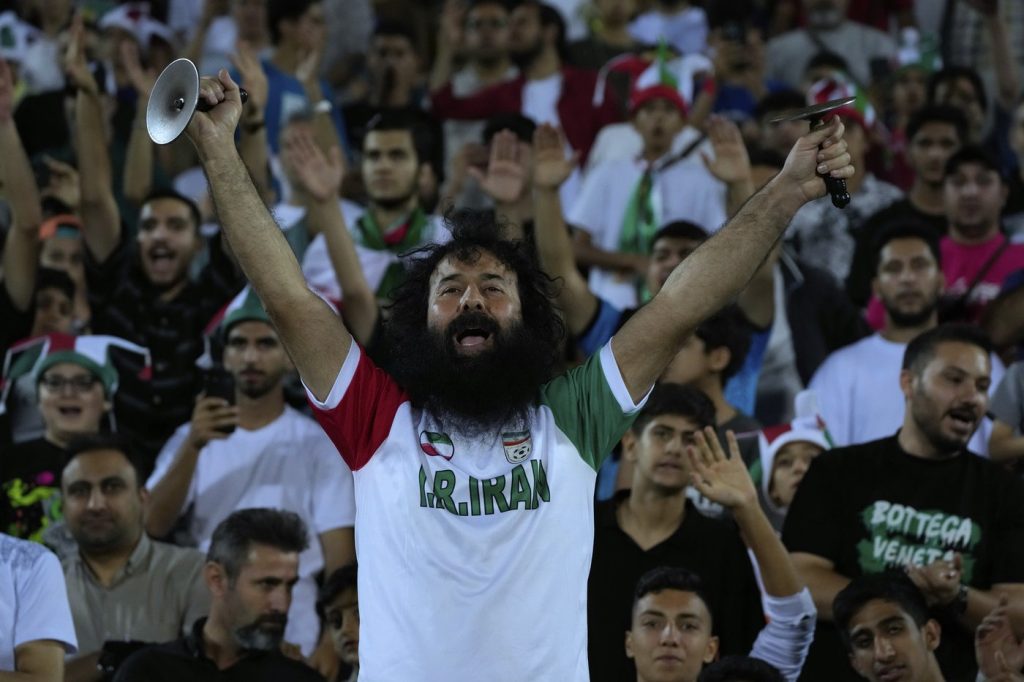
VICTORIA - Babak Shahbazi, an avid supporter of the Iranian national soccer team, has made significant journeys to countries like France, Germany, Brazil, and Russia to witness his team compete in the World Cup. Excitement surged when he learned that the 2026 FIFA Men's World Cup would be held in North America, with the potential for games to take place in Vancouver. However, much to his dismay and that of fellow fans, it was announced that Iran would play its matches in Inglewood (California) and Seattle (Washington).
Shahbazi expressed his disappointment, saying, “We were 100 percent sure that one of the games would be in Vancouver,” but it turned out to be a letdown when he discovered that the team is scheduled to play twice at SoFi Stadium in Inglewood and once at Lumen Field in Seattle. Despite the Canadian city being home to a notable population of Iranian-Canadians, the fans now face the heart-wrenching reality of having to travel to the U.S. to support their team.
The Iranian-Canadian population in Metro Vancouver is estimated to be around 45,000, although some figures suggest a higher number. Shahbazi, who is the president and founder of the Shaheen Athletic Club, stated that many within the Iranian community in Canada were eagerly looking forward to at least witnessing one of Iran's World Cup matches in Vancouver. Instead, they received unexpected news about the team's scheduled games.
Shahbazi highlighted his confusion over why Iran was scheduled to play two matches at the same stadium and expressed concerns about broader issues affecting travel between the U.S. and Iran. He pointed out that many individuals within the Iranian community are apprehensive about traveling to the U.S. to watch their favorite team due to existing visa restrictions, which are a result of longstanding political tensions. Since the Islamic Revolution of 1979, the U.S. and Iran have maintained no formal diplomatic relations, and numerous military and diplomatic incidents have arisen over the years, with the situation remaining tense.
For Iranians who have permanent residence status in Canada, entering the U.S. requires obtaining a visa, and recent political developments, including restrictions introduced by the Trump administration, have raised additional concerns. Shahbazi shared that while he holds Canadian citizenship and has commonly crossed the border without issues, many others in the Iranian community have faced refusals at the border, leading to widespread anxiety about securing tickets for the matches.
“So everybody is worried,” Shahbazi stated, emphasizing that potential attendees are hesitant to purchase tickets without reassurance that they will be able to cross the U.S. border. He expressed hope that FIFA, the governing body of soccer worldwide, would leverage its influence to urge the U.S. administration to reconsider and ease border restrictions that currently impact many Iranian-Canadians.
While Shahbazi has yet to buy tickets, he is optimistic about watching one of Iran’s matches, which include a game against Egypt in Seattle on June 26 and two matches in Greater Los Angeles: the first against New Zealand on June 15 and the second against Belgium on June 21. The uncertainty surrounding travel adds a challenging layer of complexity to the excitement of World Cup participation, leaving many fans on edge as they look forward to potential unforgettable moments with their national team.