TEHRAN, Iran (AP) – On Saturday, Iran unveiled a new pricing tier for its nationally subsidized gasoline, marking the first price adjustment since a controversial hike in 2019, which led to widespread protests and a violent crackdown that reportedly resulted in the deaths of over 300 individuals. The pricing reform aims to bring some control to the escalating fuel costs faced by the nation, which has long regarded cheap gasoline as a fundamental right.
This announcement comes amid a backdrop of economic strain due to a rapidly depreciating rial currency and stringent international sanctions linked to Iran's nuclear program. The government's cautious approach to adjusting gasoline prices appears to be influenced by the need to avoid antagonizing a fatigued public, particularly in light of the 12-day conflict initiated by Israel in June.
Residents like Saeed Mohammadi, a teacher and taxi driver, expressed their frustrations, stating, "Our discontent has no result. The government does whatever it likes. They don’t ask people if they agree or not."
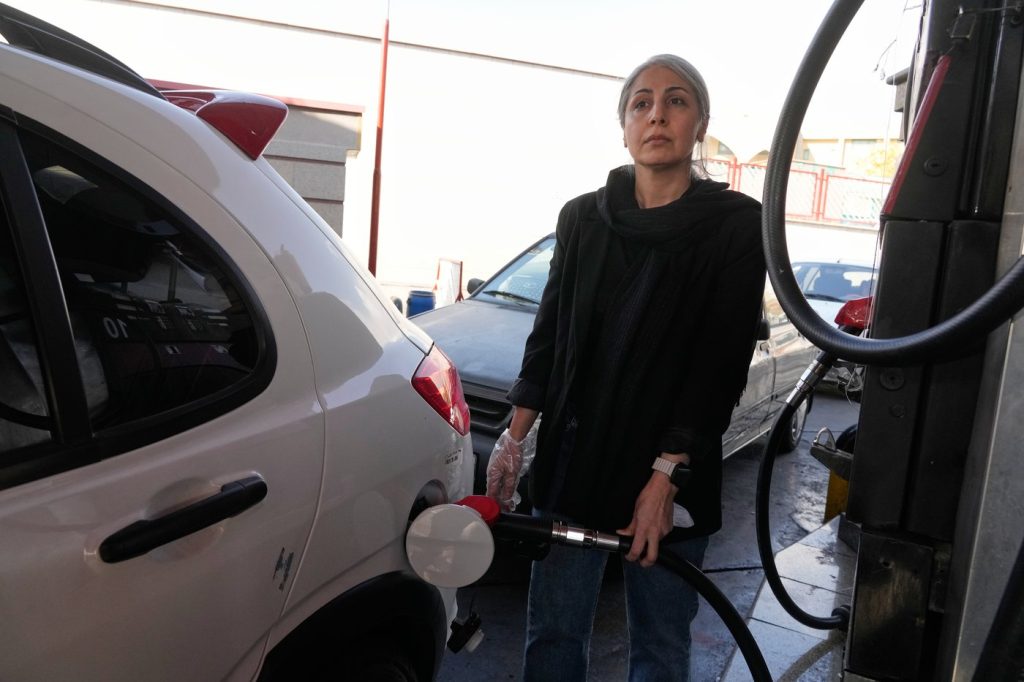
The new pricing strategy integrates a third tier into Iran’s existing fuel subsidy framework. Under this revised system, motorists can purchase up to 60 liters (15 gallons) per month at the subsidized rate of 15,000 rials per liter, approximately 1.25 U.S. cents. Following this quota, the next 100 liters (26 gallons) are priced at 30,000 rials per liter, or around 2.5 cents. Any consumption beyond this threshold will fall under the new pricing scheme of 50,000 rials per liter, equating to about 4 cents.
Despite the hike, Iranian gasoline prices remain among the lowest globally. The disparity between production and delivery costs and the subsidized price at the pump is borne by the Iranian government. According to the Paris-based International Energy Agency, Iran incurred the second-highest energy subsidy costs in the world in 2022, only behind Russia, with oil subsidies reported at $52 billion.
Since 2009, the gasoline price in Iran has reportedly surged by 15 times, suggesting an ineffective subsidy system that has contributed to ongoing inflation and budget deficits. Economist Hossein Raghfar asserted that the subsidies have failed to reduce the budget shortfall and have entrenched the economy in a cycle of inflation and deficit.
Public sentiment appears mixed, as some, like bank teller Hamid Rezapour, acknowledge that the government must raise prices to address economic needs. Rezapour noted, "It needs more money to pay for public needs. To me, it is an indirect tax, though in a messy economy, it barely works."
This price adjustment is the most significant since the severe gas price increase in 2019, which provoked protests across over 100 Iranian cities and towns. The government's response was a violent crackdown resulting in at least 321 fatalities, as reported by Amnesty International. Critics warn that even a thousand-rial increase in gasoline prices can trigger up to a 5% spike in inflation, exacerbating the current inflation rate, which stands at around 40%.
With 25 million vehicles on the road, including 3 million public and government-operated cars, the cheap gasoline has created job opportunities for many Iranians, particularly as over 8 million work as taxi drivers through rideshare platforms. This significant figure offers a stark contrast to Uber’s 8.8 million drivers and couriers worldwide.
Oil Minister Mohsen Paknejad described the new pricing as a preliminary step toward correcting fuel consumption trends. Government officials have indicated that further price adjustments may be on the table, as prices are reviewed every three months. However, skepticism remains among citizens regarding the effectiveness of future protests or reforms. Taxi driver Mohammad Reza Assadi expressed doubt, reminiscing about past protests that led to disappointment and fatigue among protesters as they returned home hopeless.