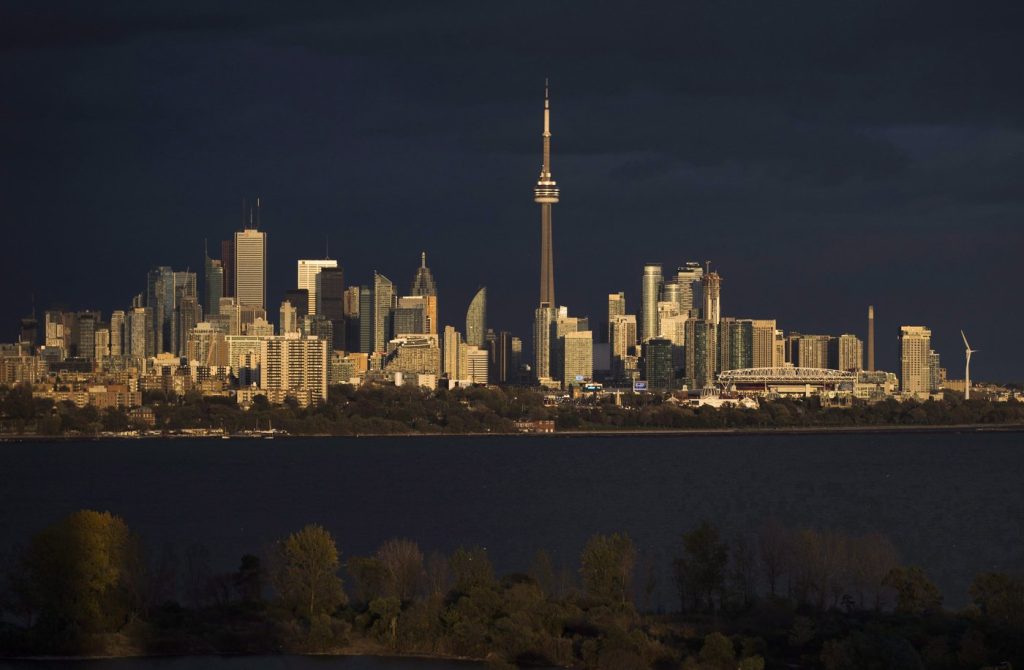
The Ford government of Ontario has announced plans to construct an underwater electricity transmission line intended to power Toronto for at least the next two decades. The proposed cable will stretch across Lake Ontario, connecting the Darlington Nuclear Generating Station, located just east of Oshawa, to the Port Lands in Toronto's east end. This new infrastructure will provide an additional 900 megawatts of power, enough to supply electricity to approximately 900,000 homes.
Minister of Energy and Mines Stephen Lecce made this significant announcement on Wednesday, emphasizing the project’s importance for the city’s infrastructure. “The land-based options don’t give us the additional capacity we’re going to need beyond 2040 and so if we want to do this once, do it right,” Lecce stated. He outlined how the underwater line, estimated to cost around $1.5 billion, while initially more expensive than building an above-ground cable, will ultimately prove to be more cost-effective due to its reliability and longevity.
Lecce further explained that the underwater cable will be designed to withstand extreme weather events, helping to prevent disruptions to the electricity supply that have previously occurred during flooding or ice storms. This initiative marks a historic moment as it will be the first time a high-voltage electricity transmission line is built underwater in Ontario.
However, the project has faced criticism from opposition figures, including the leader of the Ontario Green Party, Mike Schreiner. He argues that the government should prioritize cleaner and more affordable energy sources instead. “The Ford government is locking Ontario into high-cost electricity, which is going to continue to jack up our electricity prices,” Schreiner remarked, adding that sources such as wind, solar, and battery storage currently represent the lowest cost options for electricity generation.
Ontario’s electricity rates have been a significant concern, having surged by 29 percent in November 2023. In response to rising costs, the provincial government has been subsidizing hydro rates by 23.5 percent to alleviate financial pressure on consumers, but critics argue that this approach results in billions of taxpayer dollars being spent without addressing the underlying issues.
NDP Energy Critic and MPP Jamie West reiterated the dire need for a sustainable energy solution. “If we want to be competitive in the future, we can’t have electricity that is through the roof, and we can’t as a province continue to subsidize this forever without addressing it,” West said.
The government has set a target to complete the underwater electricity line by 2037. However, there are concerns regarding the capacity of Toronto's existing transmission lines, which are predicted to reach their limits by 2030. CEO of Toronto Hydro, Jana Mosley, was addressed about the potential power shortages in the seven-year period before the new line is operational. She expressed confidence, stating, “We’re not concerned at this point in time around the timeline. I don’t expect to see any type of brownouts here happening in the city, but we do need to move on this timeline for this third line of supply.”
The provincial government has assured that constructing the underwater line should not take longer than building an above-ground alternative. Additionally, they claim that residents living along the shoreline should not experience any disruptions during or after the construction of the line.