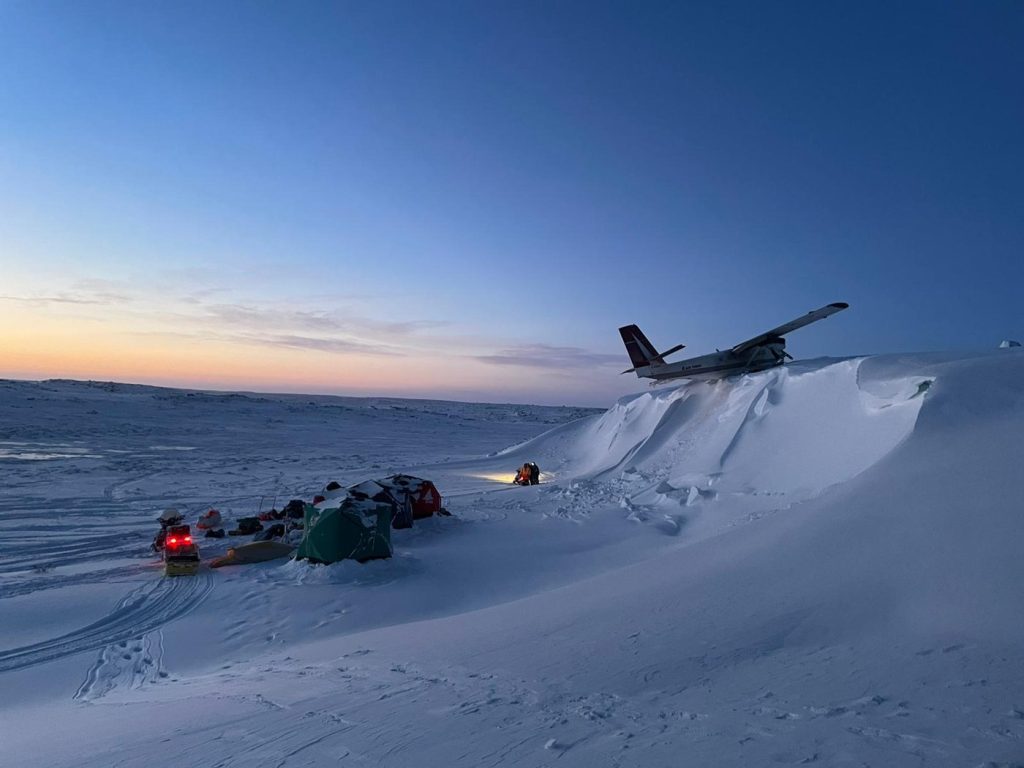
The Transportation Safety Board of Canada has released a report detailing the circumstances surrounding a plane crash near Yellowknife in December 2023, which involved a DHC-6 Twin Otter aircraft operated by Air Tindi. The report highlights that poor weather conditions and a disabled terrain awareness warning system contributed to the incident, necessitating a dramatic military rescue during a blizzard.
The plane had departed from the capital of the Northwest Territories, Yellowknife, heading towards two diamond mines north of the city. Following a stop at one of the mines, the crew faced increasingly deteriorating weather that required them to make several attempts to identify a suitable landing spot near the second mine. On its final descent, the aircraft struck a hill, just moments before the pilot was able to see the obstacle.
Miraculously, there were no fatalities among the ten individuals onboard—eight passengers and two crew members. However, the survivors were stranded for several hours in the cold with insufficient supplies. Two passengers incurred serious injuries and were unable to exit the aircraft. According to the report, the pilot and other survivors used a hatchet strap to tie the plane's nose to a rock to prevent it from sliding down the hill. Engine covers were repurposed to seal the doors of the plane, aiming to retain warmth, while a candle from the emergency kit was ignited, albeit with little effect. Additionally, a six-person tent was set up using materials from the kit, and there was some food available for the stranded individuals.
The survivors were eventually airlifted out the following day. The report indicates that the aircraft's low speed and the strong headwind it encountered were critical factors that contributed to the survival of those aboard. It noted that pilots often disabled the terrain awareness warning system, viewing it as more of a distraction than a benefit. The system was ill-equipped to detect unofficial or makeshift landing strips like those at the remote mine camps, often leading pilots to rely on visual cues for landing. As conditions continued to worsen, the flight crew switched to using an electronic mapping system to navigate.
The report pointed out a prevalent culture among Air Tindi pilots, who prided themselves on their ability to fly in challenging environments, often allowing them to deviate from established safety procedures. Less experienced first officers tended to defer to the decisions of their more experienced counterparts, harboring a belief that this was the customary approach in northern aviation. The highly experienced pilot involved in this incident was noted to have developed an altered perception of risk over time, leading to an increased willingness to accept risky weather conditions.
In light of the incident, Air Tindi President Chris Reynolds expressed that the company has worked diligently over the past two years to shift its workplace culture, promoting risk management over mere operational completion. He emphasized the importance of channeling experience into a systematic risk-based decision-making process rather than solely focusing on accomplishing flights in adverse conditions. To reinforce this cultural change, the company has introduced additional decision-making layers for determining the viability of flights in rough weather and has created new risk assessment tools for pilots and dispatchers.
Investment in the fleet has also been made, including upgrading technology to replace the outdated terrain warning system. The report criticized the survival equipment available on Air Tindi flights, deeming it inadequate for the conditions encountered during the crash. The lack of insulated tarps for shelter was particularly notable given that the crash took place north of the treeline, where little natural infrastructure was available to anchor the tarps.
A military search-and-rescue plane had been dispatched from Winnipeg and reached the crash site six hours after a distress signal was sent. The blizzard conditions and darkness delayed the rescuers from spotting the wreck for nearly an hour. The rescue team deployed parachutes just as a volunteer crew from a nearby mine arrived via snowmobile. Upon arrival, heated shelters were established below the hill, allowing all individuals present at the crash site to spend the night in safety. The following morning, helicopters were sent to transport them to the mine camp, with the injured being taken to a hospital in Yellowknife for treatment.