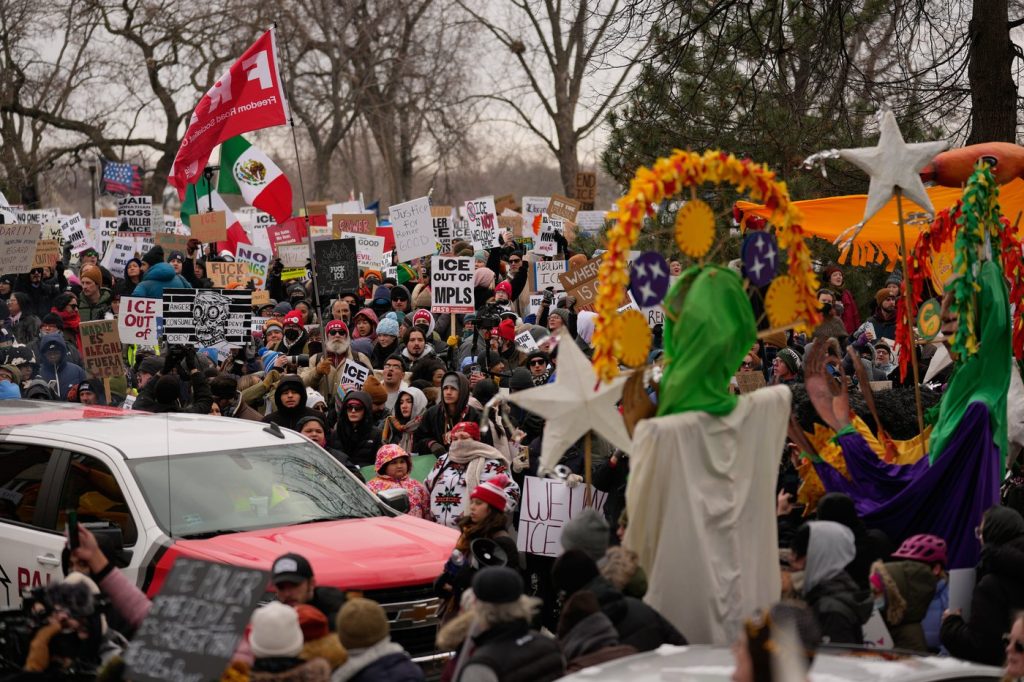
MINNEAPOLIS (AP) — Thousands gathered in Minneapolis on Saturday to protest the fatal shooting of 37-year-old Renee Good by a federal Immigration and Customs Enforcement (ICE) officer. The demonstration was part of a series of protests occurring nationwide over the weekend, responding to heightened tensions regarding immigration enforcement. Minnesota leaders encouraged participants to keep the protests peaceful, especially in light of recent violence during a previous demonstration that resulted in injuries and citations.
The protest in Minneapolis took place against a backdrop of fear among community members following Good's death, which occurred earlier that week. Many protesters voiced their concerns about the aggressive actions of ICE, with demonstrators like Meghan Moore articulating feelings of unsafety created by these federal immigration efforts. "ICE is creating an environment where nobody feels safe and that’s unacceptable," she stated.
On the night before the main protest, another gathering outside a hotel escalated into violence, with demonstrators throwing items at police, leading to minor injuries for an officer. Minneapolis Mayor Jacob Frey condemned these actions while noting that, although most protests remain peaceful, those who engage in property damage will face arrest. He attributed the provocations to "agitators," suggesting they played into the hands of political figures like President Donald Trump who advocate for strict immigration enforcement.
Minnesota Governor Tim Walz echoed Frey's sentiments, warning that the actions taken by federal officers under Trump have already led to tragic consequences. He urged demonstrators not to fall into chaos, looking to advocate for change via peaceful means. The heightened presence of ICE agents in the Twin Cities was described as the largest immigration operation in the area, tied to allegations concerning fraudulent activities among Somali residents.
Despite the significant public outcry, federal officers continued their enforcement activities in Minneapolis, as documented by Associated Press photographers observing armed officers. These actions included detaining individuals and warning journalists to maintain distance as they conducted their operations. The police noted that ICE activities were widespread, with community members alerting them about various incidents involving immigration enforcement.
Across the country, protesters united in frustration over ICE actions, with a coalition of migrant rights groups organizing the Minneapolis demonstration. Observers noted that the event remained largely peaceful but was juxtaposed with substantial federal enforcement efforts just miles away. In surrounding areas, some confrontations arose between smaller groups of protesters and law enforcement, contrasting with the relative calm observed during previous protests against police violence, such as those following George Floyd's death in 2020.
Congressional representatives from Minnesota also attempted to tour the ICE facility in Minneapolis but were thwarted by agents who cited a lack of permission for their visit. U.S. Representatives Ilhan Omar, Kelly Morrison, and Angie Craig accused ICE of obstructing their oversight responsibilities, reflecting ongoing tensions between lawmakers and immigration enforcement agencies.
The protests highlight a broader nationwide response to immigration policy and enforcement, particularly under the Trump administration, which has faced scrutiny and opposition from various communities and lawmakers. With numerous protests scheduled throughout the country, the movement signals a deep-seated frustration with federal immigration practices and the impacts they have on local communities.