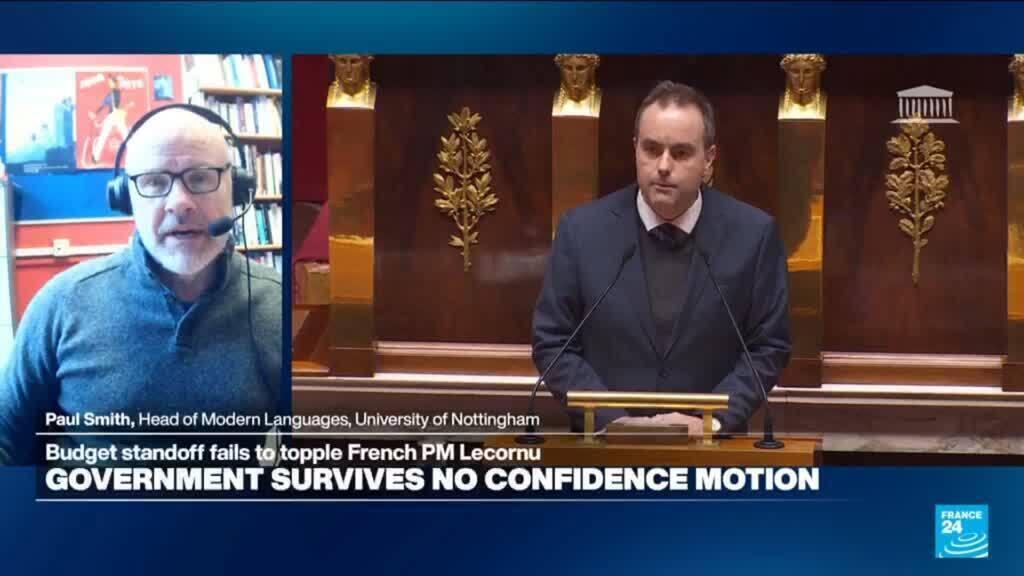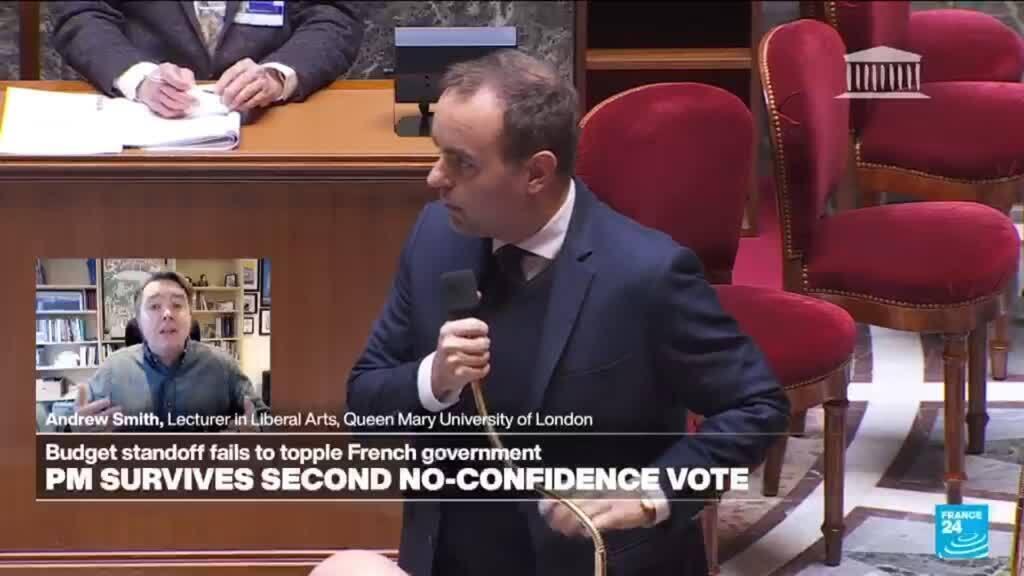
Catherine Viette recently hosted Dr. Andrew Smith, a historian specializing in Modern France at Queen Mary University of London, to discuss the implications of the French Prime Minister's recent invocation of Article 49.3. This article has been a focal point in France's political landscape, allowing the government to push through legislation, including crucial budgetary measures, without a parliamentary vote. In the current context of political gridlock and economic uncertainty, Dr. Smith provided an analysis of this maneuver, characterizing it as a "negotiated 49.3."
Dr. Smith's perspective highlights the tactical nature of the invocation. He elucidated that this approach entailed elements of both compromise and constraint, reflecting the complexities of navigating a fractured parliament. The invocation of Article 49.3 often symbolizes a government’s struggle to maintain control over legislative processes amidst a fragmented political environment. This current situation underscores a broader issue: the structural paralysis evident within the French parliament, where partisan divisions have significantly hampered productive governance.
Furthermore, Dr. Smith emphasized the symbolic power of budgetary control within the French political framework. The government's ability to enforce its budget without full parliamentary approval is not merely a procedural tactic but also a statement of authority and governance stability. In a nation where fiscal credibility is paramount, especially on the European stage, such steps taken by the Prime Minister can have profound implications. The manner in which budgetary control is exerted reflects on France’s position within the European Union and its ability to navigate economic challenges collaboratively.
In discussing the broader implications of such actions, Dr. Smith pointed to the potential risks associated with undermining parliamentary authority. By circumventing typical legislative processes, there could be a backlash that diminishes trust in governmental institutions. This erosion of trust could exacerbate public dissatisfaction and fuel further divisions within an already polarized political climate. Given the significance of maintaining fiscal discipline and credibility, the challenge remains for the government to balance assertive action with the imperative of inclusive governance.
Moreover, Dr. Smith suggested that the invocation of Article 49.3 raises questions about the future of French governance. What does it mean for a democracy when a government opts for circumventing parliamentary debate? The very essence of democratic engagement may be compromised if such practices become routine. As France grapples with pressing economic issues and social unrest, the choices made by its leaders in these critical junctures will likely have lasting repercussions on the political landscape.
Overall, Dr. Smith's insights paint a nuanced picture of contemporary French politics. The intersection of tactical governance and parliamentary dysfunction highlights not only immediate challenges but also raises important questions about democratic resilience in France. As the implications of the Prime Minister's decisions unfold, the relationship between executive power and legislative oversight remains a pivotal theme in the discourse surrounding France’s political future.