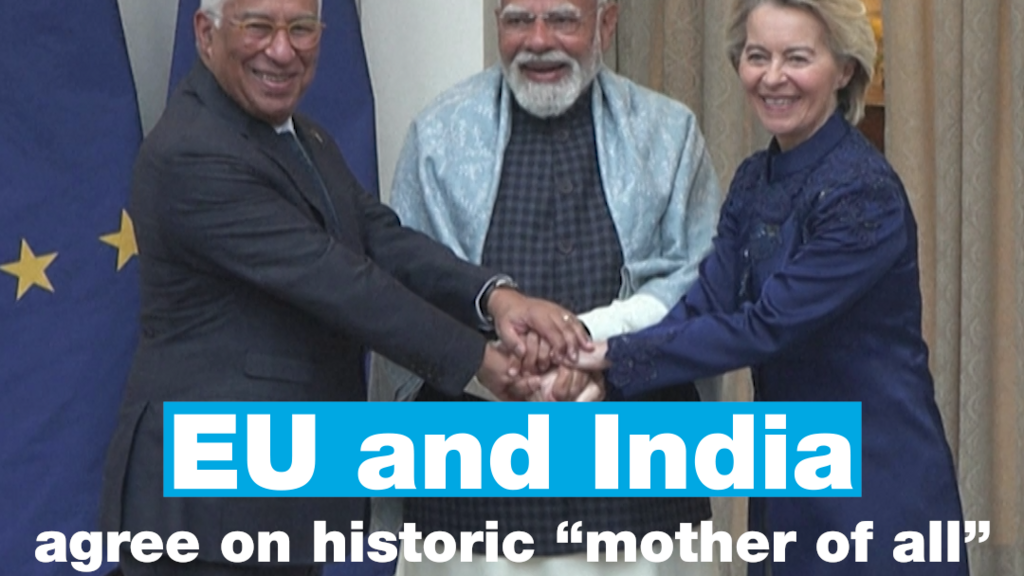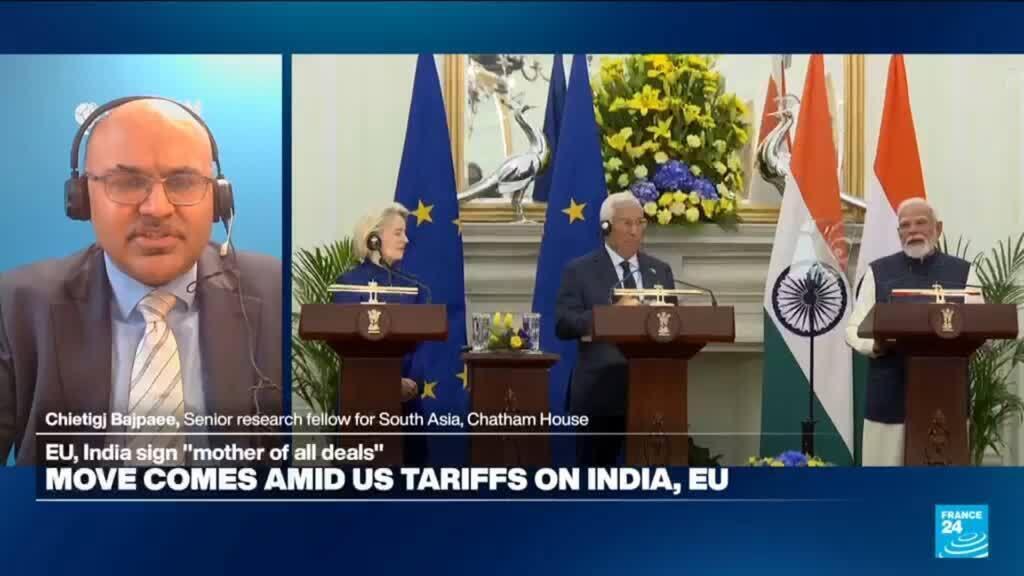
Delano D'Souza recently welcomed Dr. Chietigj Bajpaee, a Senior Research Fellow for South Asia in the Asia-Pacific Programme at Chatham House, to discuss the significant EU-India trade agreement. This deal, which took 15 years of negotiations to finalize, marks a major geopolitical and economic milestone for both regions. The agreement aims to enhance economic collaboration by reducing tariffs on a wide range of goods, deepening ties between India and the European Union (EU), and broadening the scope of cooperation beyond traditional trade to include mobility and technology.
One of the most noteworthy aspects of this trade deal is its comprehensive nature. It seeks to not only address existing trade barriers but also to facilitate a more integrated economic relationship that extends to various sectors. By reducing tariffs, the agreement promises to boost trade flow, benefitting both the EU and India by providing consumers with a wider array of products at potentially lower prices. However, it is essential to note that while the agreement is ambitious, it strategically excludes politically sensitive sectors such as agriculture, which could have complicated negotiations.
As the discussion unfolded, Dr. Bajpaee highlighted the broader context of the trade agreement, particularly the underlying geopolitical tensions that continue to influence international relations. One of the most significant factors at play is India's longstanding relationship with Russia, which casts a shadow over its partnership with the EU. As global economic competition intensifies, the EU-India trade deal emerges as a response to new geopolitical challenges, positioning both parties against a backdrop of evolving alliances and shifting power dynamics.
The agreement not only reflects the ambitions of both India and the EU to foster a more robust economic partnership but also serves as a strategic maneuver in the context of rising competition from other global powers. As countries reassess their trade relationships and alliances, the EU-India agreement can be seen as a proactive approach to securing economic interests in an increasingly complex geopolitical landscape. The deepening of ties between these two regions is a testament to their shared recognition of the importance of collaboration in the face of challenges posed by rivals.
In conclusion, the recent EU-India trade deal represents a significant step forward in economic diplomacy for both parties. While it opens new avenues for trade and cooperation, it also highlights the intricate interplay of politics and economics on the global stage. As India and the EU navigate this newly established framework, the potential for enhanced collaboration will be closely monitored as it evolves in response to ongoing geopolitical developments and economic realities.