Dr. Raz Segal Reflects on Holocaust Remembrance and Modern Responses to Genocide
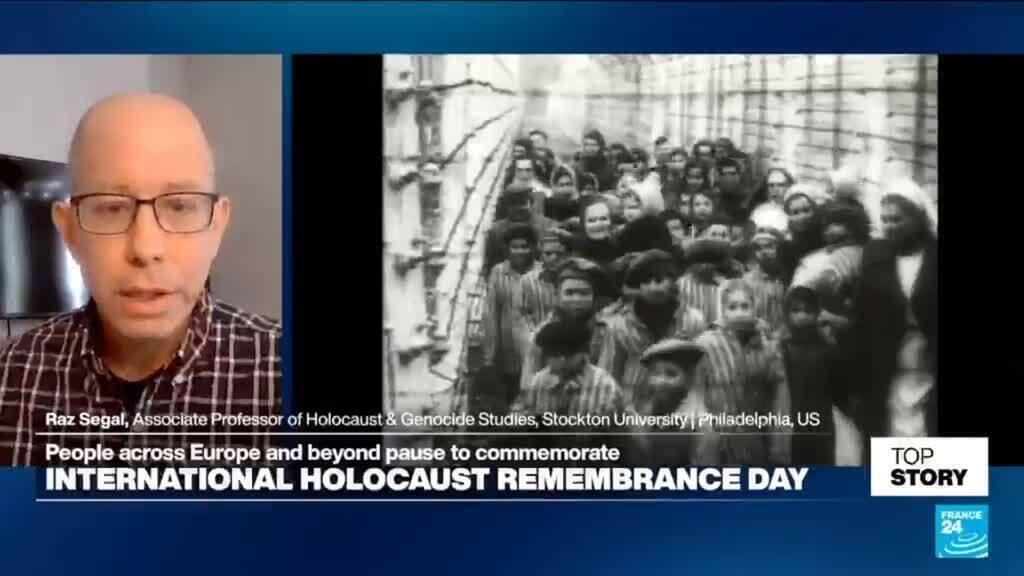
Mark Owen recently welcomed Dr. Raz Segal, the Program Director and Associate Professor of Holocaust and Genocide Studies at Stockton University, for a significant discourse on International Holocaust Remembrance Day. Dr. Segal provided a critical examination of how society remembers the Holocaust today, emphasizing the implications of this memory on our ability to recognize and address instances of mass violence and genocide in contemporary settings.
Dr. Segal's reflections shed light on the evolving nature of Holocaust remembrance, challenging conventional narratives that often dictate the understanding of the Holocaust's lessons. He posits that the dialogues surrounding memory and lessons derived from the Holocaust are not as straightforward as they may seem. This perspective underscores a vital concern: the methods by which state institutions engage with the history of the Holocaust often reflect the interests of the states themselves rather than the protections needed for individuals especially vulnerable to state-sponsored violence.
In his address, Dr. Segal articulates that the act of remembering the Holocaust is intertwined with the narrative strategies employed by various state institutions. These narratives, he argues, frequently serve to bolster national identity or political objectives, which can overshadow the fundamental lessons that should be drawn regarding the rights and protections of individuals. He compellingly underscores the idea that rather than safeguarding those targeted by the state, institutional frameworks often perpetuate a cycle where political interests take precedence over human rights.
Moreover, Dr. Segal engages with the complex relationship between memory and the recognition of current genocides. By critiquing the notion of 'lessons learned' from the Holocaust, he addresses the shortcomings in the response mechanisms to contemporary cases of mass violence. This critique raises the alarm about the complacency within societal responses to genocide, suggesting that past horrors are often remembered in a way that fails to incite meaningful action or substantive change in present-day policies and humanitarian efforts.
The discourse also touches on the broader implications of collective memory in the shaping of societal attitudes towards ongoing injustices. Dr. Segal argues that the blanket application of lessons from the Holocaust can create a false sense of security, implying that societies have adequately learned from history, when in reality, failures persist in preventing future atrocities. This lack of critical engagement with the past can lead societies to neglect the urgent needs of communities facing persecution today.
In his critical examination, Dr. Segal invites us to reflect on how we can create a more responsible and engaged remembrance of the Holocaust. He urges that acknowledging the complexities surrounding memory and institutional narratives is essential in fostering a proactive approach against genocide and mass violence. This approach requires a genuine commitment to human rights and a vigilant stance against any form of state-sponsored abuse.
Ultimately, Dr. Segal's insights serve as a powerful reminder that our collective memory of the Holocaust must not only serve as a historical reflection but also inspire tangible actions towards protecting vulnerable populations in today's world. The challenge lies in transforming remembrance into a dynamic force that galvanizes society towards empathy, awareness, and active resistance against injustices.