OTTAWA — Canadian companies are facing significant backlash due to their connections with U.S. Immigration and Customs Enforcement (ICE), particularly amid U.S. President Donald Trump's mass deportation efforts targeting immigrants. Specifically, companies like the Canadian defense manufacturer Roshel, alongside Vancouver-based Hootsuite and the Jim Pattison Group, are under intense scrutiny as public concern intensifies following recent violent incidents involving federal agents in Minnesota.
Pattison Group's Involvement
One of the points of contention is the planned acquisition of a facility in Virginia owned by the Jim Pattison Group. The U.S. Department of Homeland Security (DHS) intends to utilize the property as an ICE "processing facility." In a letter sent to the Hanover County planning department on January 27, 2026, the DHS stated its intentions to "purchase, occupy and rehabilitate" the warehouse, which would involve significant modifications, such as construction and security upgrades.
Hanover County officials disclosed that they had been informed by Homeland Security of the project and were afforded a 30-day window to respond. Subsequent discussions at the county's board of supervisors meeting will revolve around legal advice regarding zoning laws related to "federal government uses." In response to the controversial project, Emily Lowan, leader of the Green Party of B.C., called for a boycott of Jimmy Pattison's businesses.
There is widespread concern among local residents that the establishment of the facility might lead to an increase in local immigration enforcement activities and repression of protests.
Hootsuite's Contract with DHS
Another Vancouver-based company, Hootsuite, has been identified as providing social media management services to the Department of Homeland Security. Documentation from U.S. procurement records indicates that Hootsuite's technology is being used, facilitating a contract worth up to $2.8 million. However, the specifics surrounding the relationship between Hootsuite and New York-based Seneca Strategic Partners, which holds the contract, remain unclear.
In light of potential protests, a demonstration is planned outside Hootsuite's Vancouver headquarters by a group called Democracy Rising, advocating for the cancellation of the company's contracts and a public apology. Hootsuite CEO Irina Novoselsky responded to the criticism by expressing concern over the current situation and emphasizing that Hootsuite's work with ICE does not involve tracking or surveillance of individuals, which is against their terms of service.
Roshel's Vehicle Contracts
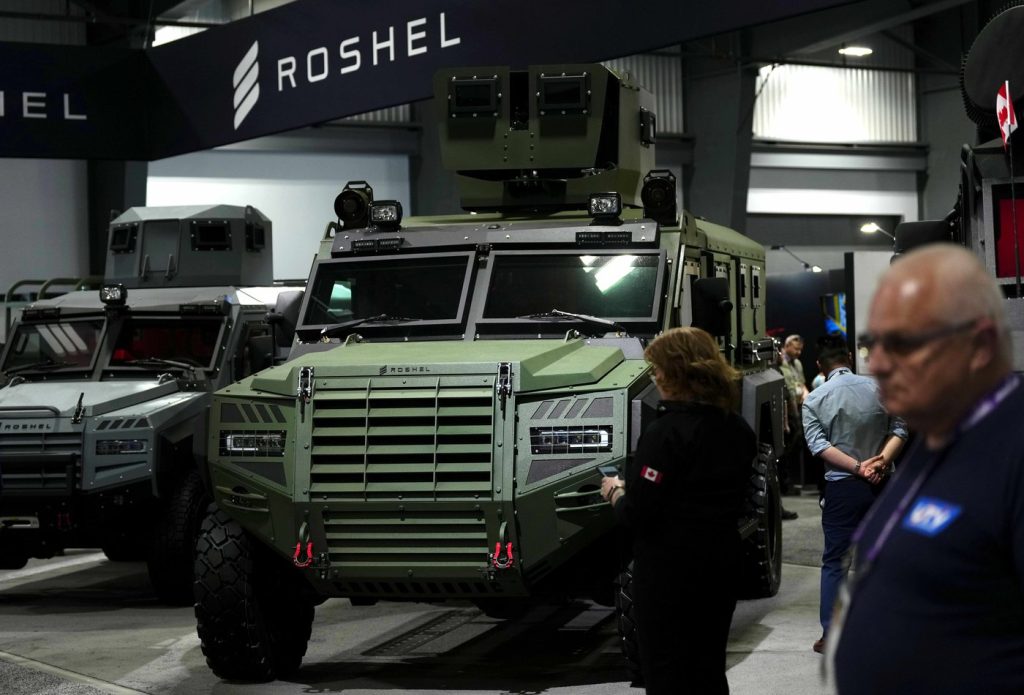
Moreover, ICE has reportedly earmarked millions for a large order of 20 armored vehicles from the Canadian defense firm Roshel. This decision has sparked backlash from arms control advocates and Canadian politicians who condemn ICE's alleged human rights abuses. Although ICE claims that these vehicles are compliant with Buy American provisions—asserting they are made in the U.S.—Roshel has manufacturing facilities in Ontario and recently opened a new facility in Michigan.
The Arms Embargo Now Coalition has circulated videos supposedly depicting Roshel vehicles at a site in Minneapolis, where federal agents were involved in a shooting incident. While the Canadian Press has yet to confirm the authenticity of these visuals, Global Affairs Canada has refrained from commenting on the issue, redirecting inquiries to ICE and Roshel.
Political Reactions and Community Concerns
Public Safety Minister Gary Anandasangaree remarked on the situation by suggesting that Canadian companies need to defend their own decisions when it comes to contracts with entities such as ICE. Furthermore, B.C. Attorney General Niki Sharma condemned the escalating violence and urged companies to reflect critically on their partnerships with ICE. Sharma expressed horror over the unfolding events in the United States and emphasized the moral responsibility of business leaders to consider the consequences of their engagements.
Marketing expert Stephen McGill echoed these sentiments, noting that when companies are linked to controversial activities, their apparent silence might be interpreted as complicity. He advocated for transparency and accountability, emphasizing the importance of acknowledging community concerns and adapting business practices accordingly.