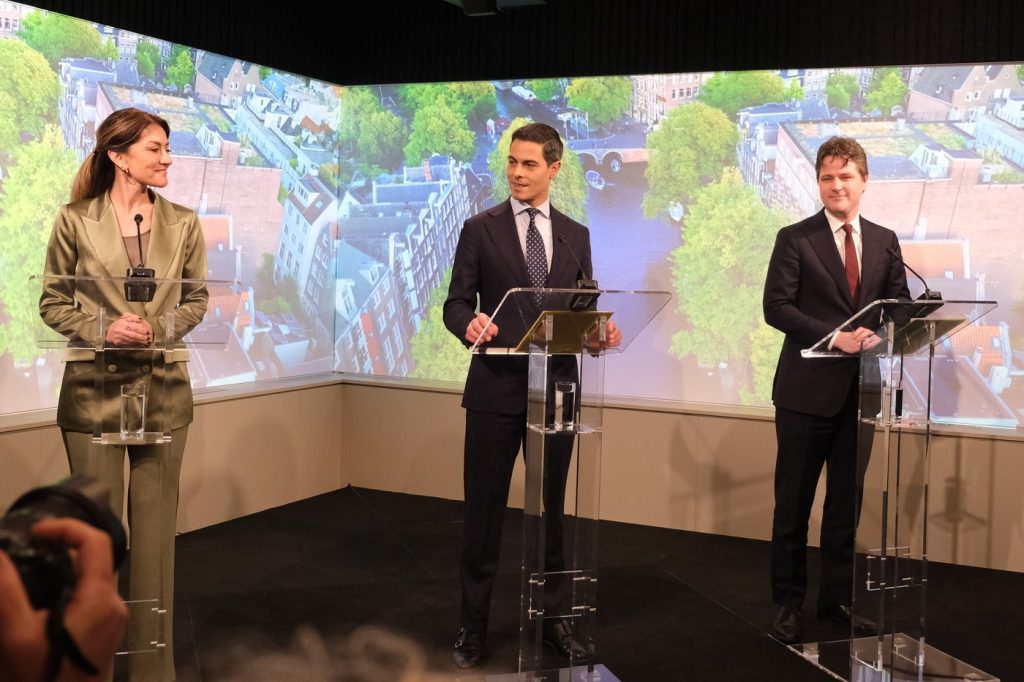
The political landscape in the Netherlands is witnessing significant changes as Rob Jetten, the leader of the centrist D66 party, is poised to become the country's next prime minister. Jetten expressed concerns about U.S. President Donald Trump's territorial ambitions in Greenland, emphasizing that these tensions serve as a "wake-up call" for Europe during a precarious time. He articulated the necessity of stronger European cooperation to ensure the security and prosperity of European citizens rather than relying heavily on the United States.
In an interview with The Associated Press, Jetten stated, "We can continue talking and complaining about the U.S., but what we should do instead is make sure that the European cooperation is strengthened." Once he assumes office, one of his initial priorities will be to engage with his European colleagues to explore how the Netherlands can contribute to fostering greater European cohesion.
Despite his focus on enhancing European collaboration, Jetten emphasized the importance of maintaining robust relations with Washington, especially regarding security matters, the ongoing war in Ukraine, and economic ties, which are deeply intertwined between the Dutch and American economies. Jetten's remarks came in the aftermath of Trump's fluctuating stance on tariffs, which he had threatened to impose on several European nations, including the Netherlands, over the issue of Greenland.
Jetten's coalition government is composed of his D66 party, alongside two right-leaning partners, the Christian Democrats and the People’s Party for Freedom and Democracy. This minority coalition emerged following the elections held three months prior, where Jetten’s party narrowly secured victory. The coalition holds only 66 out of 150 seats in the Dutch parliament, necessitating broad support across a fragmented political landscape with 16 different parties represented in the lower house.
Addressing the ambitious task ahead, Jetten remarked, "The task before us is enormous, but the Netherlands has become great through collaboration." He is set to become the youngest and first openly gay prime minister in the nation's history when he and his Cabinet ministers are sworn in, likely in late February. His leadership is already met with responses from other political factions, including Jesse Klaver, leader of the center-left Green Left-Labor Party, who characterized the minority coalition as a "risky experiment." Klaver indicated a willingness to engage in constructive opposition, contingent upon the coalition adopting more socially and environmentally conscious policies.
On the other hand, the far-right Party for Freedom, led by Geert Wilders, has pledged not to support the coalition. Recently, Wilders faced internal dissent, leading to a split where seven of his lawmakers departed to form a new bloc in parliament, further complicating the political dynamics as Jetten prepares to govern. As the Netherlands gears up for a new political chapter, the coalition aims to navigate partnerships both domestically and internationally to address pressing issues, including bolstering the military and providing continued support for Ukraine amidst the ongoing conflict instigated by Russia.
Jetten's leadership marks a pivotal moment in Dutch politics, with the country balancing its historical collaborations and contemporary challenges. The upcoming months will likely be crucial in shaping the Netherlands' domestic and foreign policy direction.