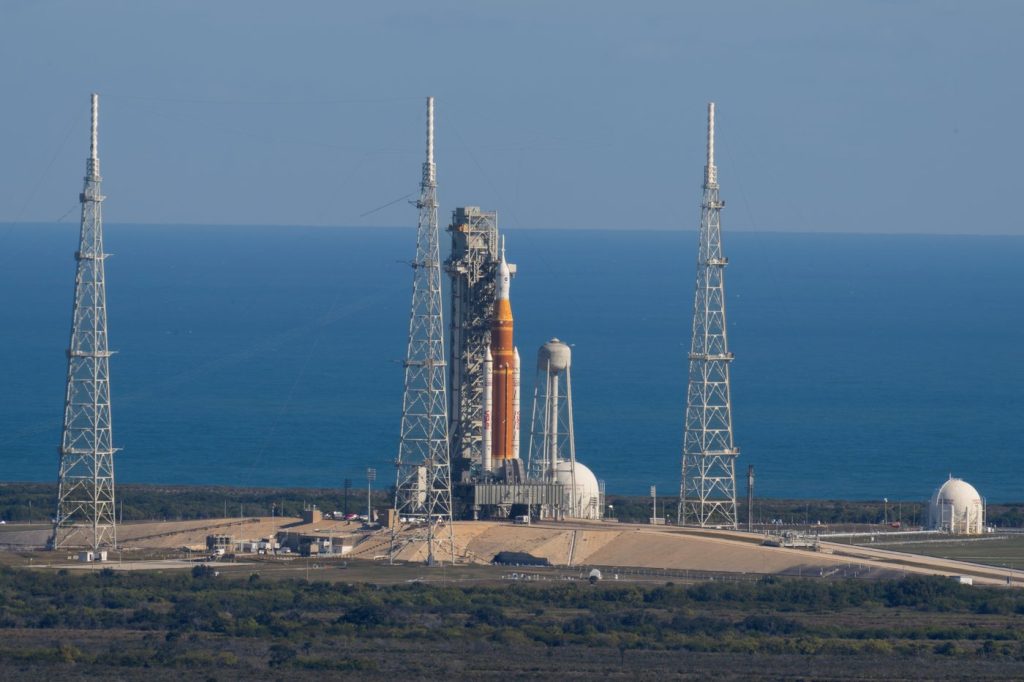
CAPE CANAVERAL, Fla. (AP) — NASA initiated a two-day practice countdown on Saturday as a precursor to the fueling of its new moon rocket, a pivotal test that will influence the timeline for when four astronauts are scheduled to embark on a lunar flyby mission. This test is a crucial component in determining the readiness of the Space Launch System (SLS) rocket for its upcoming journey to the Moon.
Commander Reid Wiseman, along with his crew, is currently in quarantine as a preventive measure against germs, ensuring their health before the historic mission. They are set to become the first humans to launch towards the Moon since 1972. While the astronauts are closely monitoring the dress rehearsal from their base in Houston, they are prepared to travel to Kennedy Space Center once the rocket receives clearance for flight.
The Space Launch System rocket, standing at an impressive 322 feet (98 meters), was moved to the launch pad two weeks ago. Immediately following the fueling test, which is slated for Monday, NASA may attempt to launch the mission within a week—potentially the earliest launch date being February 8. This significant operation involves filling the rocket's fuel tank with over 700,000 gallons of super-cold propellant, ceasing the procedure just 30 seconds before the moment the engines would ignite.
The fueling demonstration experienced a delay of two days due to an unexpected cold snap, affecting both the demonstration and the scheduled launch date. This delay underscores the challenges faced in launching such a complex mission that requires meticulous planning and execution.
Once the SLS rocket is prepared for flight, the crew will ride in the Orion capsule situated atop the vehicle. Their mission will entail a journey around the Moon, followed by a direct return to Earth, concluding with a splashdown in the Pacific Ocean. The entire mission is expected to last nearly 10 days and represents a significant advancement in NASA's objectives for deep space exploration.
The upcoming mission marks a historical moment, as NASA previously sent 24 astronauts to the Moon during the Apollo program, which took place from 1968 until 1972. Out of these astronauts, twelve had the opportunity to walk on the lunar surface. The Artemis program, of which this mission is a part, aims to build on this legacy by paving the way for future lunar exploration and establishing a sustainable human presence on the Moon.