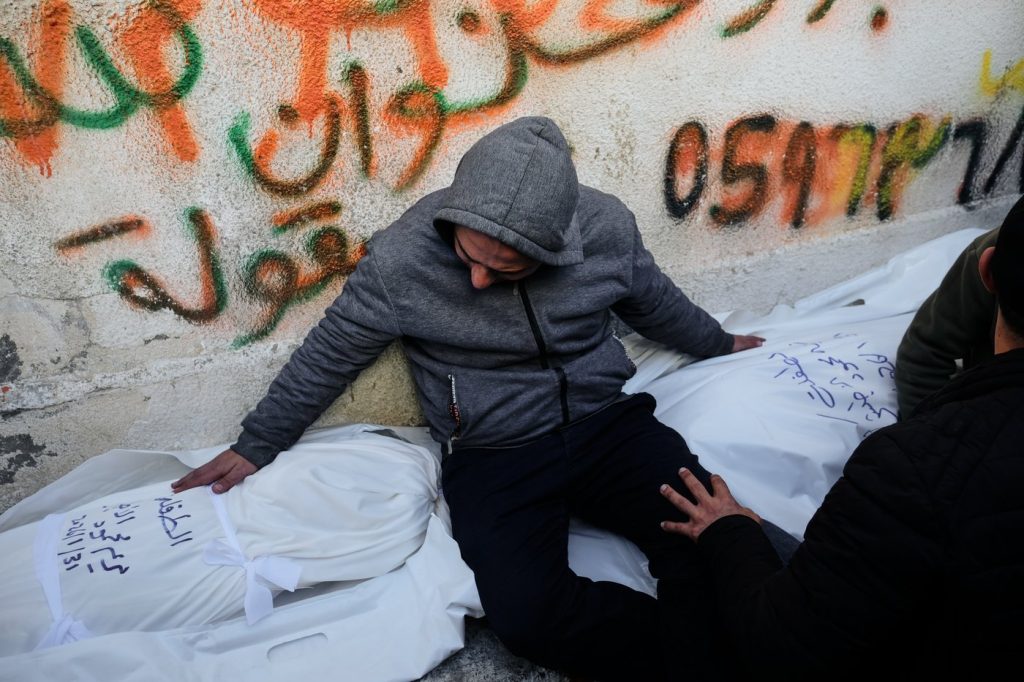
Deir Al-Balah, Gaza Strip (AP) — On Saturday, hospitals in Gaza reported that Israeli airstrikes resulted in the deaths of at least 30 Palestinians, including several children, marking one of the highest casualty tolls since the ceasefire began in October. This escalation occurred a day after Israel accused Hamas of violating the truce.
The airstrikes impacted multiple locations across Gaza, including an apartment building in Gaza City and a tent camp in Khan Younis. Among the victims were two women and six children from two families. A separate attack targeted a police station in Gaza City, leading to at least 14 fatalities and additional injuries, as stated by Shifa Hospital director Mohamed Abu Selmiya.
The recent airstrikes came just before the scheduled reopening of the Rafah crossing on the border with Egypt, which is seen as a crucial access point for many Palestinians requiring medical treatment outside of Gaza. All other border crossings, primarily those with Israel, have been closed for most of the duration of the conflict. The opening of Rafah is limited at first and coincides with discussions about the U.S.-brokered ceasefire, which is advancing into its second phase.
In response to the strikes, Egypt, one of the mediators in the ceasefire talks, condemned the Israeli actions, calling them a "direct threat" to the political prospects of the truce. Qatar also echoed this sentiment, labeling the strikes a "dangerous escalation" that jeopardizes the ongoing political process.
A witness to the tent camp attack in Khan Younis, Atallah Abu Hadaiyed, recounted the chaos that followed the explosion, stating, "We don’t know if we’re at war or at peace, or what. Where is the truce? Where is the ceasefire they talked about?" The attack reportedly killed seven people, including a father and his three children.
Shifa Hospital reported that the strike on the Gaza City apartment killed three young girls, their aunt, and grandmother. A family member, Samir Al-Atbash, mourned the loss of the girls, insisting that they were innocent civilians with no links to Hamas. Names were inscribed on body bags lined against a wall at the hospital.
In addition to the casualties from the strikes on the apartment building and police station, the Gaza Health Ministry indicated that at least one man was killed in a strike on the eastern side of Jabaliya refugee camp. Hamas characterized the attacks as a "flagrant violation" of the ceasefire and called upon the U.S. and other mediators to intervene and halt the strikes.
Israel's military maintained that its airstrikes are reactive measures to violations of the ceasefire agreement, asserting that the attacks on Saturday were in response to two separate incidents the previous day, where they claimed to have killed several militants attempting to approach Israeli forces near the dividing line.
With the reported fatalities on Saturday being significantly higher than the daily average since the ceasefire commenced, the Gaza Health Ministry has recorded at least 520 deaths from Israeli strikes since the start of the truce. This ministry, which operates under the Hamas-led government, keeps meticulous casualty records that are generally acknowledged as reliable by various international organizations.
The ongoing conflict, which erupted following a Hamas-led assault on southern Israel resulting in the deaths of approximately 1,200 people and over 250 hostages, illustrates the complex and volatile situation in the region. The remains of the last hostage held in Gaza were recovered earlier this week.