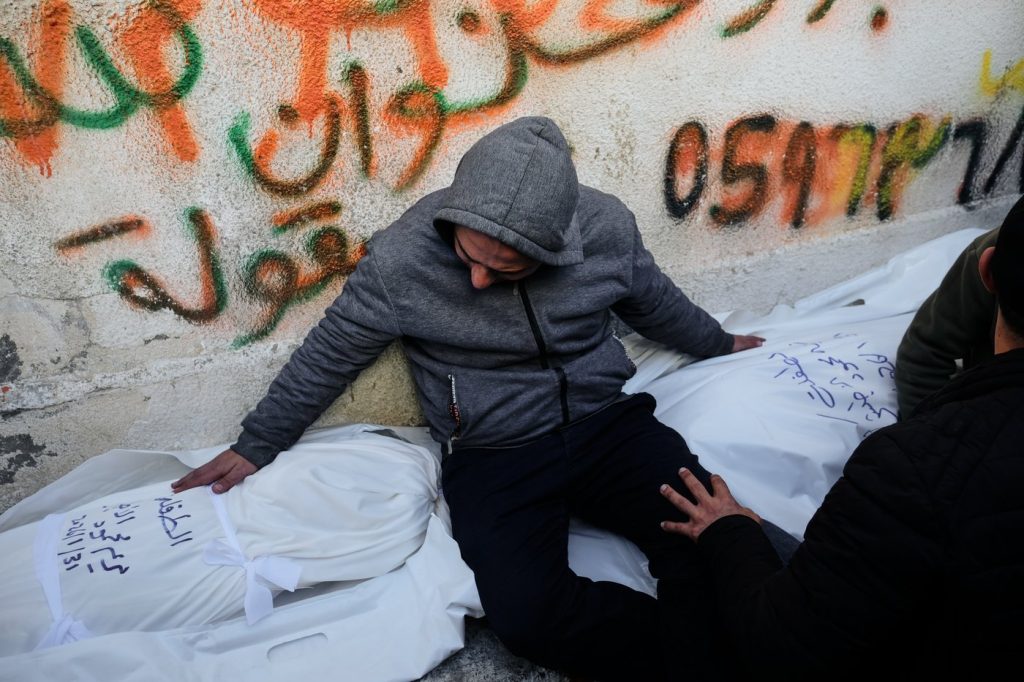
MAIDUGURI, Nigeria (AP) – In a tragic series of attacks in northeastern Nigeria, armed extremists have killed numerous individuals, with security officials reporting at least 25 construction workers lost their lives in an ambush on Thursday in the town of Sabon Gari, Borno State. A senior officer from the Borno State Police Command, who remained anonymous due to a lack of authorization to speak with the media, confirmed the grim details, emphasizing the devastation of the incident. Nigerian authorities typically do not disclose precise death tolls from such violent occurrences, citing ongoing security concerns.
The police official highlighted that the attack bore the hallmarks of Boko Haram insurgents, a militant group that has historically opposed developmental projects in the region. Established in 2009, Boko Haram aims to combat Western education and impose a radical interpretation of Islamic law. The insurgency has evolved over the years, giving rise to a faction known as the Islamic State West Africa Province (ISWAP), which operates under the broader umbrella of the Islamic State group. Since its inception, the conflict has resulted in approximately 35,000 civilian deaths and has displaced over 2 million people, as reported by the United Nations.
Abdurrahman Buni, an officer with the Civilian Joint Task Force—a volunteer group assisting the military in combating extremist forces and violent gangs—also confirmed the loss of at least 25 construction workers during the ambush. Concurrently, the police officer reported a separate incident in which extremist gunmen, utilizing armed drones, launched an assault on an army base in the same town just hours before the ambush. This attack resulted in the deaths of nine soldiers and two members of the civilian task force, while approximately 16 security personnel sustained injuries and were promptly evacuated for medical assistance amidst heavy gunfire.
While the police officer debated whether the army base attack was executed by Boko Haram or the rival ISWAP, both factions remain active in the region, contributing to a complex security environment. The situation in Nigeria has become increasingly precarious, marked not only by the insurgency in the northeast but also by a significant rise in kidnappings for ransom in the northwest and north-central regions over recent months.
In a related development, last month, the United States conducted airstrikes in northern Nigeria targeting fighters affiliated with the Islamic State. This military intervention came after allegations surfaced regarding Nigeria’s inability to mitigate escalating attacks on Christian communities. The ongoing violence reflects the urgent need for effective security measures and humanitarian interventions in a region plagued by instability and conflict.