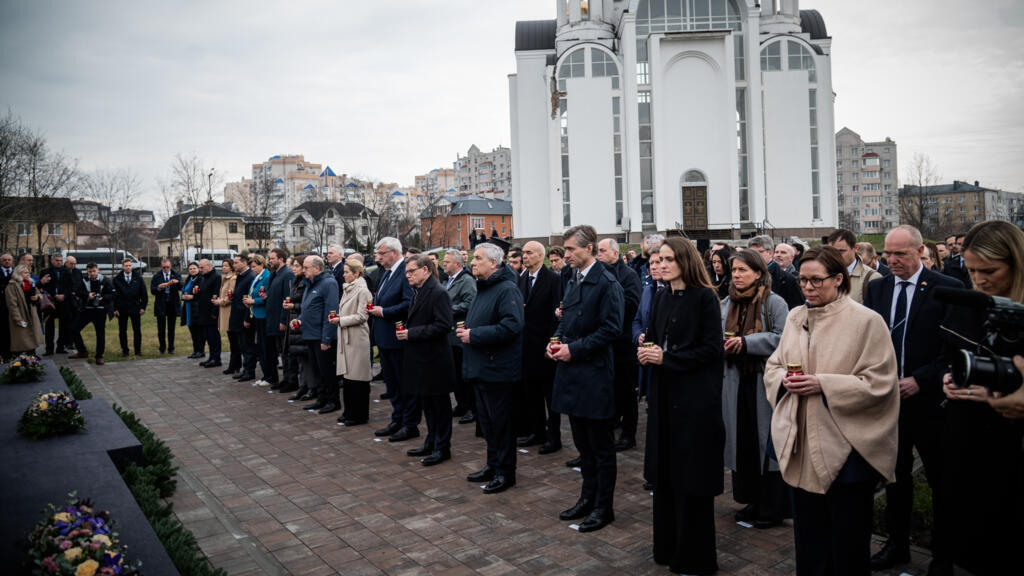
The fourth anniversary of the Bucha massacre was commemorated in a solemn ceremony on Tuesday, attended by European Union Foreign Policy Chief Kaja Kallas along with foreign ministers from several EU member states. This event took place in Bucha, a suburb of Kyiv, which has become a significant symbol of the atrocities faced during the ongoing conflict in Ukraine. The massacre, which took place in 2022, is a poignant reminder of the brutal realities of the war, as it involved the killing of numerous civilians, prompting international outrage and condemnation.
The commemoration provided a moment for reflection on the severe humanitarian crisis resulting from the war, as well as the ongoing support required for Ukraine. In her remarks, Kaja Kallas emphasized the importance of remembering the victims and ensuring justice for the atrocities committed. She acknowledged the resilience of the Ukrainian people in their fight for sovereignty and territorial integrity, highlighting the need for continued international backing.
However, the memorial event was overshadowed by ongoing tensions within the European Union regarding financial support for Ukraine. Hungary has been a significant point of contention, as it has recently blocked an aid package that aimed to provide crucial financial resources to assist Ukraine in rebuilding and addressing the dire consequences of the war. This internal discord among EU member states raises concerns about unity and the effectiveness of the bloc's foreign policy in dealing with the Russian invasion of Ukraine.
Several other foreign ministers echoed Kallas’s sentiments during the memorial, reaffirming their commitment to standing with Ukraine against aggression. They called for a united response from the EU to ensure that Ukraine receives the necessary support to withstand the current challenges and to pursue accountability for the war crimes committed. The ceremony not only served as a reminder of past tragedies but also highlighted the collective responsibility of the international community to prevent such atrocities in the future.
As the EU grapples with internal divisions, the need for a coherent strategy in supporting Ukraine is becoming increasingly urgent. The situation in Ukraine remains fluid, and ongoing discussions among EU member states will be critical in determining how effectively the bloc can respond to both the humanitarian needs and geopolitical challenges posed by the conflict.
Furthermore, memorials such as this one play a vital role in raising awareness of the ongoing challenges faced by Ukraine. They serve not only to honor the victims but also to galvanize international support and reinforce the importance of a unified front against oppression and injustice.
In conclusion, the commemorative ceremony in Bucha underscores both the tragedy of the past and the pressing need for a coordinated and robust EU response to support Ukraine amid significant challenges. The actions of member states, particularly those like Hungary, will be pivotal in shaping the future trajectory of EU foreign policy and the collective effort to assist Ukraine in its struggle for peace and restoration.