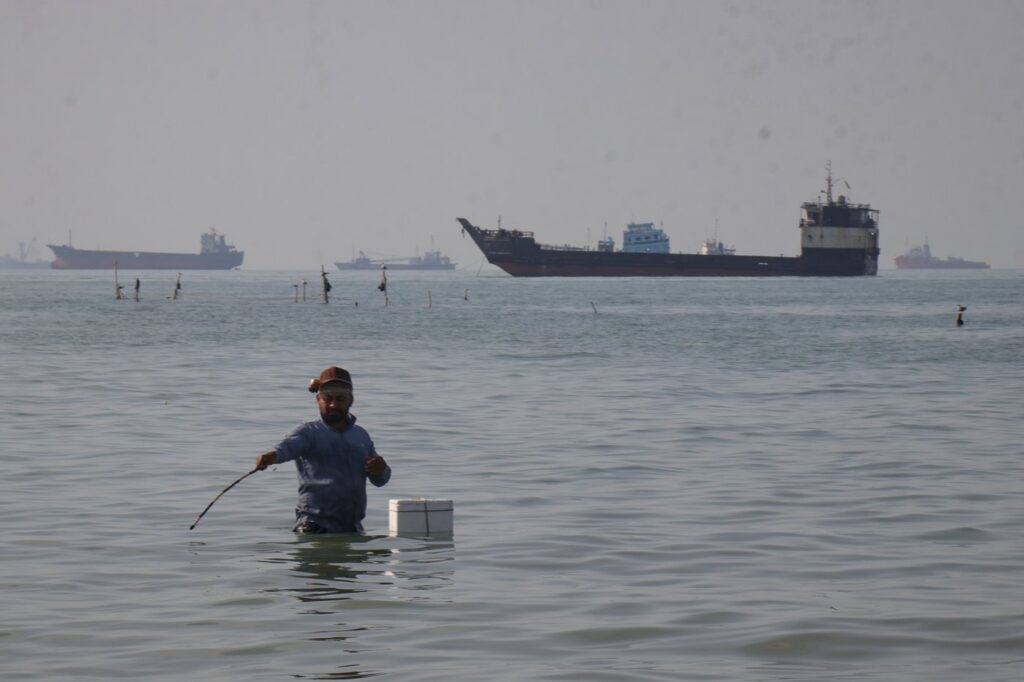
DUBAI, United Arab Emirates (AP) — On Monday, the United States is set to initiate an operation designed to assist stranded ships in the Iran-affected Strait of Hormuz, according to President Donald Trump. This announcement comes after two vessels reported experiencing attacks in proximity to the strait.
Details remain sparse regarding this extensive operation aimed at aiding hundreds of vessels, representing around 20,000 seafarers. In response, Iran has condemned the move, labeling it a violation of the ceasefire. Trump mentioned in a social media post that “neutral and innocent” countries have been impacted by the ongoing Iran war, and stated, “we have told these countries that we will guide their ships safely out of these restricted waterways.”
Dubbed “Project Freedom,” the initiative is slated to commence in the morning hours of Monday in the Middle East. Trump further noted that his representatives are engaged in discussions with Iranian officials that might yield positive outcomes for all parties involved. U.S. Central Command has confirmed that the mission will incorporate guided-missile destroyers, over 100 aircraft, and approximately 15,000 military personnel. The Pentagon has yet to provide clarity on the deployment strategies.
The effective closure of the Strait of Hormuz by Iran, a tactic employed since the commencement of hostilities between the U.S. and Israel on February 28, has created significant tremors in global financial markets.
Many vessels, especially those transporting oil, gas, and various cargo, have found themselves trapped in the Persian Gulf since the onset of the war. Reports from crew members illuminate a dire situation, with experiences of intercepted drones and missiles exploding in the vicinity, while many aboard are running low on essential supplies like drinking water and food. A majority of these sailors hail from India and other regions in South and Southeast Asia.
Trump referred to these sailors as “victims of circumstance” and framed the effort as a humanitarian action, emphasizing that the U.S. along with Middle Eastern countries, particularly Iran, is motivated to assist. However, he cautioned that any obstruction to this humanitarian endeavor would necessitate a forceful response.
Iran's state-operated news agency, IRNA, characterized Trump’s announcement as indicative of his “delirium.” Ebrahim Azizi, head of Iran’s national security committee, reiterated on X that any interference in the strait would be regarded as a violation of the ceasefire.
Hours before Trump’s remarks, Iran disclosed its ongoing review of the U.S. response to a recent proposal aimed at concluding the war. It was made clear that these discussions are not related to nuclear negotiations. The fragile three-week ceasefire currently appears to be intact.
In a concerning development on Sunday, a cargo ship operating near the Strait of Hormuz reported being attacked by multiple small crafts, according to the British military’s United Kingdom Maritime Trade Operations center. Another ship indicated it was struck by “unknown projectiles.” These incidents mark the latest in a series of attacks, now totaling at least two dozen since the Iran war began, raising alarms over the potential risks associated with the new U.S. initiative.
Iranian authorities have asserted dominance over the strait, claiming control and demanding that vessels not aligned with the U.S. or Israel pay tolls for navigation—a direct challenge to the freedom of passage as stipulated by international regulations.
Trump's administration has warned shipping companies that they could face sanctions if they pay Iran in any form, including digital currencies, for safe passage through the strait. The ongoing U.S. naval blockade, established since April 13, continues to deny Tehran critical oil revenues necessary for stabilizing its struggling economy.
According to U.S. Treasury Secretary Scott Bessent, Iran has reportedly received less than $1.3 million in tolls, a stark contrast to their previous daily oil revenue, which suggests a financial strain is mounting for Tehran. Bessent projected that Iran’s oil storage would soon reach capacity, prompting the likelihood of well shutdowns in the near future.