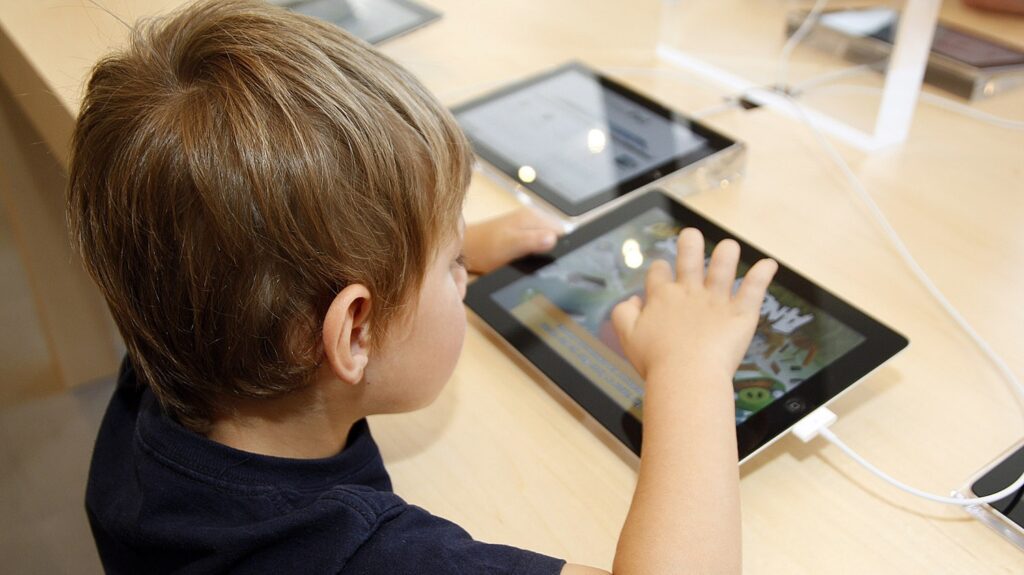
The Association of Quebec Speech and Audiologists (AQOA) has raised concerns regarding the negative impact of screen time on the development of young children. Many parents remain unaware of how excessive screen exposure can lead to significant developmental issues, particularly in language acquisition.
Marie-Philippe Rodrigue, a speech and language therapist and president of AQOA, emphasizes the importance of spreading awareness during Speech and Hearing Month in May. Numerous studies have established a correlation between increased screen time for children under five and a heightened risk of language delays. The Canadian Paediatric Society strongly advises against screen time for children under two years old, even for educational content. Their official stance indicates that there is no compelling evidence supporting early technology introduction.
Research conducted in 2018 by the Hospital for Sick Children in Toronto highlights alarming statistics: 18-month-olds are 2.3 times more likely to experience delayed spoken language skills if their screen time reaches 30 minutes daily. For those aged two to five, experts suggest limiting screen time to just one hour each day. Despite these guidelines, many children have consistent access to tablets and smartphones as a source of entertainment.
The Institut de la statistique de Québec reported that in 2022, one in four 17-month-olds engaged with screens for at least one hour daily during the week. In particular, children from low-income families are disproportionately affected; the same study found that 27% of two-and-a-half-year-olds from these households spend over two hours in front of a screen during the week, compared to none from higher-income families. On weekends, this figure rises to 42% for low-income children versus 29% for their peers.
Rodrigue explains that in disadvantaged communities, screens often serve as convenient "babysitters." When resources are limited, parents may resort to screens to occupy their children, seeking a moment of respite. She observes a trend among new parents who grew up with smartphones, often downplaying screens' potential negative effects. Instead of fostering guilt, Rodrigue aims to provide parents with practical tools to manage screen time more effectively.
A major issue with screen use is the lack of meaningful interaction between children and the content they consume. When a story is read to a child, they have the opportunity to engage with the material, pointing at images, asking questions, and reinforcing vocabulary, all at their own pace. Rodrigue argues that this interactive component is absent when children watch pre-recorded content.
Rodrigue advocates for the careful selection of content to which children are exposed, noting that certain activities can still be beneficial. For instance, if parents participate in a children's yoga video together with their child, it may provide a healthier screen experience. She stresses the importance of parents reflecting on what screen time is displacing, such as valuable interactions with others or opportunities for free play and exploration.
In summary, the conversation surrounding screen time and its implications for young children's language development is critical. Parents should prioritize interactive and enriching experiences over passive consumption of screen content, ensuring their children thrive both linguistically and socially.