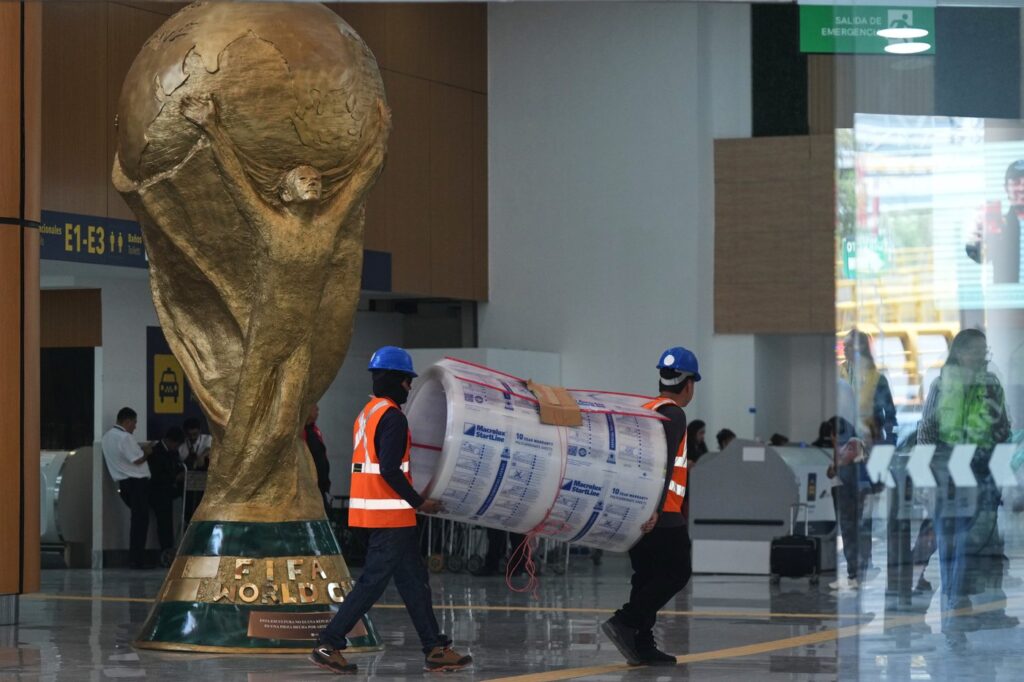
MEXICO CITY (AP) – With the 2026 FIFA World Cup just weeks away, passengers arriving at Benito Juárez International Airport in Mexico City are greeted by a bustling construction site. The scene is characterized by the sound of drilling, the presence of scattered pipes, and unfinished flooring, creating a chaotic atmosphere amidst the excitement for the upcoming soccer tournament.
The ongoing construction is juxtaposed with vibrant promotional materials for the World Cup, including posters and life-sized figures of soccer balls and trophies, which aim to distract travelers from the inconveniences caused by the year-long renovations. Engineer Luis Ibarra, 28, expressed his indifference towards the construction, emphasizing the urgent need for improvements due to historical flooding, leaky roofs, and severe overcrowding at the airport.
The renovation project, one of the largest in the history of Mexico’s most significant airport, is in full swing with over 3,000 workers operating 20 hours a day, as reported by airport authorities. As the first phase of renovations approaches 90% completion, Adm. Juan José Padilla, the general director of the Benito Juárez International Airport, admitted that the complications encountered exceeded their initial expectations. He attributed these difficulties to dealing with outdated infrastructure and a lack of original blueprints for certain sections of the airport.
As of May 2025, a $500 million modernization project commenced to address these longstanding issues. The airport's renovations are fully funded by the airport itself, which has been administered by the Mexican Navy since 2023. Project coordinator Capt. Arturo Flores detailed various upgrades, including enhanced terminal facades, renovated restrooms, and refreshed baggage carousels. The initiative also involves replacing nearly 100,000 square meters (approximately 1,100,000 square feet) of flooring and lighting, as well as reclaiming 30,000 square meters (320,000 square feet) of waiting areas for passengers. Phase two of the project is set to begin in August, post-World Cup, and will continue through December.
In addition to physical upgrades, the renovation includes enhancements to security measures, increasing the number of security cameras from 2,200 to over 4,000. These cameras will utilize artificial intelligence for advanced surveillance, aimed at identifying suspicious vehicles, luggage, or individuals. An anti-drone system is also expected to be installed soon to manage any potential threats.
Earlier this month, the foreign ministry of Mexico announced a collaboration with the U.S. Department of Transportation to enforce the 2015 bilateral transportation agreement through new measures. This includes an expansion in the number of aircraft takeoff and landing slots at the airport. In previous years, the available slots were reduced from 61 to 43 per hour but have increased to 44 in the past year. Adm. Padilla stated that the total number of slots for both foreign and domestic airlines will soon be raised to 46.
This significant airport renovation initiative reflects a major effort by Mexican President Claudia Sheinbaum following a tumultuous period under her predecessor, Andrés Manuel López Obrador. López Obrador’s attempt to reroute capital flight operations to a new, military-operated airport was ultimately unsuccessful, paving the way for the current upgrades at Benito Juárez International Airport.