

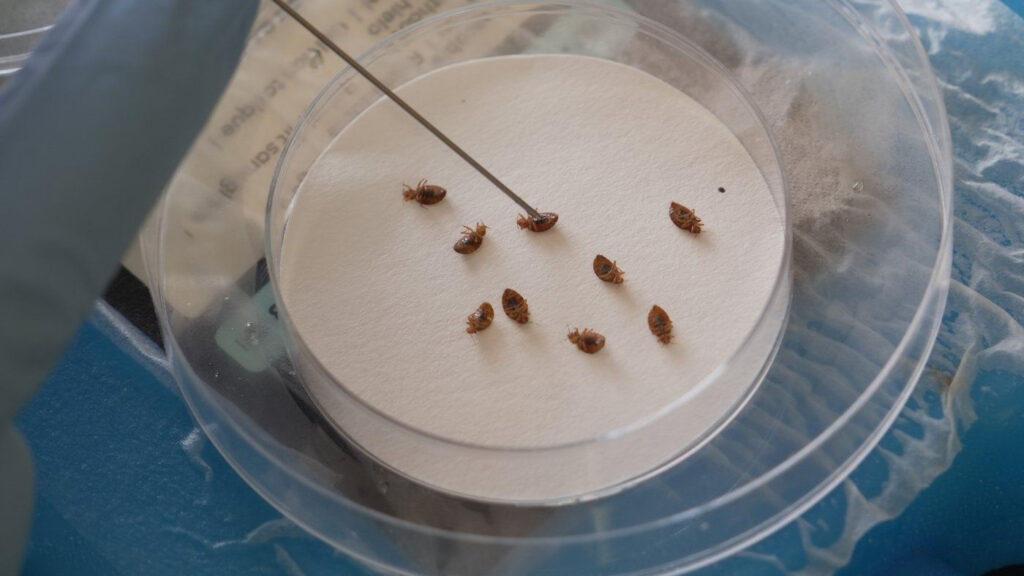
NEW YORK (AP) — Bedbugs, often referred to as the vampires of the insect world, are notorious for hiding during the day and emerging at night to feast on human blood. While children have been cautioned to "sleep tight and don’t let the bedbugs bite," the reality is that bedbug infestations are on the rise. This annual increase in infestations coincides with this time of year, and some scientists worry that these pests could potentially spread antibiotic-resistant infections like MRSA.
Historically, bedbugs have instilled fear in homeowners and occasionally caused public panic. Notably, in New York City in 2018, several city buses had to be taken out of service after reports of bedbugs crawling on the seats. Similarly, Paris faced a bedbug scare in 2023, with reports emerging about infestations in movie theaters, on trains, and on buses, particularly as the city prepared for the 2024 Olympics.
Christopher Hayes, an assistant professor at North Carolina State University and someone who has experienced over 50 bedbug bites in the course of his research, stated, "They certainly are out there. And if you're unaware, if you're not on top of your game, it's easy to bring them into your home."
Bedbugs Really Do Come Out at Night
Bedbugs are reddish-brown pests about the size of an apple seed. Some researchers estimate their existence dates back to the time of dinosaurs, but they are notorious for living alongside and preying on humans. These pests find refuge in narrow crevices, fabrics, linens, and mattresses, making them difficult to spot, though their presence is indicated by small dark excrement stains.
Bedbugs thrive year-round, but their population peaks in the summer. They emerge at night, crawling onto people and using a specialized mouthpart to pierce human skin for blood. The bite itself is painless, but some individuals may develop itchy red welts a day later, while others might not react at all. This lack of reaction can lead to a rapid infestation, as unnoticed bites accumulate over time.
A particularly alarming case reported in a 2020 medical journal described a 70-year-old man living alone in an apartment in Paris. After fainting on the street, he was admitted to a hospital where he was diagnosed with anemia caused by a longstanding loss of blood, alongside a dementia diagnosis. Upon investigating his apartment, authorities found thousands of bedbugs infesting his bed and home.
They Aren’t Thought to Spread Disease, but One Experiment Raises Questions
Fortunately, there is no conclusive evidence that bedbugs spread diseases from one person to another. Their unique anatomy and digestion processes typically prevent efficient germ transfer, according to Chow-Yang Lee, an entomologist at the University of California at Riverside. However, a 2023 study from the University of South Dakota suggested that bedbugs could acquire and potentially spread MRSA during blood feedings, prompting further investigation into their role in public health.
Bedbugs Are More Resistant to Pesticides
Following World War II, extensive use of the pesticide DDT significantly reduced bedbug populations in developed nations. However, the U.S. Environmental Protection Agency banned DDT for most uses in 1972 due to its harmful impact on wildlife and potential risks to humans. Despite this ban, bedbugs have adapted over time and developed resistance to various insecticides, contributing to their resurgence in recent decades.
While the exact prevalence of bedbugs remains uncertain, pest control companies frequently publish lists ranking U.S. cities by bedbug problems based on customer calls. Chicago and Philadelphia often top these lists, but such rankings don't encompass all infestations, particularly in low-income or public housing where residents may not employ professional pest control services.
How to Protect Yourself from the Pests
Experts recommend preventing bedbug infestations rather than dealing with them afterward. Travelers are advised to inspect hotel rooms for signs of bedbugs before unpacking, checking mattresses and linens for both bugs and fecal spots. It's also suggested to avoid placing luggage on beds and consider sealing it in plastic bags or leaving it in the bathtub during stays.
If secondhand furniture or items are purchased, they should be visually inspected and treated before entering the home. Washing clothes immediately after return from travel and possibly freezing shoes or other items for a week can also help eliminate any hidden pests.
How to Get Rid of Bedbugs if You Have Them
The U.S. Environmental Protection Agency provides guidance for do-it-yourself bedbug removal, although these methods require significant labor and caution against random chemical use, which is unlikely to be effective due to insecticide resistance. Consultation with professional exterminators is advised, despite high costs that can range from hundreds to thousands of dollars.
Alternative treatments may include applying silica dust to absorb moisture from bedbugs or using sustained dry heating to kill both eggs and adults, though this method necessitates professional handling to avoid damaging household items. Hayes concludes by encouraging prompt action in addressing potential infestations, advising against panic as a response.









