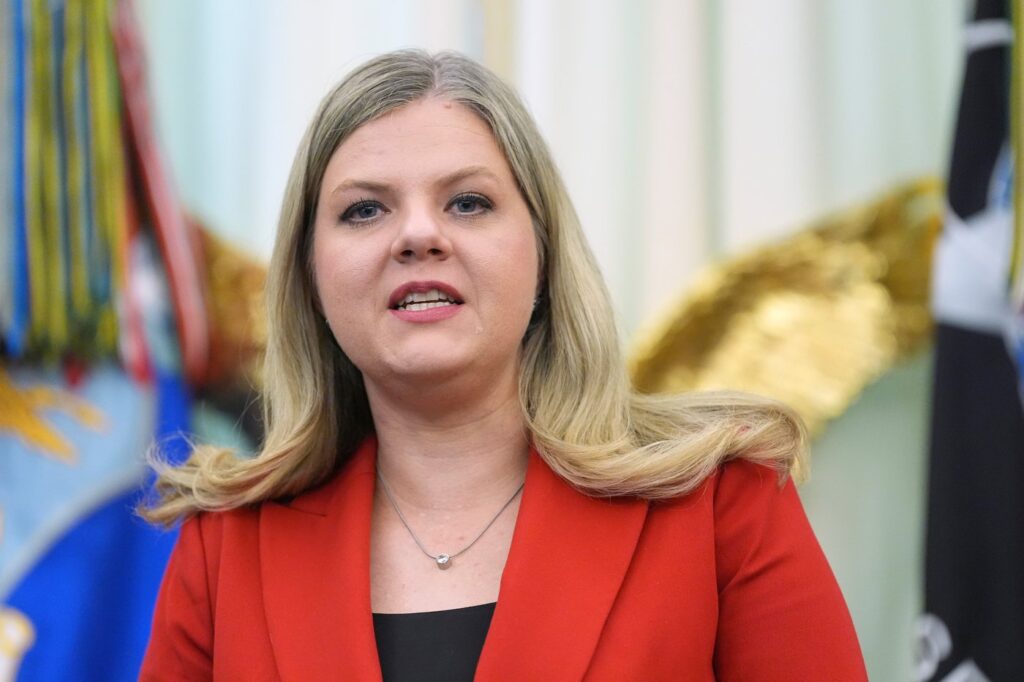
WASHINGTON (AP) — Dr. Heidi Overton has been announced as the new head of the Food and Drug Administration (FDA) by President Donald Trump on Wednesday. Overton, who is currently the deputy director of the White House Domestic Policy Council, is a medical doctor and has played a significant role in Trump’s health initiatives during his second term. As a trusted administration figure, she is seen as a supporter of the president’s goals for healthcare reform.
If confirmed by the Senate, Overton will face the challenge of balancing various competing interests, including the President’s focus areas, traditional Republicans' anti-regulatory stance, and the anti-corporate attitudes promoted by Health Secretary Robert F. Kennedy Jr. These complexities have been consistent challenges for Dr. Marty Makary, the previous FDA head, who resigned in May 2023, leaving unfinished projects related to ultraprocessed foods, antidepressants, and COVID-19 vaccinations.
In a post on Truth Social, Trump referred to Overton as “Dr. Heidi,” praising her as a “rockstar” who is expected to accelerate the pace of medical cures, innovation, and lower drug prices, while also supporting Kennedy’s “Make America Healthy Again” initiative. Kennedy himself remarked on social media that Overton exhibits exceptional judgment and professionalism, along with a strong commitment to the American public.
Overton earned her medical degree from the University of New Mexico and holds a doctoral degree in clinical investigation from Johns Hopkins University. Before her role in Trump’s second administration, she served as the chief policy officer at the America First Policy Institute, a conservative think tank. Recently, she has joined Trump in announcing significant healthcare projects, including the administration’s “most favored nation” drug pricing deals and an order regarding the separation of the combined measles, mumps, and rubella (MMR) vaccine into three individual shots, despite opposition from medical professionals.
How Overton handles her confirmation process will be crucial, as she will need to gain approval from a Republican-led Senate and navigate questions from the Senate Health, Education, Labor and Pensions Committee. Committee Chair Sen. Bill Cassidy, a Republican physician from Louisiana, has expressed “strong concerns” regarding her lack of managerial experience and her involvement in the controversial vaccine order.
Democratic senators have strongly criticized Overton's nomination, with Washington Sen. Patty Murray describing her as a “far-right, anti-abortion extremist" unsuitable for leading the FDA. The new head is expected to address issues left unresolved by her predecessor, particularly concerning flavored e-cigarettes and the scrutiny of biotech drug approvals, which had resulted in complaints from health industry executives and anti-abortion activists.
With increased scrutiny on the approval of abortion pills, which make up about two-thirds of abortions in the U.S., Overton has previously voiced criticism against these medications. If confirmed, she will have the opportunity to modify FDA rules concerning access to abortion pills, aligning with the views of U.S. abortion opponents who are demanding stricter regulations.
Furthermore, the FDA under Kennedy has encountered skepticism from certain members of the health movement, which could also impact Overton's authority. The organization has ongoing inquiries into the safety of widely-used antidepressants, particularly concerning their use during pregnancy and potential links to autism, a point of contention that has been emphasized by Kennedy in line with his prior anti-vaccine advocacy.
Additionally, the FDA is currently investigating several foodborne illness outbreaks, including cases linked to tainted iceberg lettuce and jalapeño peppers that have sickened numerous individuals. As such, Overton will need to prioritize regulatory responses to these public health concerns alongside broader health initiatives.
In summary, Dr. Heidi Overton's nomination to lead the FDA comes at a critical juncture, potentially influencing a wide array of health policies and regulatory decisions in the coming years, particularly in relation to Trump's health agenda and contentious public health issues.