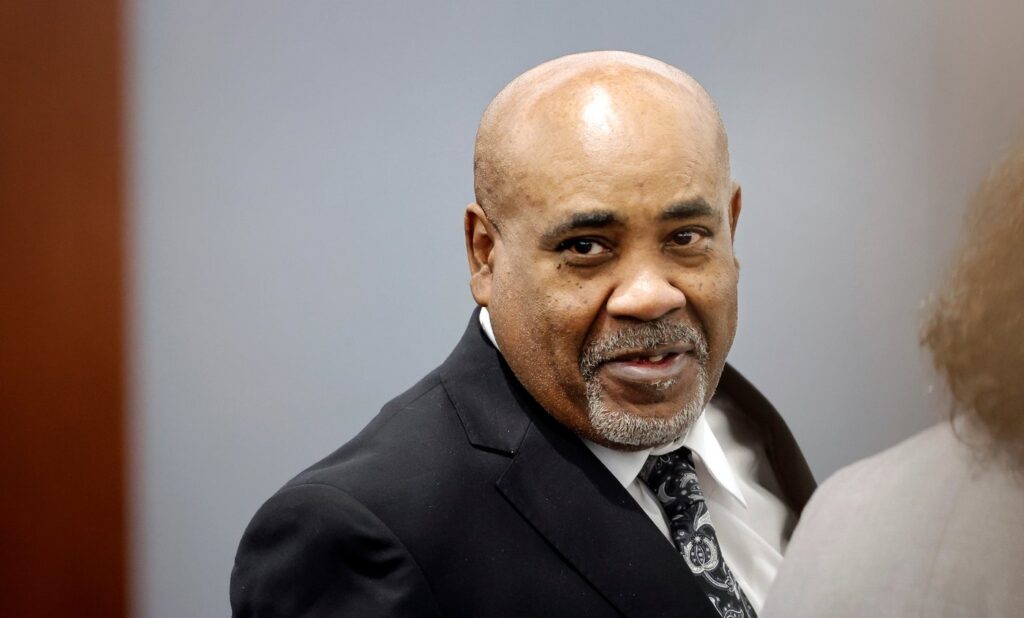
LAS VEGAS (AP) — On Thursday, jurors in the high-profile murder trial of Duane “Keffe D” Davis heard a 2008 audio recording in which Davis implicated his late nephew, Orlando “Baby Lane” Anderson, as the individual who fired the shots that killed renowned hip-hop artist Tupac Shakur in 1996. This statement was made during an interview with detectives, revealing an intricate web of claims surrounding Shakur's death. At the time of the interview, Anderson had already been deceased for a decade.
Davis, who is currently facing charges of orchestrating the killing of the iconic rapper, recounted how he and Anderson were passengers in a white Cadillac that pulled alongside Shakur’s vehicle, a black BMW, shortly before the shooting. As he narrated the event, he mentioned that Tupac was inside the car with hip-hop mogul and Death Row Records founder Marion “Suge” Knight. Davis stated, “If we would have been on my side, I would have blasted,” suggesting a clearer shot at Shakur could have been possible. However, since Knight’s car was on the opposite side, Davis handed his weapon to Deandre “Big Dre” Smith, who declined to use it. Anderson then allegedly took the gun and opened fire, according to Davis.
This audio recording played a pivotal role in the prosecution's case against the 63-year-old Davis. During the courtroom proceedings, jurors were shown a transcript of the audio, and many took notes. Davis’s account in this recording marked the first instance where he directly discussed his involvement in Shakur's murder with law enforcement. Prosecutors opened their case by indicating that they would heavily rely on Davis’s admissions from both his police interviews and media appearances, including his 2019 memoir titled “Compton Street Legend.”
Contrarily, Davis's legal team has labeled the prosecution's narrative as “fiction,” asserting that Davis's statements regarding his involvement were unreliable and unsubstantiated by any credible evidence. Throughout the trial, Davis has maintained his innocence, pleading not guilty to the charges of murder. His attorney argued that investigators had previously dismissed Davis's claims for lack of evidence, noting that when investigators originally brought him in for questioning, it was about the 1997 murder of Shakur's rival, Notorious B.I.G. Davis had been considered a suspect in that case but was later ruled out.
During the recorded interview, detectives, Greg Kading and Daryn Dupree, assured Davis that their conversation would remain confidential, with Dupree stating, “Nothing you say today can be used against you.” Despite these assurances, prosecutors argued that conversations Davis had publicly about the shooting negated any confidentiality agreement he might have believed existed. They outlined a motive for the crime, asserting that Shakur was killed in retaliation for an altercation involving Anderson just hours prior at the MGM Grand following a Mike Tyson fight.
Davis claimed to have witnessed the incident but was not directly involved in the brawl. The prosecution emphasized that after Anderson discharged his weapon, Davis believed Knight had been mortally wounded. Tupac Shakur’s legacy endures decades after his untimely death. He is regarded as a cultural icon and one of the most influential rappers in history, whose fame only intensified following his passing. The ongoing trial seeks to unravel the long-standing mystery behind his assassination, a case that has captivated the public and media alike.