In recent times, pro-Russia social media users have depicted Russian President Vladimir Putin as a leader who is deeply loved by his people. This portrayal aims to highlight a supposed personal connection between Putin and the citizens of Russia. Interestingly, in order to bolster this image, these users have circulated claims stating that Putin travels without a security team—a stark contrast to other world leaders who are often accompanied by extensive security details.
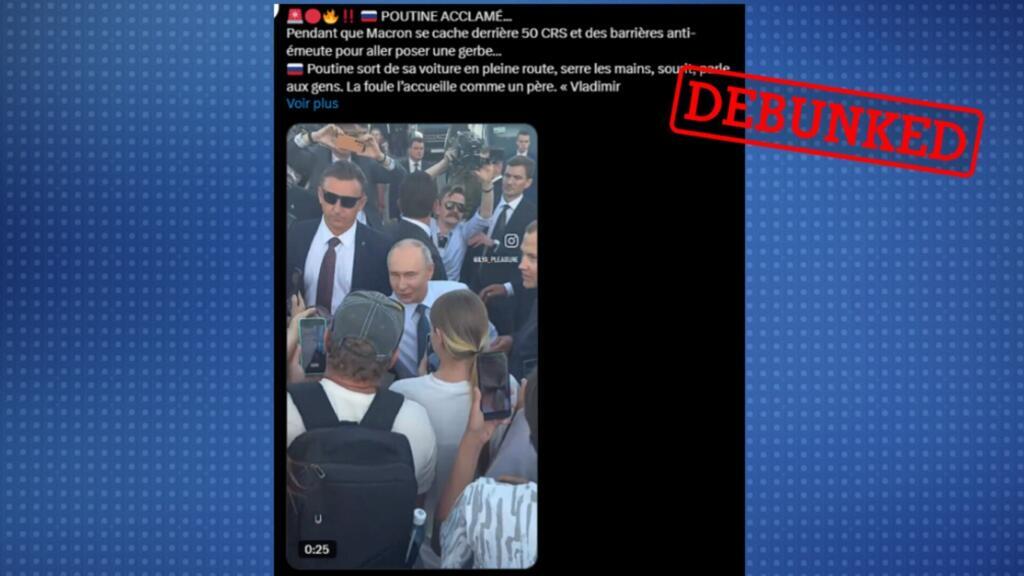
To support this narrative, a video of Putin on his latest trip to Siberia was shared widely across various social media platforms. The video was intended to reinforce the idea that Putin is so beloved and trusted by his people that he feels secure enough to travel alone, without the need for protective detail. This portrayal aligns with a desire among some segments of the public and media to position Putin in a more favorable light, emphasizing accessibility and a sense of camaraderie with the people.
However, while the intention behind sharing the video was to illustrate this claim, the footage revealed an entirely different reality. Viewers could clearly see that Putin was not, in fact, traveling without a security presence. On the contrary, the video showcased the presence of a substantial security contingent accompanying him during his travels. This contradicts the narrative painted by those sharing the content. The contrast between the claims and the visual evidence raises questions regarding the authenticity and accuracy of the portrayal being pushed by pro-Russia users online.
The use of visuals in political narratives has become increasingly important in the digital age. Images and videos carry a significant weight in shaping public perception. As such, the discrepancies evident in Putin’s video could lead to skepticism among viewers who might have initially accepted the claims at face value. It highlights the broader issue of misinformation and how easily narratives can be crafted and disseminated in the digital landscape.
This situation underscores the complexity of political communication in today’s society. Social media users, motivated by various agendas, can manipulate imagery and context to construct a specific narrative. This particular instance not only highlights a disconnect between the proclaimed reality and visual evidence but also sheds light on the challenges faced by citizens in discerning fact from fiction in political representations.
Moreover, this incident raises critical questions about the responsibility of those sharing content on social media. In an age where misinformation can spread rapidly, it is essential for users to critically evaluate the sources and authenticity of the information they consume and share.
In conclusion, while the intention of portraying Putin as a leader without the need for security may have resonated with some individuals, the reality depicted in the Siberian trip video presents a contrasting story. Such discrepancies serve as a reminder of the importance of accountability and transparency in political communication, especially in a world continuously influenced by the dynamics of social media.