LOS ANGELES (AP) – Peter Arnett, the esteemed Pulitzer Prize-winning war correspondent, has passed away at the age of 91. Known for his brave reporting from various conflict zones, spanning from the rice paddies of Vietnam to the deserts of Iraq, Arnett died in Newport Beach on Wednesday, surrounded by his family and friends. His son, Andrew Arnett, revealed that he had been battling prostate cancer.
Arnett earned the 1966 Pulitzer Prize for International Reporting for his extensive coverage of the Vietnam War at The Associated Press. His contributions to journalism have left an enduring legacy, as noted by fellow AP war correspondent Edith Lederer, who described him as "intrepid, fearless, and a beautiful writer and storyteller." She emphasized that his work would serve as an inspiration for future journalists and historians. Arnett rose to prominence in 1991 during the first Gulf War, when he provided live updates for CNN while defying the exodus of Western reporters from Baghdad.
His commitment to delivering the truth was showcased during a tumultuous broadcast, where he calmly reported live from his hotel room amidst missile strikes, detailing the effects of the explosions even as air raid sirens blared in the background. This moment became a defining example of his fearless reporting style.
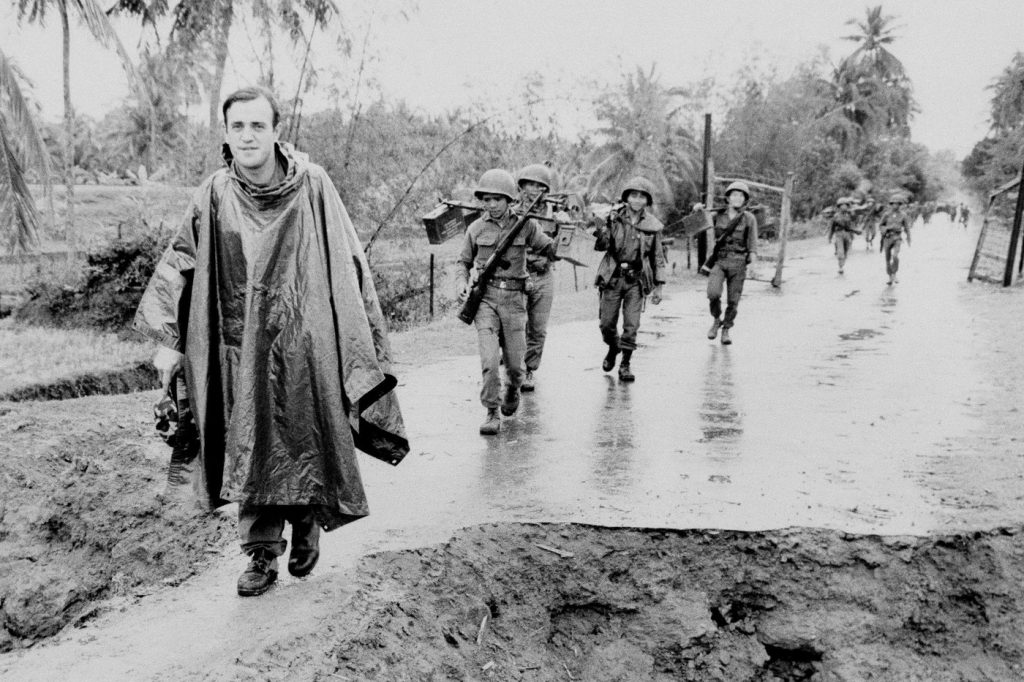
Arnett's history of close encounters with danger began earlier in his career. In January 1966, while embedded with U.S. soldiers in Vietnam, he experienced the death of Lt. Colonel George Eyster, who was shot while looking at a map just inches away from Arnett. The incident profoundly impacted his reporting perspective and methods.
Having joined The Associated Press (AP) after a brief stint in Indonesia, Arnett found himself surrounded by distinguished journalists in Saigon, learning valuable survival techniques that would serve him throughout his career. He reported from Vietnam from 1962 until Saigon fell to Communist forces in 1975. During the final days of conflict, rather than destroy classified documents as instructed, he secretly preserved them, believing they would be historically significant—a decision that proved prescient when those materials later entered the AP's archives.
After departing AP in 1981, Arnett became a foundational figure at CNN. During the subsequent decade, he continued to make headlines, covering conflicts such as the Gulf War and conducting interviews with controversial figures like Saddam Hussein and Osama bin Laden. His 1995 memoir, "Live From the Battlefield: From Vietnam to Baghdad, 35 Years in the World's War Zones," captures his extensive experiences in conflict reporting.
However, Arnett's career faced challenges as well. He resigned from CNN in 1999 following the retraction of a contentious report about the use of nerve gas in Laos. In 2003, while covering the Iraq War for NBC and National Geographic, he was dismissed for giving an interview to Iraqi state television in which he criticized U.S. military strategies. Although his remarks drew backlash in the United States, he quickly secured new reporting opportunities internationally.
In his later years, Arnett transitioned to academia, teaching journalism at Shantou University in China before retiring in 2014 and relocating with his wife, Nina Nguyen, to Fountain Valley, California. He was born on November 13, 1934, in Riverton, New Zealand, and began his journalism career at the Southland Times shortly after finishing high school. His passion for storytelling and journalism remained evident until the end of his life, as he reflected on the excitement of his first day in a newspaper office—a moment that set the course for his prolific career.
Peter Arnett is survived by his wife and their children, Elsa and Andrew. Retired AP photographer Nick Ut, who worked alongside Arnett in Vietnam for years, expressed his deep sense of loss following Arnett's passing, illustrating the void left by the death of a close friend.