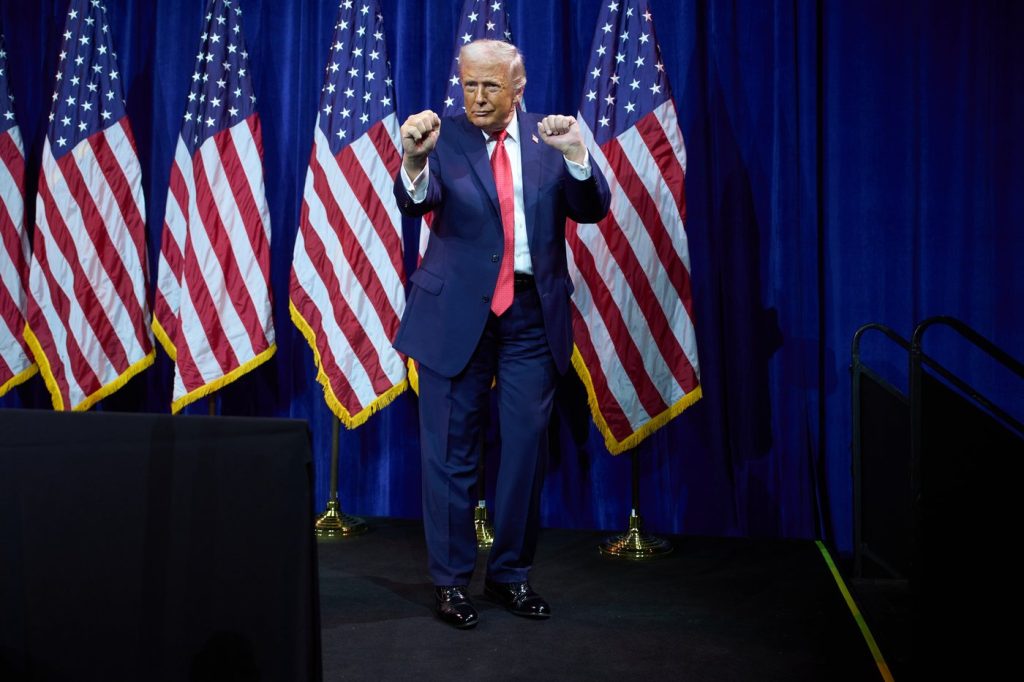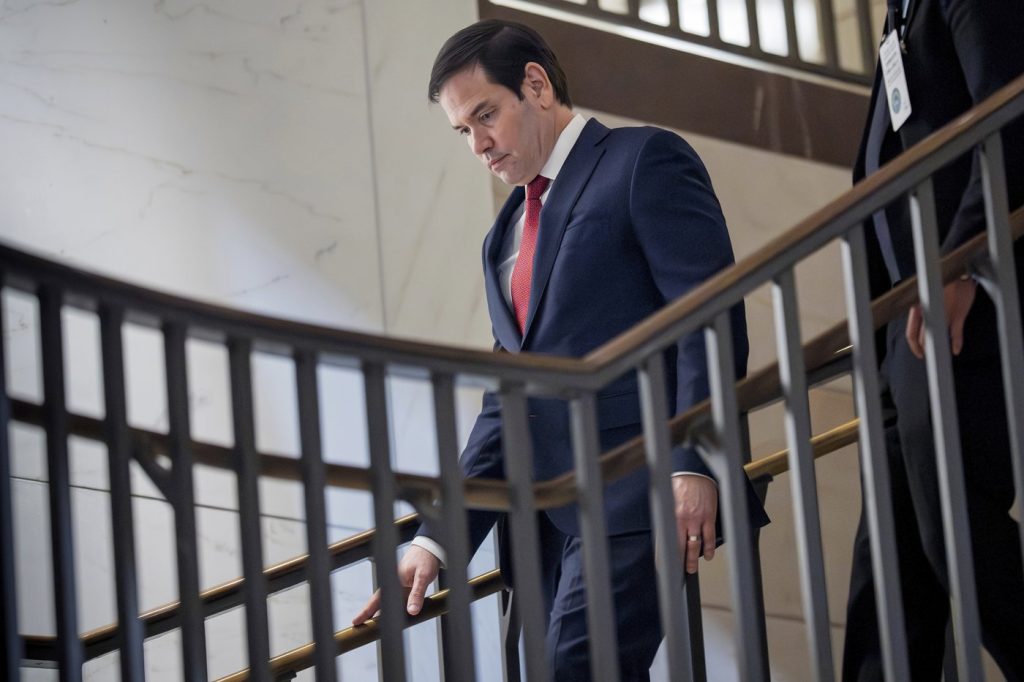
President Donald Trump has made broad and somewhat ambiguous claims regarding the future governance of Venezuela following the potential ouster of Nicolás Maduro. His administration has provided scant details on how the U.S. plans to "run" Venezuela, leading to concerns among legislators and former officials about the preparedness of the administration for the post-Maduro landscape. The remarks made by Trump and Secretary of State Marco Rubio have created confusion, with interpretations suggesting that the U.S. either intends to take control of Venezuelan administration or will allow existing officials to remain temporarily in power.
Rubio articulated that the U.S. would leverage existing sanctions on Venezuela's oil sector and criminal organizations to influence future leadership in Venezuela. This uncertainty in definitive planning for Venezuela stands in contrast to the extensive preparatory discussions that characterized past U.S. military interventions, particularly in Iraq in 2003, which often did not lead to the anticipated positive outcomes.
Disagreements on Strategy
The conflicting statements made by Trump and Rubio have elicited concern from several former diplomats, highlighting a lack of clear strategy moving forward. Dan Fried, a retired diplomat and former sanctions coordinator, expressed that there is considerable confusion regarding the next steps in Venezuela. He indicated that even among a limited group privy to operational plans, there appears to be significant disagreement on how to proceed.
Supporters of Trump’s approach seem to indicate that there is clarity regarding U.S. objectives despite the ambiguous rhetoric. Rich Goldberg, a proponent of sanctions and former advisor at the White House, suggested that while administrative day-to-day operations may remain under local leadership, ultimate control and influence over Venezuelan happenings would lie with the U.S.
According to current U.S. officials, any pre-existing plans for a U.S. role in Venezuela following Maduro's potential removal were confined to a select group of Trump’s political allies. These officials noted the absence of preparations for military occupation or an interim governing body, contrasting with previous administrations that prioritized such frameworks in the lead-up to war.
Historical Context of Military Interventions
Previous U.S. interventions, like those in Panama in 1989 and Iraq in 2003, saw extensive interagency discussions about how to address power vacuums left by ousted leaders. The invasion of Panama was notably preceded by nearly a year of excavation, while the complex situation in Venezuela presents challenges due to the country's size, population, and long history of anti-American sentiment.
Fried pointed out that the relative success experienced in Panama was due to international support and the quick transition to a democratic government. He contrasted this with Trump's dismissal of Venezuelan opposition leader Maria Corina Machado, suggesting that the president's remarks undermine the credibility of potential successors in the event of regime change.
Comparing Global Cases
The hopes for democratic transitions in Iraq and Afghanistan post-saddam and Taliban, respectively, have not materialized as anticipated and have resulted in costly outcomes for the U.S. In discussing Venezuela, Rubio noted that the context is distinctly different compared to Middle Eastern states, arguing that Venezuela shares Western ties and cultural connections with the United States. This lack of clarity and heavy reliance on Trump's campaign platform of reducing U.S. foreign involvement leaves many supporters questioning the intentions behind the actions in Venezuela.
Republican figures like Rep. Thomas Massie and Sen. Rand Paul have voiced skepticism regarding intervention policies, stressing the human and financial costs associated with military actions based on regime change. Concerns remain that the administration's engagement in Venezuela may reflect broader, longer-term involvements, akin to the U.S. presence in the Middle East. However, as evidenced by past experiences, no plan guarantees success, underscoring the unpredictable nature of international interventions.