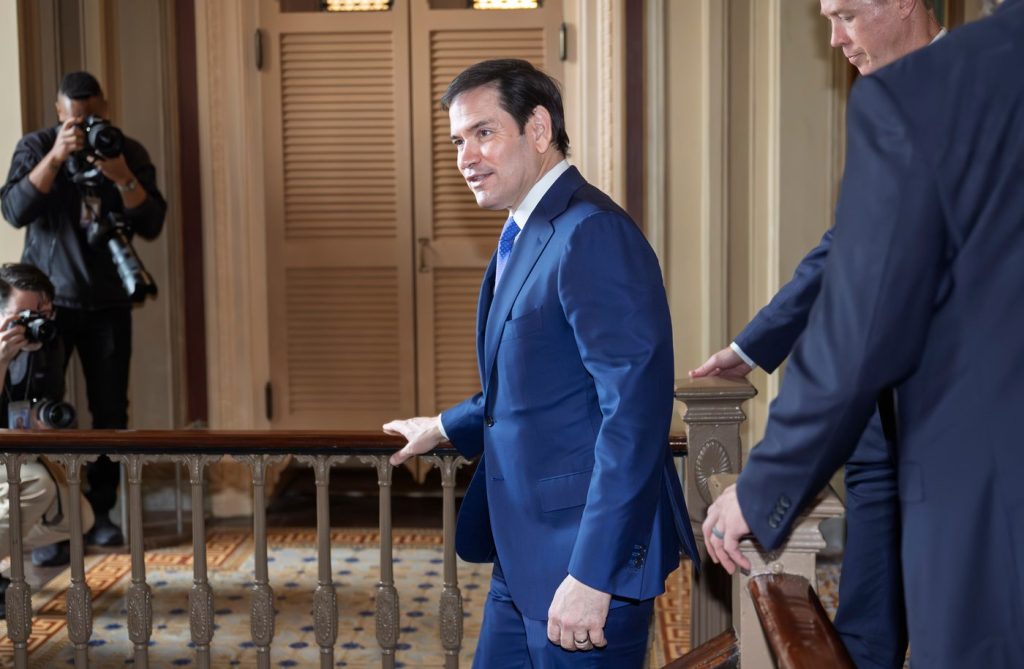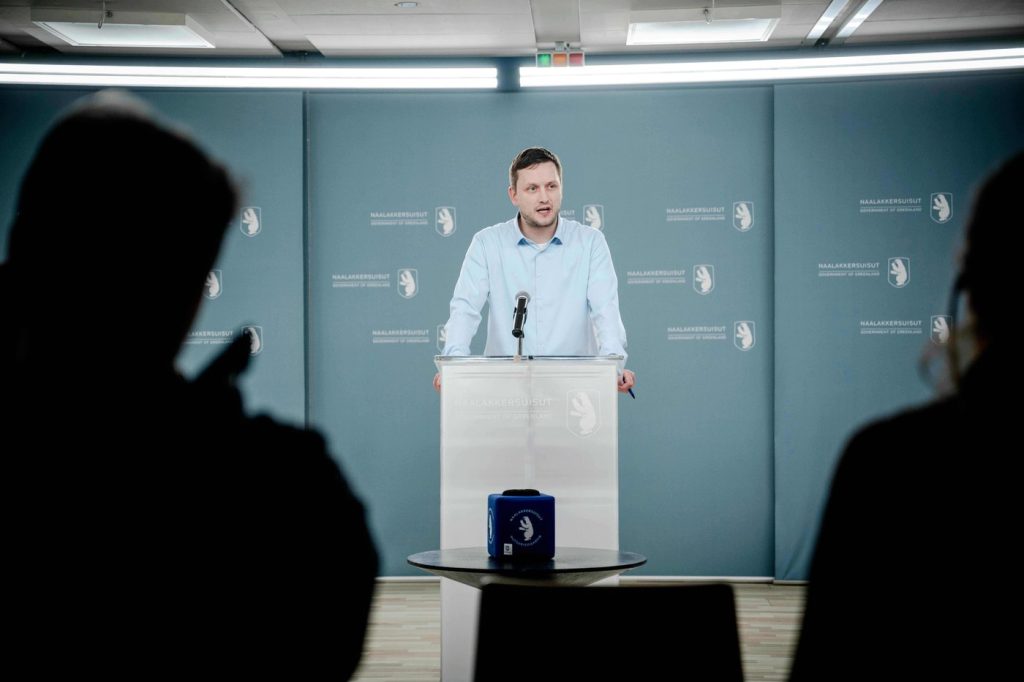
The White House announced on Tuesday that "U.S. military is always an option," despite a chorus of European leaders dismissing President Donald Trump's remarks suggesting a takeover of Greenland, the world's largest island, which is part of Denmark. This idea has been floated by Trump since his first term, with renewed emphasis on acquiring Greenland for strategic reasons following recent military activities in Venezuela.
White House Press Secretary Karoline Leavitt stated, "President Trump has made it well known that acquiring Greenland is a national security priority of the United States, and it's vital to deter our adversaries in the Arctic region." Leavitt's comments indicated that the administration is exploring various methods to achieve this foreign policy goal, emphasizing the potential use of military action if deemed necessary. This position contrasted sharply with newly appointed U.S. special envoy to Greenland and Deputy White House Chief of Staff Stephen Miller, who previously suggested that military intervention wouldn't be required. Republican House Speaker Mike Johnson also indicated discomfort with the idea of military action in Greenland, declaring it "not appropriate."
The leaders of France, Germany, Italy, Poland, Spain, and the United Kingdom stood alongside Danish Prime Minister Mette Frederiksen, stating in a joint declaration that Greenland "belongs to its people." This announcement reinforced Greenland's sovereignty as a self-governing territory of Denmark and part of the NATO military alliance. They emphasized that decisions relating to Denmark and Greenland must come from their respective peoples.
Canadian Prime Minister Mark Carney lent his support, announcing a visit to Greenland by Governor General Mary Simon and Foreign Minister Anita Anand in early December. Carney reiterated that the futures of Greenland and Denmark are to be determined solely by their citizens.
Stephen Miller, reflecting on the discussions at the White House, expressed skepticism regarding Denmark's claim over Greenland and questioned whether Denmark could effectively govern the territory. Despite this, he stated that there was no intent to consider an armed intervention. Instead, Milller emphasized, "Nobody is going to fight the U.S. militarily over the future of Greenland."
Greenland, which became part of Denmark in 1953, holds significant strategic importance due to its location and natural resources, including rare earth minerals and potential oil deposits. The U.S. Department of Defense operates the remote Pituffik Space Base in Greenland, which has been pivotal for missile defense and surveillance operations.
Recent events escalated tensions when Katie Miller, Stephen Miller's wife, posted an illustrated map of Greenland colored like the U.S. flag with the caption "SOON." Trump's subsequent comments regarding Greenland deepened fears of an impending U.S. intervention. Danish Prime Minister Frederiksen warned that any U.S. military action against another NATO member would jeopardize the alliance and the security it has provided since World War II. Greenland's Prime Minister Jens-Frederik Nielsen underscored the importance of maintaining good relations with the U.S., dismissing notions of an immediate takeover while fostering ongoing cooperation.
Bipartisan U.S. Representatives Steny H. Hoyer and Blake Moore responded to the situation, urging caution and disavowing aggressive stances on Greenland's status. They noted that the U.S. already has favorable access to Greenland and that a military takeover would be counterproductive, risking the integrity of the NATO alliance.
Experts have questioned Trump’s claims regarding the Russian and Chinese naval presence in the Arctic, suggesting they may be overstated. Overall, the discourse surrounding Greenland's future highlights both the geopolitical significance of the territory and the complexities of international diplomacy. The situation remains sensitive and may have long-lasting implications for U.S.-European relations and NATO.