The Hague, Netherlands (AP) Following the devastation of two world wars in the last century, nations united to establish an international framework aimed at preventing future conflicts. However, this global order, primarily centered at the United Nations (U.N.) headquarters in New York, now faces significant challenges as a "might makes right" philosophy resurfaces on the world stage.
U.N. Undersecretary-General Rosemary A. DiCarlo emphasized to the Security Council that the "maintenance of international peace and security depends on the continued commitment of all member states to adhere to all the provisions of the U.N. Charter." On the other hand, U.S. President Donald Trump contends that the recent capture of Venezuelan President Nicolás Maduro was legal, characterizing the ongoing conflict with Venezuelan drug cartels as an "armed conflict," according to a memo from his administration.
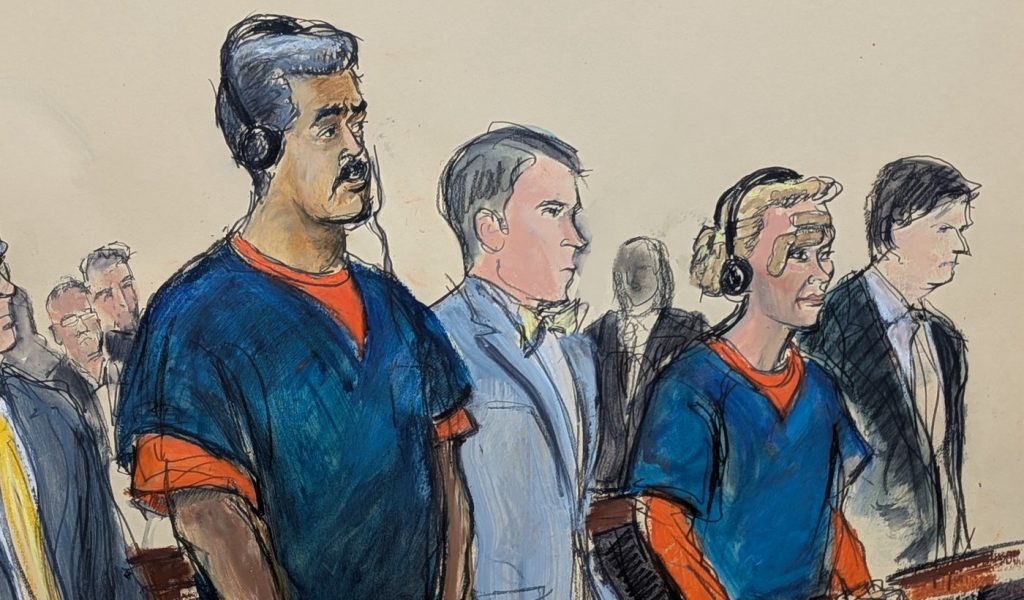
The operation to apprehend Maduro and his wife, Cilia Flores, from their residence on a military base in Caracas has led to charges of involvement in a narco-terrorism conspiracy. U.S. Ambassador to the U.N., Mike Waltz, justified the military action as a "surgical law enforcement operation" that aligns with Trump's National Security Strategy, which aims to re-establish U.S. dominance in the Western Hemisphere.
Concerns, however, are rising about the implications of such actions. Trump's remarks on Colombia's President Gustavo Petro, whom he referred to as a "sick man" involved in cocaine trafficking, further complicate matters. The Trump administration imposed sanctions on Petro and other high-ranking officials in October, signaling a precarious relationship between the U.S. and its South American allies.
Various global leaders and analysts, ranging from those in China to Mexico, have criticized the mission against Maduro, fearing it could set a precedent for further military actions and the erosion of international law. French Foreign Minister Jean-Noël Barrot warned that such violations by powerful nations could have detrimental effects on global security.
Moreover, the ongoing conflict in Ukraine, triggered by Russia's aggression, has strained the transatlantic alliance, relying heavily on U.S. support. The Russian ambassador to the U.N., Vasily Nebenzya, condemned the U.S. action in Venezuela as a regression towards lawlessness and called for collective rejection of U.S. military policies.
Trump's approach also extends to geopolitical tensions involving Greenland and Taiwan. His comments on Greenland underscore a strategic interest due to perceived threats from Russian and Chinese military presence in the region. Meanwhile, rising tensions between the U.S. and China over Taiwan could escalate if Washington's recent actions set a blueprint for military interventions elsewhere.
In the Middle East, ongoing hostilities between Israel and Hamas highlight the international community's struggle to manage conflicts. The U.S., as Israel's closest ally, has vetoed Security Council resolutions advocating for ceasefires, further complicating the global peace narrative.
As the global community contemplates the shifting dynamics, the 27-nation European Union's response to the Trump administration’s actions is crucial. While the EU maintains that Maduro lacks political legitimacy, it asserts that the principles of international law and the U.N. Charter must be respected, indicating a potential fracture in longstanding transatlantic relations.
Hungarian Prime Minister Viktor Orbán, a Trump ally, has also downplayed the effectiveness of international law, suggesting that many great powers often disregard such regulations, signaling a worrying trend in global governance.