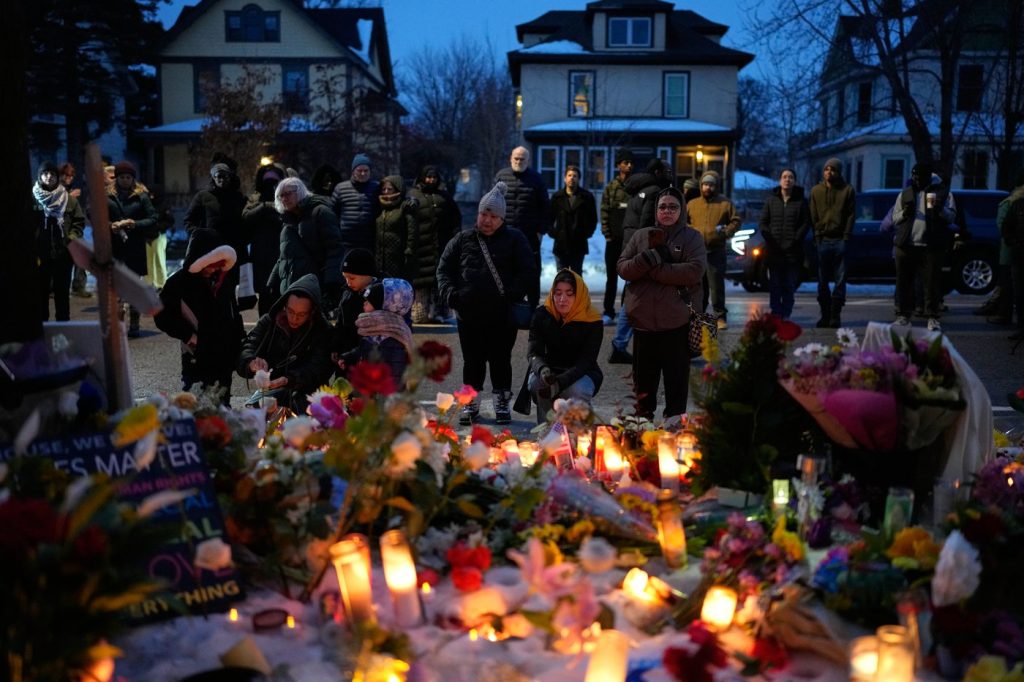
A day after a federal immigration officer fatally shot 37-year-old Renee Good in Minneapolis, tensions escalated when federal authorities restricted state investigators from accessing evidence related to the shooting. They asserted that Minnesota has no jurisdiction to investigate the incident, raising critical legal questions regarding the accountability of federal officers carrying out immigration enforcement operations.
The FBI informed Minnesota law enforcement that they would not be permitted to take part in the investigation or examine key evidence connected to the shooting incident on Wednesday. As a response, local prosecutors are currently evaluating their legal options, as federal authorities have taken control over the case. Minnesota Governor Tim Walz has urged federal officials to reconsider their position, expressing concerns that initial statements from Homeland Security Secretary Kristi Noem and other leaders may undermine public confidence in the fairness of the investigation.
Legal experts suggest that the issue of potential state charges against the federal officer involved is fraught with challenges. Precedent indicates limited scope for state charges, especially when federal immunity claims arise. Such claims are based on the Supremacy Clause of the U.S. Constitution, which protects federal employees acting within the bounds of their federally sanctioned duties. However, this immunity is not absolute; actions taken that violate constitutional protections, such as the Fourth Amendment, may not be covered.
According to Robert Yablon, a professor at the University of Wisconsin Law School, a federal officer is generally immune from state prosecution if their actions were authorized by federal law and necessary for their duties. For state prosecutors to address potential immunity, they must demonstrate not only a violation of state statutes but also that the use of force was unconstitutionally excessive under federal law. Establishing excessive force under the Fourth Amendment is critical to challengiNg claims of immunity.
The situation is further complicated by ongoing non-cooperation between federal and state authorities. Governor Walz noted that federal authorities had rescinded a previous cooperation agreement with the Minnesota Bureau of Criminal Apprehension, urging them to reverse that decision. In contrast, Homeland Security Secretary Noem stated that state officials do not have jurisdiction in the investigation. Despite this, Minnesota Attorney General Keith Ellison emphasized that the state's inability to cooperate with the FBI does not preclude state officials from conducting their own investigation.
Hennepin County officials have expressed concerns that a lack of information sharing from the FBI could leave them uninformed regarding the investigation's findings. County Attorney Mary Moriarty highlighted the potential opacity of the investigation, stating that without access to FBI findings, the community may not receive critical information related to the case.
Federal Deputy Attorney General Todd Blanche defended the use of force by federal agents; noting that officers often face chaotic and dangerous situations requiring split-second decisions. He underscored that established protocols help ensure the preservation of evidence following officer-involved shootings.
In investigations surrounding use of force, it is common for authorities to evaluate the specific training of officers involved and whether they adhered to established protocols during the incident. The access of state investigators to training records or interviews with federal agents involved in Good's shooting remains uncertain.
In light of the historical context, Samantha Trepel, a former federal prosecutor, critiqued the current Department of Justice's approach, claiming it lacks the independence of prior administrations. She pointed out that previous administrations conducted comprehensive investigations into allegations of excessive force by federal officers, highlighting community trust in impartial federal reviews.
Additionally, questions have emerged regarding the officers' response post-shooting in terms of providing medical assistance to Good. Footage from the incident shows a physician attempting to offer aid but being directed back by officers, raising concerns about compliance with medical aid protocols. Previous cases, including the 2023 death of Tyre Nichols, have demonstrated that failure to ensure medical support can lead to administrative actions against officers involved.