In recent developments, President Donald Trump's persistent threats to seize control of Greenland have strained relations between the United States and its NATO allies. This situation has raised concerns among member countries that any forcible takeover could jeopardize the integrity of the world's largest security alliance.
Historically, tensions among NATO members have emerged, particularly between nations like Greece and Turkey. However, a direct annexation of territory from one ally by the United States would set a dangerous precedent for international diplomacy. On Sunday, Trump reiterated his commitment by declaring, "One way or the other, we’re going to have Greenland." The White House has not dismissed the potential use of military force, emphasizing that preventing Russia and China from gaining control over the island is a priority.
Greenland, a semi-autonomous territory within the Danish realm, is currently under the governance of Denmark. Danish Prime Minister Mette Frederiksen has articulated a strong warning, stating that a military strike by the United States against another NATO nation would result in a complete breakdown of their cooperative security agreements.
NATO was founded in 1949 by twelve nations as a bulwark against the Soviet Union during the Cold War. The organization hinges on a significant American military presence in Europe, underscored by the deployment of U.S. nuclear weapons on the continent. Since its inception, NATO's membership has expanded to 32 countries, including Sweden, which joined in 2024 amid rising concerns over Russian aggression. Presently, NATO identifies its foremost threats as Russia and international terrorism.
NATO's structure encourages any European nation to join, provided it meets specific criteria. Decisions within NATO require consensus, meaning that any member state holds veto power. For example, the Trump administration has previously vetoed Ukraine's application for membership. The core principle of NATO is collective defense, as outlined in Article 5 of the treaty, positing that an attack on one member constitutes an attack on all.
This framework has only been activated once, in response to the 9/11 terrorist attacks on the United States. While Trump has expressed a commitment to this article, his threats regarding Greenland have generated apprehensions about his willingness to defend allies perceived as not contributing sufficiently to their own defense.
Any conflict between the U.S. and Denmark over Greenland would likely complicate NATO's collective defense efforts, as Article 5 would not apply without unanimous support. In such a scenario, Denmark might invoke Article 4 for consultations, although this would not necessarily lead to concerted action.
Historically, U.S. military interventions, such as the invasion of Iraq in 2003, have caused friction among NATO allies, with various countries taking differing positions on the issue. The current geopolitical landscape raises questions about which members would align with Trump should tensions escalate over Greenland.
The United States remains NATO's most influential member, significantly outspending other allies in defense and holding unparalleled military capabilities. Washington has often been at the helm of NATO strategies, although under Trump, there have been observed shifts in leadership dynamics within the alliance.
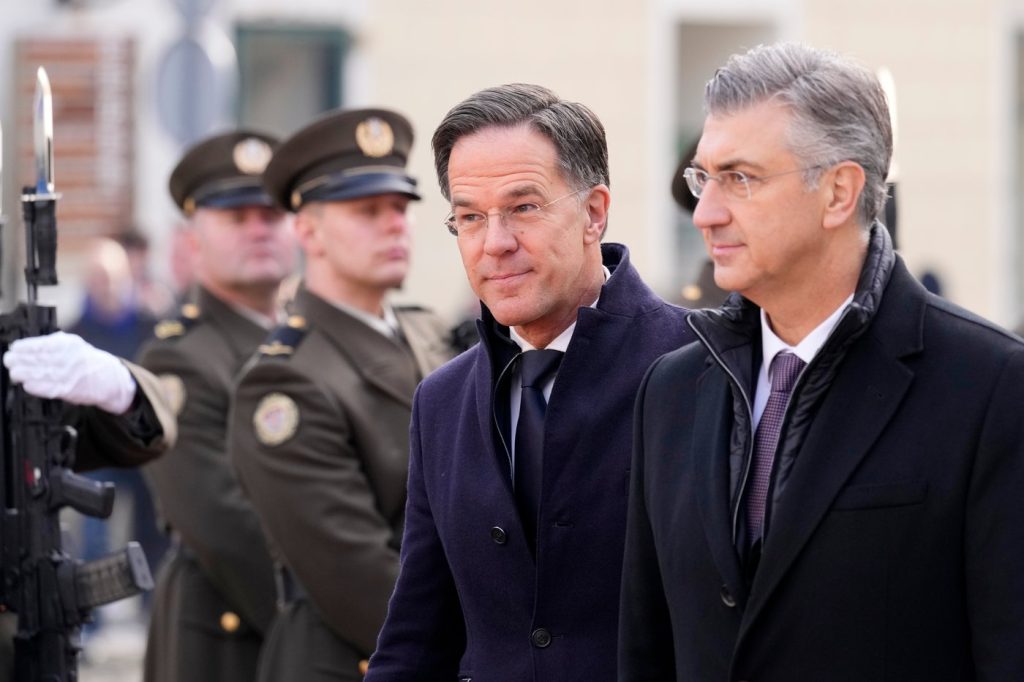
NATO operates its day-to-day functions from its headquarters in Brussels, led by Dutch Prime Minister Mark Rutte, who serves as NATO's top civilian official. His main role involves fostering consensus among members to ensure continued U.S. commitment to the alliance. Despite the growing tensions surrounding Greenland, he has refrained from publicly criticizing Trump and downplayed the potential crisis during a recent press conference.
Rutte emphasized that all NATO allies recognize the importance of Arctic security, particularly against the backdrop of increased activity from Russia and China in the region. His comments indicate a collective view among NATO members that, while Greenland is a point of contention, the alliance remains intact.
The military headquarters near Mons, Belgium, operates under a U.S. officer's command, with Trump presiding over these operations as Commander in Chief. As tensions surrounding Greenland evolve, NATO's unity and strategic direction will be crucial in navigating the challenges posed by Trump's provocative stance.