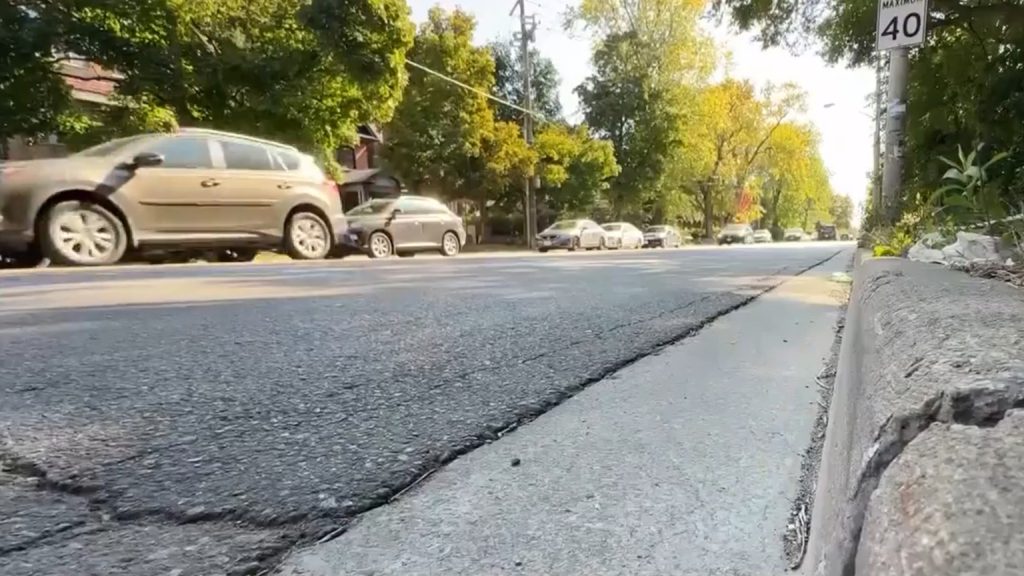
Despite prolonged discussions and planning, Parkside Drive in Toronto's west end continues to be infamous for speeding. With the recent ban on automated speed cameras imposed by the provincial government, residents express concerns that measures to combat speeding are being neglected.
Just meters from the sidewalk, an empty post that once held the Parkside Drive speed camera remains, a remnant of a device that was frequently vandalized before the province outlawed its use late last year. Faraz Gholizadeh, co-chair of Safe Parkside, stated, “Speeding has not been addressed. The cameras showed us there was a problem. The fact they haven’t done anything is really concerning.”
The history of accidents on Parkside Drive is alarming. According to a report from the City of Toronto, there were 1,487 crashes documented between Bloor Street and Lake Shore Boulevard from 2014 to 2024. This statistic raises significant safety concerns among residents, especially after a tragic incident in October 2021, where two individuals lost their lives in a chain reaction accident caused by a driver exceeding 100 km/h.
Installed in April 2022, the Parkside Drive speed camera quickly became one of the most active in Toronto, issuing over 69,000 tickets and generating more than $7.3 million in fines. Motorists were caught driving at speeds exceeding 150 km/h in a 40 km/h zone, highlighting the severity of the speeding issue in this area. Seven out of the top ten speeds recorded on this stretch of road surpassed 120 km/h.
Additionally, the City of Toronto had also approved plans for a bike lane and safety improvements for Parkside Drive, but these initiatives were halted by the province. District Councillor Gord Perks lamented, “It keeps me up at night. We have been trying. We made small changes, and we were at a point where we were altering what was a freeway, and then the province just came in and stomped all over it.”
The City cited limitations on its ability to implement safety measures on Parkside Drive, including the installation of speed bumps, which are prohibited due to the road's designation as an emergency access route for fire, police, and paramedics. Nevertheless, the City has committed to studying potential changes, with the aim of implementing them by the summer.
Perks added, “We are working behind the scenes to be ready so we can make small moves that aren’t a bike lane or street reconstruction, and if everything goes right, we’ll have that in place before the FIFA World Cup.” Gholizadeh expressed skepticism, stating that any plan must prioritize community safety by reducing speeds effectively. “I don’t know what their answer is going to be, but unless it’s reducing the speed from where it is, if they’re not going to make this a community safe zone, then they’re not serious,” he remarked.
The provincial legislation not only banned the removal of a live lane of traffic for a bike lane but also affected existing bike lanes on significant streets, such as Bloor Street, University Avenue, and Yonge Street. A recent judicial ruling, following a constitutional challenge by a cycling advocacy group, found the legislation unconstitutional, emphasizing the heightened risks to cyclist safety and a lack of evidence supporting claims that such removals would alleviate traffic congestion.
The Ford government plans to appeal this ruling in court on January 28. The City of Toronto is now closely monitoring how this legal outcome may influence future design considerations for Parkside Drive.