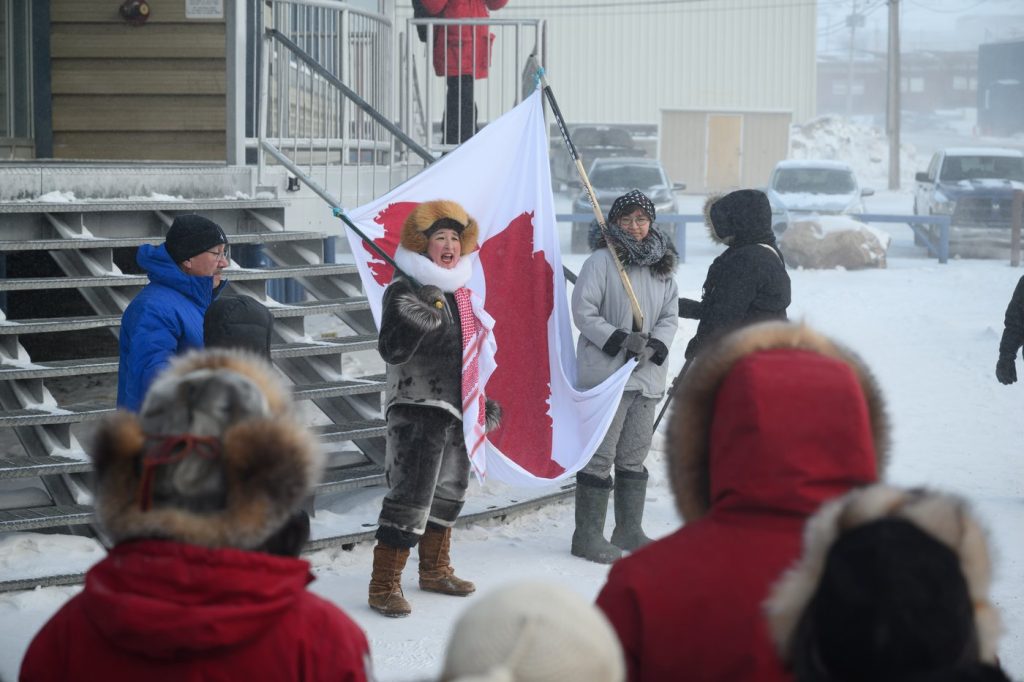
On January 17, 2026, protests erupted in both Greenland and Nunavut, Canada, in response to U.S. President Donald Trump's provocative statements regarding the acquisition of Greenland. In Iqaluit, the capital city of Nunavut, a rally organized by lawyer and activist Aaju Peter attracted around 70 participants. The rally-goers, braving freezing and windy conditions, chanted "Greenland is owned by the Greenlandic people" in Inuktut, showcasing a unified stance of solidarity with their Greenlandic counterparts.
Aaju Peter, who also teaches Inuit languages, expressed her admiration for the diverse turnout at the rally, which included people of all ages, politicians, and students. Inspired by a similar demonstration scheduled to take place in Nuuk, the capital of Greenland, Peter emphasized the cultural and familial ties between the Inuit populations of northern Canada and Greenland. She highlighted the shared ancestry and close relationships that connect the two regions, despite the colonial borders that separate them.
Meanwhile, in Nuuk, thousands of Greenlanders participated in what police described as the largest demonstration they've ever witnessed, voicing their dissent against Trump's intentions with chants of "Greenland is not for sale" while displaying national flags. The protests were sparked by Trump's announcement of a planned 10 percent import tax on goods from eight European nations, including Denmark and Norway, as part of his strategy to negotiate a deal for the "Complete and Total purchase of Greenland." The imposition of this tariff is intended to raise tensions ahead of potential talks regarding the status of the largely Inuit-populated island, which currently falls under Danish sovereignty.
Trump's remarks, delivered from his golf club in West Palm Beach, Florida, suggested that if a purchase agreement was not reached, the import tax would escalate to 25 percent on June 1. He views Greenland as strategically important to U.S. national security, a sentiment that adds an unsettling dynamic to the region's governance. Historically, the U.S. has had a military presence in Greenland since 1945, with a significant reduction in troop numbers over the decades, culminating in approximately 200 soldiers stationed at the Pituffik Space Base, which supports missile defense and surveillance operations for the U.S. and NATO.
Aaju Peter, who was born in Greenland and has relatives still living there, articulated the collective anxiety felt among the Inuit community regarding Trump's threats. She remarked on the determination of the Inuit people to remain united against external pressures, asserting, "He’s not gonna divide and conquer us." Laakkuluk Williamson, a filmmaker and artist present at the Iqaluit rally, echoed these sentiments, stating that Inuit peoples from Nunavut and Greenland are bound together by their shared culture and heritage. She conveyed concerns for her relatives in Greenland, who are reportedly stocking up on supplies in light of the perceived threats, underscoring the gravity of the situation for those directly affected by the rhetoric of the U.S. president.
As tensions simmer over the future of Greenland and its people, the demonstrations in both Iqaluit and Nuuk serve as a powerful reminder of the interconnectedness of the Inuit populations in the Arctic regions, and their commitment to standing together against perceived threats to their sovereignty and way of life.