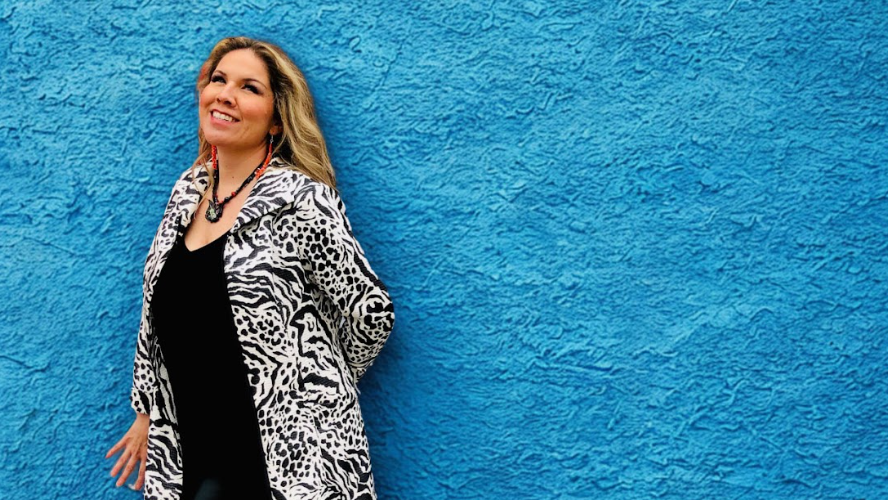
Last month, Donita Large, a Cree artist based in Edmonton, experienced a shocking incident when she discovered an AI-generated image of herself used in an online publication discussing her new album. Large voiced her concern, stating, "My whole body just kind of responded with ‘what am I supposed to do with this? This is not me.’” Her apprehension stemmed from the fact that the album announcement used an artificial image rather than an actual photograph of her, despite her real pictures being readily available.
The image depicted what appeared to be an Indigenous woman, featuring long black hair and a darker skin tone than Large herself. This representation was particularly concerning for Large as it was not clearly labeled as AI-generated, leading to a potential misunderstanding about her identity. “The fact that it’s thrown into a news article changes it to be not only a stereotype that’s created by AI; you then make it a fact,” she explained. “It could have caused me a lot of damage had it continued.”
The image included stereotypical elements, such as a transparent female figure in the background adorned with a beaded headpiece and other pan-Indigenous cultural accessories. Large elaborated on the implications of this imagery, asserting that it perpetuates limited and historical views of Indigenous peoples. “That’s so stereotypical of what we’re supposed to look like or that Indigenous people are only of history when we’re modern people who live in every place,” she remarked.
After Large notified the publication, Wire Service Canada, of the situation, the article was promptly removed without any acknowledgment or apology. CityNews reached out to the publisher regarding its AI policy but did not receive an immediate response. This lack of accountability highlights the growing concerns surrounding the use of AI in media and the importance of maintaining ethical standards.
Katrina Ingram, an AI ethics expert and founder of Ethically Aligned AI, emphasized the need for organizations to have clear guidelines regarding the use of AI-generated content. “There are lots of ethical choices that we can make, including having policies for acceptable use,” she stated. Ingram advocates for the establishment of guidelines to ensure clarity on how AI tools should and should not be used within organizations.
Through sharing her experience, Large aims to raise awareness about the consequences of misinformation and media misrepresentation exacerbated by AI technologies. Her album, titled "The Ancestors," makes the issue even more poignant, as she expresses that the erasure of her image and identity is indicative of a broader historical pattern of Indigenous erasure. “My album is called ‘The Ancestors’ and that alone, to erase me in that story, is highly problematic,” she explained. “To have my image be changed and erased, to me, is also a part of that longer story around that.”
As the dialogue around AI in media continues, Large’s experience underscores the critical need for ethical practices in portrayal and representation, particularly within marginalized communities.