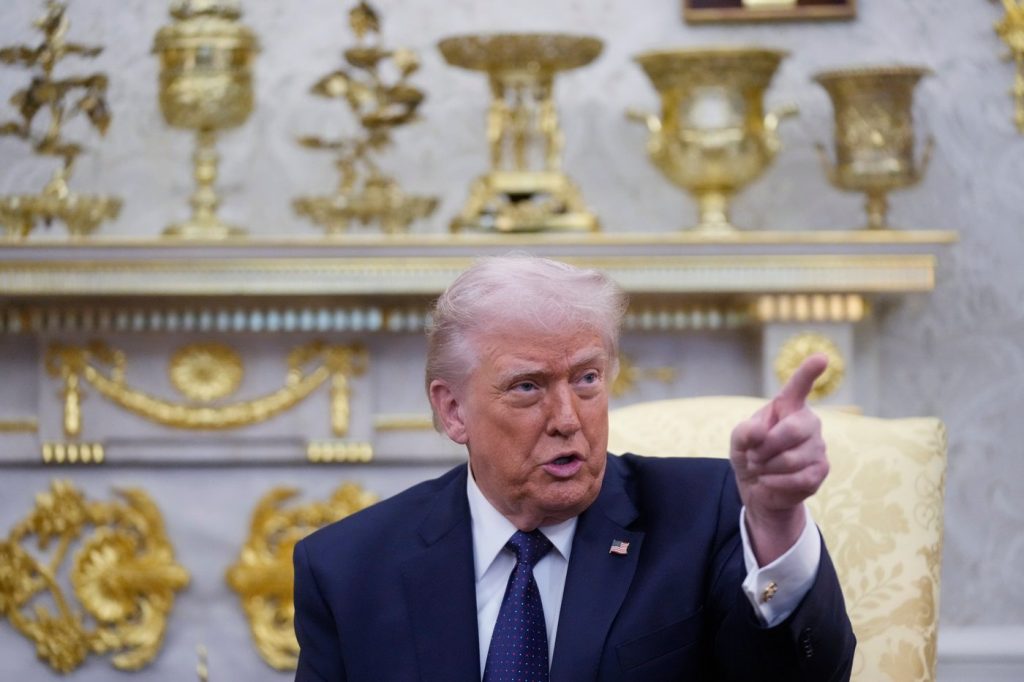
On March 3, 2026, President Donald Trump commented on the ongoing U.S.-Israeli military campaign against Iran, suggesting that a figure from within the Iranian regime might be the ideal choice to lead the country after hostilities cease. However, he noted that many potential candidates have already been killed during the campaign, including Iranian Supreme Leader Ali Khamenei and other top officials. Trump's remarks signal a deviation from his previous call for Iranians to take control of their government following the end of the conflict.
In a conversation with reporters in the Oval Office, Trump indicated uncertainty about valid successors for Iran, stating, "Most of the people we had in mind are dead." He expressed concern that finding credible leadership may prove difficult, with the possibility that newer figures might also have been killed. The president specifically mentioned exiled crown prince Reza Pahlavi as not being heavily considered by his administration for a future leadership role.
He emphasized that the best candidate for leadership might come from within Iran, potentially someone who is popular among the Iranian people if such an individual exists. "It would seem to me that somebody from within maybe would be more appropriate," Trump remarked, advocating for a thoughtful approach to avoid inadvertently installing another problematic leader in the aftermath of the war.
Trump's comments coincided with his meeting with German Chancellor Friedrich Merz, during which he faced increased scrutiny regarding the decision to initiate the military action against Iran. The White House is currently making an effort to counter criticisms suggesting that the U.S. hastily chose to engage in conflict without adequate justification.
Last week, Trump authorized military strikes after receiving advice from his envoy, Steve Witkoff, and son-in-law, Jared Kushner, who had been in negotiations with Iranian officials. Despite their discussions in Geneva, there was skepticism about reaching a satisfactory nuclear agreement with Iran. The administration was given the impression that negotiations were being stalled, with the possibility of a more favorable “Obama-plus deal” being pushed, though the Iranians were reportedly not willing to comply.
In a response to international allies, Trump expressed frustration with Britain and Spain for their hesitance to support U.S.-Israeli military actions. He criticized British Prime Minister Keir Starmer for initially blocking U.S. planes from utilizing British bases for attacks against Iran's missile capabilities, although permissions were later granted. Furthermore, Trump declared a desire to "cut off all trade with Spain" after Spanish officials stated they would not allow U.S. forces to use their bases for operations not sanctioned by the United Nations.
Additionally, Trump sought to dismiss claims made by some close allies that the U.S. was compelled to act due to pressure from Israel. In response to Secretary of State Marco Rubio's assertion that a preemptive strike was necessary due to anticipated Israeli actions, Trump stated, "If anything, I might have forced Israel’s hand." He reiterated that the decision for military intervention was independent from Israel's influence.
During his meeting with Merz, the German Chancellor expressed interest in a collaborative strategy for post-war Iran, underscoring the significance of the conflict's resolution for both Europe and the security of Israel. With rising oil prices projected as a temporary issue throughout the military engagement, Trump remained optimistic that prices would decline once hostilities cease. According to AAA data, the average price of gasoline in the U.S. had risen sharply, hitting around $3.11 per gallon.