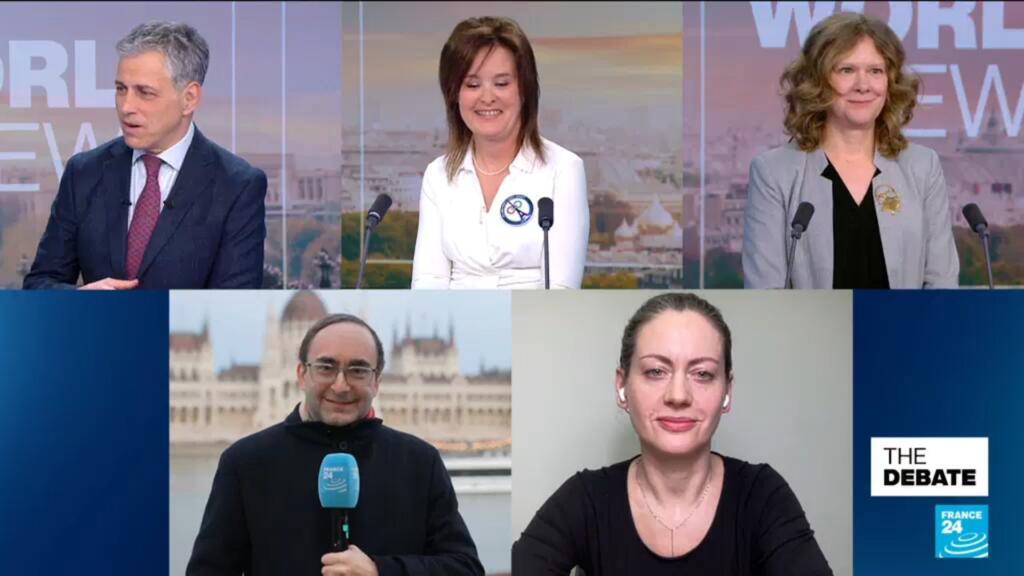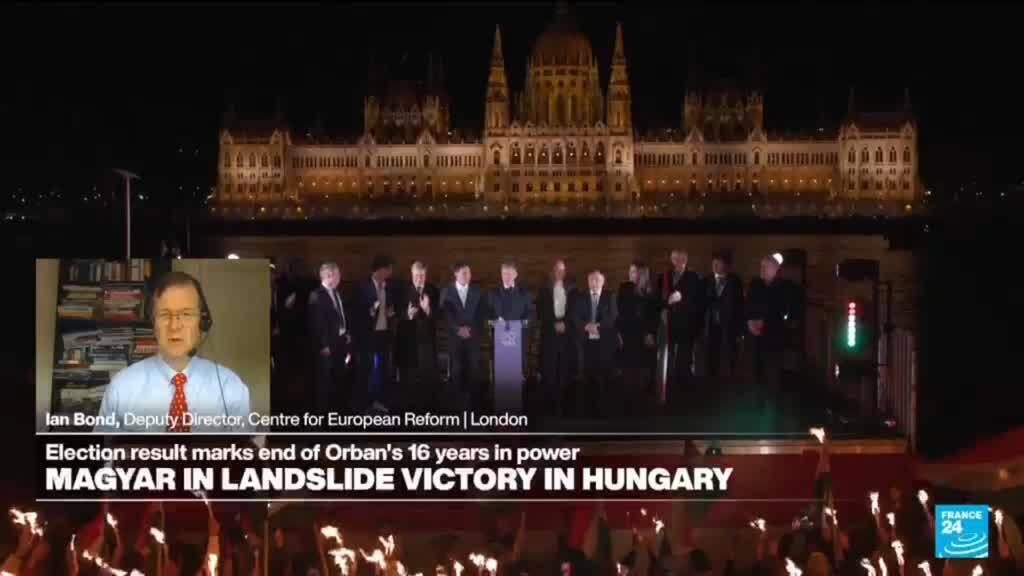
Following the recent elections in Hungary, Peter Magyar's decisive victory over Viktor Orbán has sparked considerable interest in the landscape of European politics. Ian Bond, a former Senior British Diplomat and Deputy Director of the Centre for European Reform, joins Genie Godula to discuss the implications of this shift. Bond asserts that Magyar's win should be understood within the context of broader European political dynamics, particularly concerning right-wing populism and governance.
Bond outlines that the election results reflect significant political currents in Hungary, which has been characterized by Orbán's autocratic rule for many years. Magyar's victory can be seen as a challenge to the entrenched right-wing populist narrative that has dominated Hungarian politics under Orbán. However, Bond emphasizes that this transition should be approached with cautious optimism, as the changes in Hungary are likely to be partial and contested rather than instantaneous or transformative.
One of the critical aspects discussed by Bond is the legacy of hardline governance associated with Orbán's tenure. He notes that the political environment in Hungary has been shaped significantly by Orbán's policies, which have often undermined democratic institutions and eroded checks and balances. As Magyar assumes power, the challenges faced will be substantial, as he seeks to navigate the remnants of Orbán's rule while attempting to restore faith in democratic processes. This transition period is expected to be fraught with contention as various political factions, including those loyal to Orbán, engage in a struggle over the direction of Hungary's future.
In assessing the implications for EU cohesion, Bond highlights that Hungary's political shift may resonate across the continent, particularly among other nations grappling with similar populist tendencies. The victory of a more centrist and democratic leadership in Hungary could signal a potential retraction of populist movements elsewhere in Europe, but the outcome remains uncertain. Bond suggests that while this election might inspire hope for a resurgence of centrism in European politics, the actual realization of such a shift is contingent upon various factors, including the response from other EU member states and their respective political landscapes.
Another critical theme Bond addresses is Hungary's future role in the EU, particularly concerning its policy towards Ukraine. Given the ongoing geopolitical tensions and the EU's stance on the conflict, Hungary's leadership under Magyar could influence the collective approach to support for Ukraine. Bond notes that a more cooperative and pro-European stance from Budapest might enhance EU cohesion in addressing the crisis and reinforce the union's collective strategy in Eastern Europe.
Ultimately, while the landscapes painted by these elections open doors for change, Bond's analysis indicates that any political transformation in Hungary will require careful navigation through a complex web of challenges and opposition. The consequences of Magyar's victory are poised to extend beyond Hungary’s borders, impacting the broader European political environment and establishing precedents for future governance in other countries vulnerable to populist movements.
```