BRUSSELS (AP) The rhetoric from European Union leaders has escalated in response to U.S. President Donald Trump’s threats to impose tariffs on countries opposing American dominion over Greenland. Terms like “intimidation,” “threats,” and “blackmail” are now characterizing the transatlantic relationship as Trump's presidency signals a shift in traditional alliances.
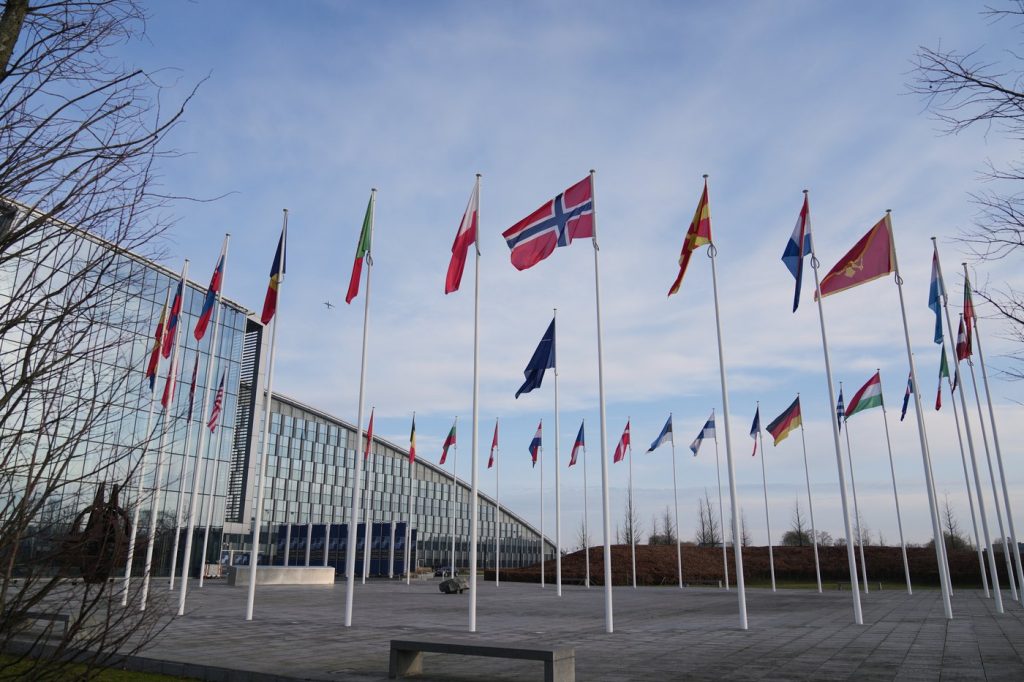
As Europe grapples with the notion that a NATO ally might assert control over Danish territory, the reaction becomes more pronounced. Trump’s term has amplified concerns about the stability and future of NATO, with reports suggesting that European confidence in the transatlantic alliance is rapidly diminishing. Danish Prime Minister Mette Frederiksen has explicitly warned that any attempts by Trump to annex Greenland would jeopardize Denmark's involvement in NATO.
Maria Martisiute, an analyst at the European Policy Centre, articulates this sentiment by stating that Europe is entering a profound political-military crisis, realizing that America has seemingly abandoned NATO. The fallout from Trump’s initial presidency nearly pushed NATO to failure, with former Secretary-General Jens Stoltenberg reflecting in his memoir on the brink of collapse that the alliance faced during Trump’s earlier threats.
Fast forward to January 2025, and European leaders await Trump’s direction regarding Ukraine as the ongoing war enters its fourth year. The apprehension is palpable, considering that Berlin and other capitals perceive a Russian victory as a significant existential threat. Despite hopes that U.S. support for Ukraine would remain robust, those aspirations quickly evaporated as military and financial aid from America started to dissipate.
At a NATO speech in February, U.S. Defense Secretary Pete Hegseth conveyed a stark message to Europe, emphasizing that the United States has other priorities and that Europe must assume responsibility for its own security. He stated that NATO would not welcome Ukraine as a member, nor would it seek to regain territory seized by Russia. Furthermore, European nations would be on their own should they decide to initiate direct military engagement with Russia.
In a troubling turn of events, Trump has publicly blamed Ukrainian President Volodymyr Zelenskyy for the invasion, despite a series of diplomatic engagements with various European leaders aimed at pacifying relations. In the meantime, European nations have initiated measures to bolster their military capabilities, particularly to counteract pressures from Trump’s administration and the broader geopolitical challenges posed by Russia.
Germany's Chancellor Friedrich Merz has publicly stated that the current geopolitical landscape necessitates an urgent and substantial escalation of defense efforts across Europe. As the EU moves forward, a multibillion-euro fund has been established to procure arms, focusing on decreasing reliance on U.S. suppliers by fostering growth within European defense industries.
France, Germany, the U.K., Norway, Sweden, and the Netherlands have recently deployed troops to Greenland, sending a clear and symbolic message against potential U.S. aggression. French President Emmanuel Macron emphasized the importance of respecting the sovereignty of nations, underscoring the necessity for Europe to navigate its emerging uncertainties in international alliances.
Amid these tensions, European leaders have stated their unwavering commitment to principles of sovereignty and territorial integrity in the face of tariff threats. They express concerns that Trump’s aggressive economic measures could further strain transatlantic relations, potentially invoking a detrimental downward spiral in diplomatic ties.
Overall, the evolving landscape of European security and international relations is shifting due to these tensions with the U.S., prompting European leaders to reconsider their reliance on traditional allies and to explore pathways to greater autonomy.