WASHINGTON U.S. Customs and Border Protection (CBP) is facing delays in initiating refunds for tariffs imposed by President Donald Trump that were recently deemed illegal by the Supreme Court. In a court filing made on Friday, Brandon Lord, a senior official in the CBP’s trade office, stated that the agency aims to establish a refund system within the next 45 days.
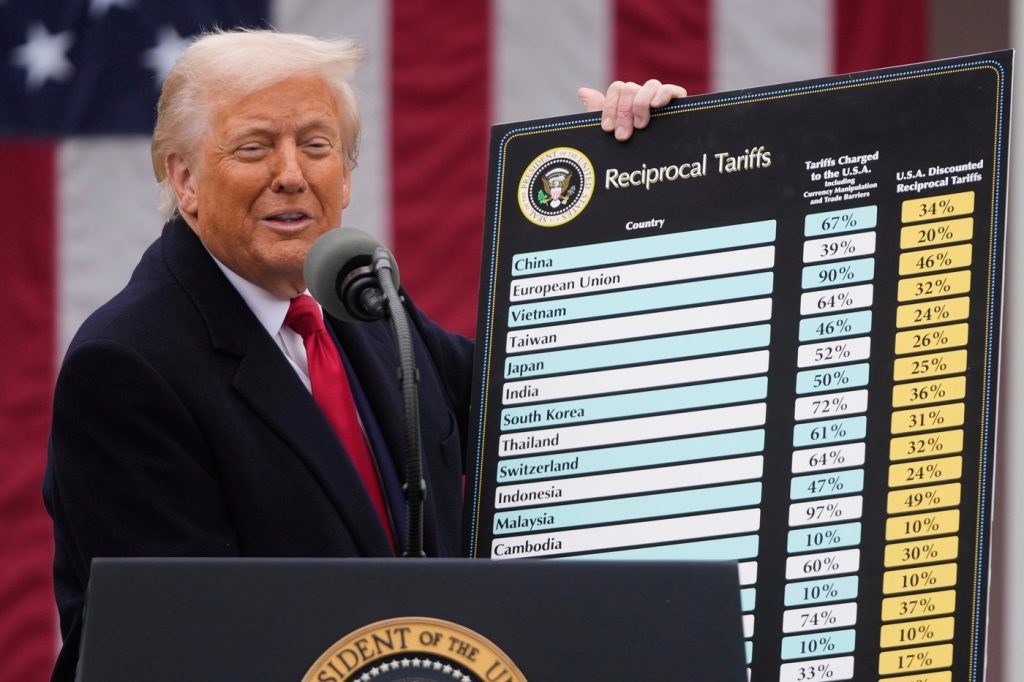
The recent ruling by the U.S. Court of International Trade ordered refunds for companies that had paid what are referred to as Trump’s “Liberation Day” tariffs and certain fentanyl-related duties levied on imports from Canada, Mexico, and China. This decision follows the Supreme Court’s earlier ruling, which determined that Trump did not have the legal authority to implement such tariffs under the International Emergency Economic Powers Act (IEEPA), emphasizing that the U.S. Constitution grants Congress the power over taxation and tariff regulations.
Although the Supreme Court did not directly order refunds for the tariffs, it left affected companies, which include importers who paid duties under IEEPA, to pursue legal action against the federal government for reimbursement. The recent ruling from Judge Richard Eaton in New York came as a result of a lawsuit filed by Atmus Filtration, a Tennessee-based company. The judge noted that all importers who paid IEEPA duties are “entitled to the benefit” of the Supreme Court's ruling.
Brandon Lord explained that the CBP is "not able to comply" with the court’s order immediately; however, the department is working towards a redesigned system that would simplify the refund process. Notably, Lord indicated that as of March 4, the agency had identified approximately 330,000 importers who had made over 53 million entries, amounting to about $166 billion in potential refunds. He further remarked that the existing process is inefficient, estimating that it would require over four million work hours to process these refunds, while expressing confidence that the new system would facilitate a quicker turnaround.
Before the refund process can commence, it must receive approval from Judge Eaton. Meanwhile, the White House has yet to comment on the trade court ruling, leaving open the possibility that the Trump administration may consider appealing the decision or taking alternative measures to delay the refund process.
Some Canadian companies are among those waiting for refunds; however, it is important to note that Canada was largely insulated from the IEEPA tariffs due to a carve-out included within the Canada-U.S.-Mexico Agreement (CUSMA). President Trump declared an emergency at the Canadian border regarding the movement of fentanyl in order to justify imposing a 35 percent tariff on imports, which ultimately did not affect goods compliant with CUSMA.
Subsequently, Trump replaced the IEEPA tariffs with a new worldwide tariff set at 10 percent using Section 122 of the 1974 Trade Act. This tariff can be increased to a maximum of 15 percent and is set to expire after 150 days unless Congress opts to extend it. Similar to the previous tariffs, this global tariff also does not apply to goods that are compliant with CUSMA.
It should be highlighted that none of the recent court rulings influence Trump’s distinct tariffs on various Canadian industries, which include sectors such as steel, aluminum, automobiles, lumber, and cabinetry.