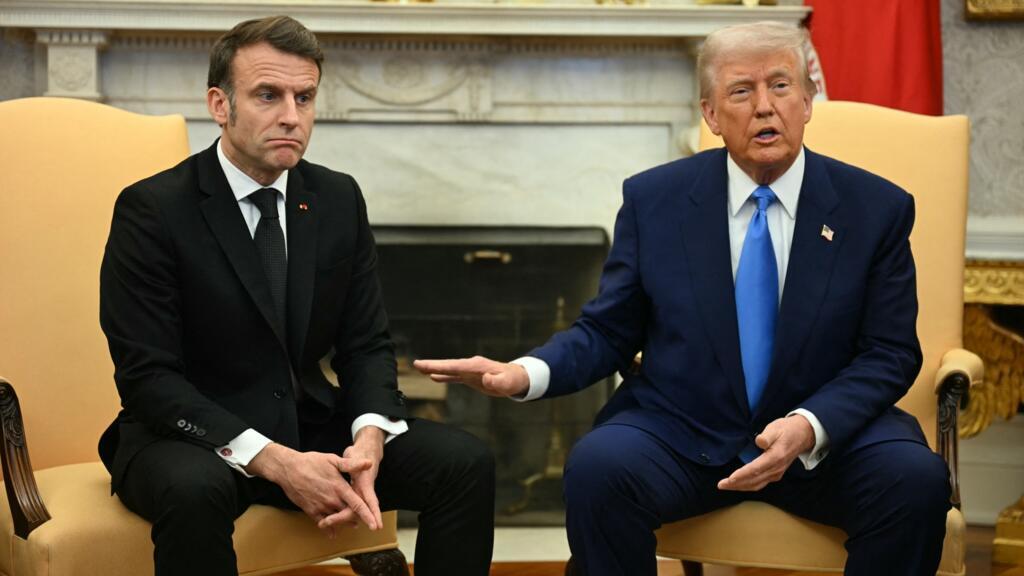
On Thursday, French President Emmanuel Macron reached out to former US President Donald Trump via a private text message, proposing to host a G7 summit in Paris. The message also included a controversial suggestion that Macron could invite Russian representatives to attend the discussions on the sidelines of the summit. The proposal was meant to engage in dialogue with Russia, a notion that has been contentious among G7 leaders due to ongoing geopolitical tensions.
Following the exchange, Donald Trump shared the private communication on his social media platform, Truth Social, which sparked a flurry of reactions and discussions regarding the appropriateness of such an invitation. The authenticity of the message was later confirmed by Macron's team, adding an element of legitimacy to the correspondence that became a focal point of media coverage.
This proposal by Macron comes during a time when international relations are strained, particularly between Western nations and Russia. The G7, which includes Canada, France, Germany, Italy, Japan, the United Kingdom, and the United States, has often taken a united stance against Russian actions, particularly regarding Ukraine and other territorial disputes. Macron's openness to include Russia reflects his ongoing belief in dialogue over confrontation, a stance that has been met with mixed responses from other G7 leaders.
Critics of Macron's suggestion argue that inviting Russia to the G7 could undermine the unity of the group, which has traditionally bolstered collective strategies against challenges posed by the Kremlin. Supporters, however, point to the idea that engaging Russia might foster diplomatic solutions to current conflicts. This debate illustrates the broader tension within international diplomacy—whether peace can be achieved through isolation or engagement.
The possibility of hosting the G7 in Paris is significant given the city's historical role in world diplomacy and its status as a global cultural capital. Paris has previously hosted numerous important international summits, and Macron's government may view this as an opportunity to reassert France's leadership on the global stage. However, the inclusion of Russia in any discussions remains a highly sensitive subject that could polarize the member states of the G7.
As the situation evolves, the dynamics of international relations continue to shift, and the future of the G7, particularly regarding its relationship with Russia, remains uncertain. Macron’s willingness to engage Russia could either lead to breakthroughs in dialogue or create rifts within the alliance, highlighting the complexities of modern diplomatic engagements.