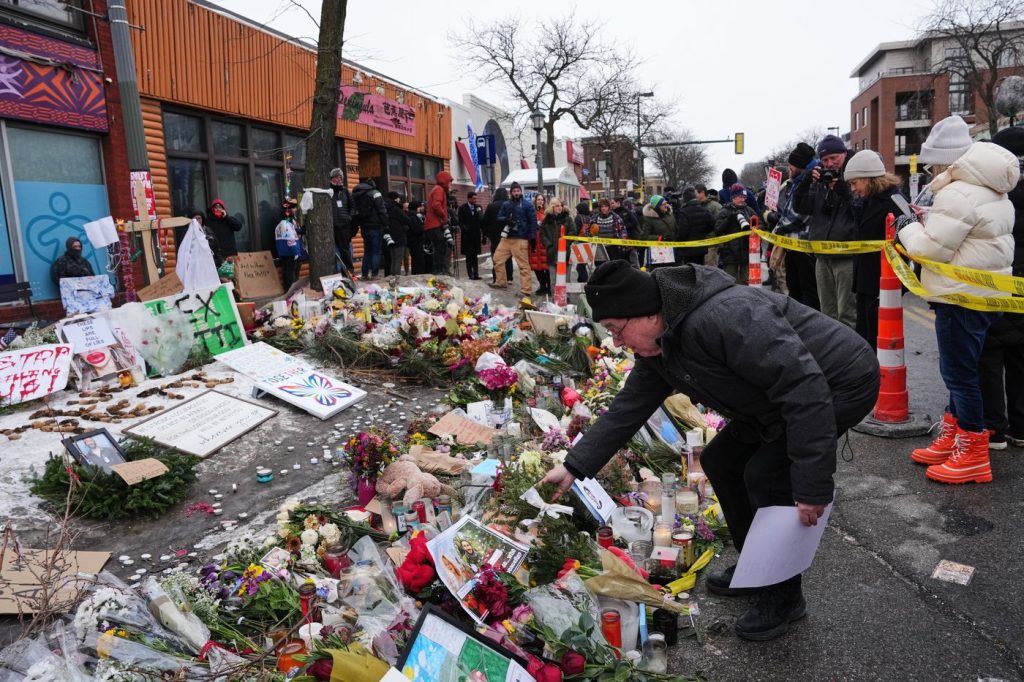
On Monday, President Donald Trump adopted a more conciliatory stance towards Democratic leaders in Minnesota, a notable shift following the second fatal shooting of a protester by federal agents during the administration's robust efforts to deport undocumented immigrants. This change in approach came after the shooting of Alex Pretti, which sparked widespread criticism, including from some Republicans questioning the administration's aggressive tactics against both migrants and opposition protests.
Trump's recalibration in Minnesota aligns with a pattern observed throughout his presidency where he initially adopts a hardline stance before subsequently moderating his position. Earlier this month, he threatened military action against Iran, claiming the country was violently suppressing anti-government protests. Despite emphasizing a firm response, Trump later claimed to have suspended any military action after receiving assurances from Tehran regarding planned executions.
Moreover, Trump's abrupt announcement of new tariffs targeting European allies who resisted his request for U.S. control over Greenland was scrapped the day after the stock market reacted negatively to the announcement. His administration then vaguely detailed a framework for an agreement that seemed to mitigate the dispute over Greenland.
In Minnesota, Trump expressed a more amicable tone towards Governor Tim Walz after speaking with him, claiming they were now on a "similar wavelength." This shift was significant given Trump's past criticisms of Walz and Minnesota Democrats, as he had previously described the governor in harsh terms, labeling him a "disturbed, unstable individual." Following the recent tumultuous events, Trump dispatched border czar Tom Homan to oversee operations in Minnesota, indicating a shift in strategy.
Meanwhile, Minneapolis Mayor Jacob Frey confirmed discussions with Trump led to the decision for federal agents to leave the city, suggesting the president recognized the untenable nature of the current federal operations. The new developments in Minnesota emerged in the backdrop of growing dissatisfaction among Republicans regarding the tactics employed by federal agents, particularly in relation to the recent fatal incident.
Republican gubernatorial candidate Chris Madel unexpectedly exited his campaign, citing the ongoing immigration enforcement operations in the Twin Cities as an "unmitigated disaster." Other Republican figures, including Texas Governor Greg Abbott and Vermont Governor Phil Scott, offered mild criticisms, calling for a reevaluation of federal tactics in Minnesota and citing a failure in coordinating law enforcement practices.
While Trump's approach toward Walz appeared unexpectedly cooperative, this marked a significant turnaround from previous rhetoric. Just a day prior, Trump's deputy chief of staff, Stephen Miller, used social media to disparage Walz and label Pretti, who was a nurse, as a "would-be assassin" as tensions escalated. The administration's context for these comments has come under scrutiny following the contradicting narratives presented by officials and the visual evidence from the incident.
Despite the drastic changes in tone, Trump’s response to the protests and the deaths of Pretti and another protester, Renee Good, has been relatively subdued compared to his responses following political violence directed at figures aligned with his ideology. Historically, Trump has delivered national addresses addressing public reactions to violence against those tied to his political base, while his engagement with the implications of violence from federal operations remains minimal.
Trump's comments during this crisis remain tethered to blame directed at Walz and other Minnesota Democrats, painting them as instigators for obstructing federal agents. His spokesperson, Karoline Leavitt, reiterated this narrative, maintaining that the actions witnessed in Minneapolis were reflective of "left-wing agitators" inciting chaos against federal law enforcement efforts.