Sophie Adenot's Upcoming Mission Aboard the International Space Station
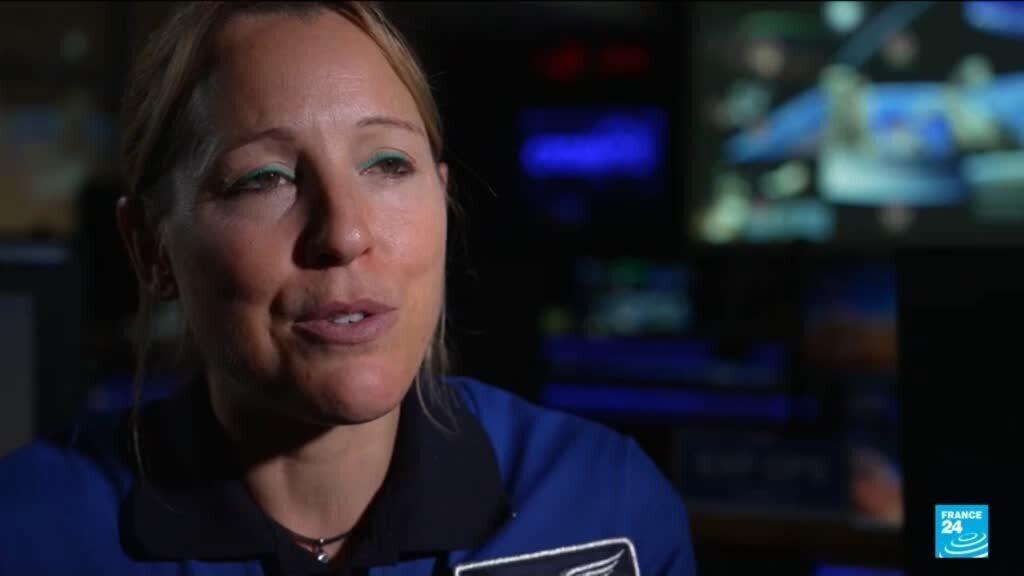
Sophie Adenot, a French astronaut, is gearing up for a groundbreaking nine-month mission aboard the International Space Station (ISS). This mission is set to establish a new record for the longest duration spent in orbit by a French astronaut. Over the course of her stay in space, Adenot will engage in a rigorous program that focuses on over 200 scientific and medical experiments designed to explore the unique conditions of microgravity. The research aims to benefit not only space exploration but also life on Earth.
As one of the key objectives of this mission, Adenot will focus on the effects of microgravity on various biological and physical processes. These experiments will span various fields, including biology, physiology, and materials science. Conducting these studies in low Earth orbit allows scientists to observe phenomena that cannot be replicated on the ground, offering invaluable insights into human health, advanced materials, and potential applications for future long-duration space missions.
Adenot's robust educational background and extensive training contribute significantly to her preparedness for this challenging mission. Prior to embarking on this adventure, she has undergone extensive training, incorporating both practical skills and theoretical knowledge necessary for life aboard the ISS. This preparation includes simulations, fitness regimens, and familiarization with the various systems on the station. Additionally, her training involves collaborating with other astronauts and ground control experts to ensure a seamless mission experience.
Maintenance work will also be a critical component of Adenot's duties while on the ISS. During her nine months in space, she will be responsible for monitoring and maintaining the various systems and equipment onboard the station. Keeping the ISS operational is essential not only for her own safety but also for the continuation of the scientific research being conducted. This aspect of the mission ensures that Adenot will be kept busy with diverse tasks, balancing scientific research with operational responsibilities.
The ISS serves as a unique laboratory that supports a plethora of scientific endeavors, making it an invaluable asset to researchers worldwide. With the ability to perform experiments in an environment free from the interference of gravity, scientists can gain a deeper understanding of fundamental biological and physical processes. Adenot’s contributions to this international research effort are anticipated to yield results that could have far-reaching implications in both space missions and terrestrial applications, such as medical advancements.
Sophie Adenot's mission comes at a time when space exploration is gaining renewed interest. In recent years, there has been a surge in both governmental and private sector investments in space missions. This momentum not only paves the way for innovative scientific research but also inspires future generations to dream big. Adenot’s record-setting mission is set to be a milestone for France in the realm of space exploration, highlighting the important role astronauts play in furthering human understanding of life beyond our planet.
As she prepares for her time in orbit, the significance of Adenot’s mission will resonate not just in the scientific community but also among the general public. The mission aims to foster interest in STEM (science, technology, engineering, and mathematics) fields and illustrates the potential of human exploration beyond Earth. With her impressive track record and unwavering dedication, Sophie Adenot is poised to leave an indelible mark on the history of space exploration.
In conclusion, Sophie Adenot's upcoming nine-month mission aboard the ISS represents a significant achievement for French space exploration, with a focus on scientific research in microgravity. By conducting more than 200 experiments and handling crucial maintenance tasks, she will contribute to expanding humanity's understanding of life in space and its implications for life on Earth.